 5.0 Out Of 250+ Reviews


 Financing Available


 (214) 227-2763

Table of Contents
- Common Reasons Storm Damage Claims Are Denied
- How to Read a Storm Damage Claim Denial Letter
- Building Your Evidence: Documentation and Timeline
- How to Appeal a Denied Homeowners Insurance Claim
- Storm Damage Insurance Claim Appeal Timeline and Deadlines
- When to Seek Professional Help: Public Adjusters and Attorneys
- Partial Denials and Underpayments: What to Do
- Frequently Asked Questions
Last Updated: October 14, 2026
Common Reasons Storm Damage Claims Are Denied
A storm damage claim denied by your insurer isn’t random, denials follow specific, documented reasons. Understanding them is your first step toward fighting back.
The most common denials fall into five categories: pre-existing damage, disputed causation, policy exclusions, insufficient documentation, and filing errors. Each has a different fix.
Pre-Existing Damage and Wear Disputes
Their argument: your roof was already aging, so hail didn’t cause new damage, it just exposed what was there.
Wear and tear is NOT covered by homeowners insurance, only sudden, accidental damage is.
What this means in practice: You need photos of your property BEFORE the storm, or a contractor’s inspection report distinguishing old damage from new impact marks.
Get a contractor’s damage assessment immediately after a storm. Waiting weeks allows your insurer to argue the damage worsened naturally over time, not from the storm itself.
Disputed Storm Causation
Your insurer might agree damage exists but deny the storm caused it, blaming poor maintenance, faulty installation, or gradual deterioration instead.
This happens constantly with roof and siding claims: an adjuster sees interior water damage and calls it a months-old roof leak, not the recent hail storm, or blames siding damage on wood rot rather than wind impact.
Policy Exclusions and Coverage Gaps
Some damage isn’t covered regardless of whether the storm caused it. Read your policy exclusions carefully.
Common exclusions include:
- Flood damage (separate flood insurance required)
- Damage from lack of maintenance
- Damage from poor installation
- Cosmetic damage that doesn’t affect function
- Damage to items stored outside
If your policy excludes the type of damage you’re claiming, denial is correct. No appeal will change this. You’d need different coverage.
However, many homeowners misunderstand their exclusions, thinking something isn’t covered when it actually is. That’s why reading your denial letter carefully matters.
Insufficient Documentation and Evidence
Insurers deny claims when you haven’t provided enough proof: photographs, repair estimates, inspection reports, and weather documentation.
Without this evidence, they assume you’re exaggerating. It’s not fair, but it’s how the system works.
Common documentation gaps:
- No photos of damage
- No contractor estimates for repair costs
- No weather records showing a storm occurred
- No inspection report from a licensed contractor
- No documentation of when damage was discovered
Claim Paperwork Errors and Late Filing
Filing deadlines vary by state. Miss yours and your claim is denied automatically, regardless of merit.
Other paperwork errors include:
- Incomplete claim forms
- Wrong policy number
- Incorrect property address
- Missing required signatures
- Late notice of loss
These errors seem minor, but insurers use them to deny valid claims. They’re not required to work around your mistakes.
How to Read a Storm Damage Claim Denial Letter
Your denial letter contains specific language explaining exactly why your claim was rejected. Learning to decode it is critical.
The letter references your policy number, date of loss, and claim number, and states a reason for denial, but that reason is often buried in hard-to-understand legal language.
Decoding Policy Language and Exclusion Clauses
Insurance policies use terms with precise legal meanings.
Your denial letter will quote your policy. Look for phrases like:
- “Not a covered loss under Section…”
- “Excluded under the following provision…”
- “Does not constitute sudden and accidental loss…”
- “Pre-existing condition not covered…”
When you see these phrases, the insurer is citing specific policy language. Write down the section number, then read that section in your policy word-for-word.
Many denials rest on misinterpretations of policy language: your insurer reads it one way, a lawyer or public adjuster reads it another.
Identifying the Specific Denial Reason
The denial letter must state a reason. It might say:
- “Claim denied due to pre-existing damage”
- “Loss does not fall within covered perils”
- “Insufficient documentation provided”
- “Claim filed outside notice deadline”
- “Damage caused by lack of maintenance”
Write this reason down exactly as stated. This is your starting point for building an appeal.
If the letter is vague and doesn’t clearly state why you were denied, that’s a red flag. Vague denials can sometimes be challenged on procedural grounds, since your insurer must give a clear explanation.
If your denial letter doesn’t explain the reason clearly, request a written explanation immediately. Send a formal letter to your insurer asking them to state the specific reason in writing. Keep copies of everything.
Building Your Evidence: Documentation and Timeline
You can’t appeal a denial without evidence: photographs, inspection reports, weather records, and contractor assessments.
Start gathering evidence immediately after a storm. The longer you wait, the harder it is to prove the damage is storm-related.
Photograph and Inspection Report Checklist
Document everything before repairs begin. Your photos are your proof.
Photograph checklist:
- Wide shots showing overall property damage
- Close-ups of impact marks on roof shingles
- Close-ups of hail dents on siding, gutters, and downspouts
- Water damage marks on exterior walls
- Interior water damage and stains
- Damage to windows, doors, and frames
- Damage to landscaping, deck, or patio
- Photos showing the date (use your phone’s timestamp)
Inspection report checklist:
- Licensed contractor’s name and license number
- Inspection date (within days of storm, not weeks later)
- Detailed description of each damaged area
- Photographs attached to the report
- Contractor’s professional opinion on storm causation
- Repair cost estimate with line-item details
- Contractor’s signature and contact information
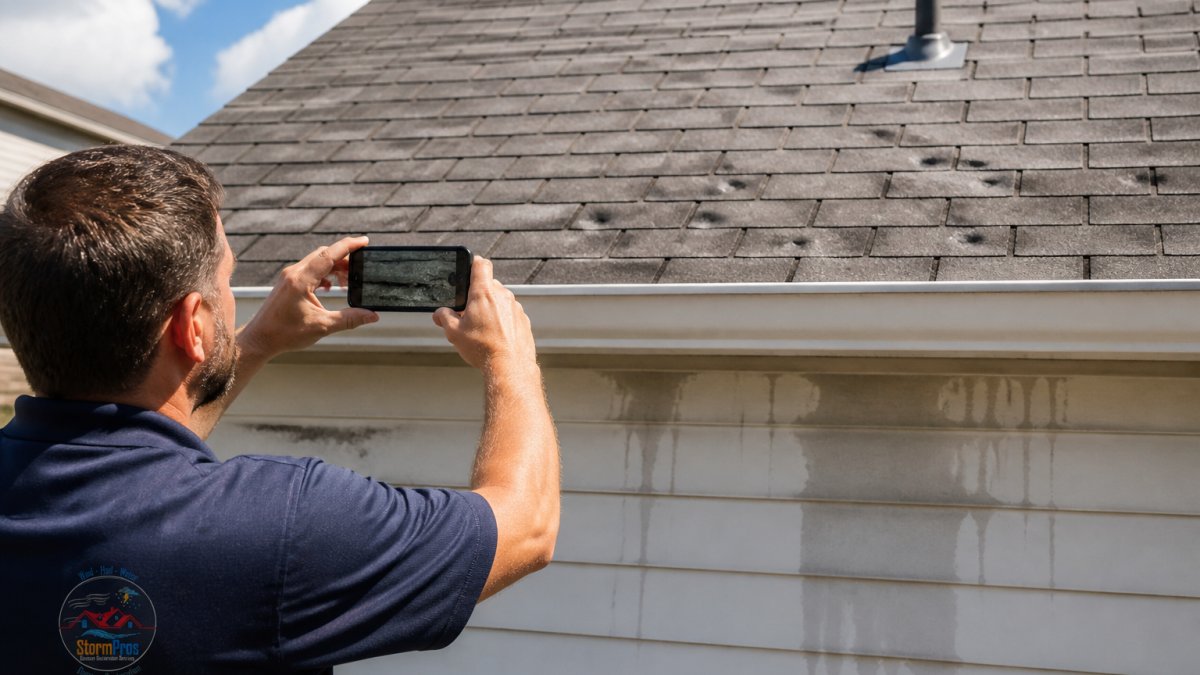
Get multiple contractor estimates if possible. If three contractors agree the damage is storm-related, your insurer has a harder time claiming otherwise.
Gathering Weather Records and Independent Assessment
Weather records prove a storm occurred in your area on the date you claim.
Weather documentation sources:
- National Weather Service reports for your county
- Local news archives documenting the storm
- Weather.com historical data for your zip code
- NOAA storm reports
- Insurance adjuster’s own weather findings (they usually document this)
An independent assessment from a licensed contractor carries weight with insurers. This isn’t a repair estimate, it’s a professional evaluation of what caused the damage.
The contractor should document:
- Storm date and characteristics (hail size, wind speed, duration)
- Damage patterns consistent with the storm
- Why pre-existing damage doesn’t explain current conditions
- Whether damage matches typical storm damage vs. wear and tear
How to Appeal a Denied Homeowners Insurance Claim
Most denials can be challenged. The appeal process has specific steps. Follow them in order.
Step 1: Request a Formal Reconsideration in Writing
Don’t call your insurer and argue. Send a formal written request for reconsideration.
Your letter should:
- Reference your claim number
- State that you’re requesting reconsideration of the denial
- Briefly explain why you believe the denial was wrong
- Indicate that you’re submitting new evidence
- Request a written response within 30 days
Keep the letter professional and factual; insurers respond better to calm, documented requests than to anger.
Send it via certified mail for proof of delivery and keep a copy.
Step 2: Submit New Evidence and Expert Documentation
This is where your photographs, inspection reports, and weather records matter.
Organize your evidence clearly:
- Label each photograph with date and location
- Include the contractor’s full inspection report
- Attach weather service documentation
- Include repair cost estimates
- Add any other relevant documents
Submit everything with a cover letter explaining what each document shows and why it supports your claim.
Don’t overwhelm your insurer with disorganized piles of paper. Create a clear, labeled package that’s easy to review. Include a one-page summary of what you’re submitting and why.
Step 3: Consider Appraisal or Independent Inspection
If your insurer still denies the claim after new evidence, you have the right to request an appraisal.
An appraisal is a formal process where an independent appraiser determines what the insurer owes.
Appraisals cost money upfront, but they’re binding. If the appraiser agrees with you, your insurer must pay.
Consider this step if the claim amount justifies the cost.
Storm Damage Insurance Claim Appeal Timeline and Deadlines
Every state has different appeal deadlines and procedures. Missing one can cost you the entire claim.
Your denial letter should state the appeal deadline; if it doesn’t, contact your state’s Department of Insurance.
State-Specific Filing and Notice Requirements
Most states let you file a complaint with the state insurance commissioner if you can’t resolve the dispute with your insurer. It’s free.
State insurance commissioners can investigate complaints and pressure insurers to pay valid claims.
The process typically works like this:
- You file a complaint with your state’s Department of Insurance
- The commissioner’s office notifies your insurer
- Your insurer has 30-45 days to respond
- The commissioner investigates both sides
- The commissioner issues a decision
This process is free, requires no lawyer, and is a good option if you’ve already appealed directly to your insurer without success.
Appeal Windows and Reinspection Procedures
Your insurer can request a reinspection at any time during the claim process to gather additional evidence.
During a reinspection, the adjuster will look for:
- Signs of pre-existing damage
- Evidence of poor maintenance
- Alternative explanations for the damage
- Anything that contradicts your claim
You have the right to be present during the reinspection, bring your contractor if possible, since they can point out details the adjuster might miss.
Document the reinspection: photograph what the adjuster examines and note their comments, creating a record if you later dispute their findings.
When to Seek Professional Help: Public Adjusters and Attorneys
Some situations require professional help. Knowing when to hire an expert can mean thousands in recovered benefits.
A public adjuster negotiates with your insurer on your behalf.
An insurance attorney handles disputes that can’t be resolved through negotiation, filing lawsuits against insurers who wrongfully deny claims.
You should consider hiring help if:
- Your claim was denied for unclear reasons
- The denial seems unreasonable based on your evidence
- Your insurer refuses to reconsider despite new evidence
- The claim amount is large enough to justify legal costs
- You’ve already appealed and been denied again
If your claim involves significant damage, professional help is worth the investment.
Partial Denials and Underpayments: What to Do
Partial denials and underpayments are common tactics to reduce payouts while appearing to cooperate.
If the claim was approved but underpaid, compare their estimate to your contractor’s.
Document everything, keep all estimates, inspection reports, and insurer correspondence to support your appeal.
A denied storm damage claim feels personal, but it’s a business decision based on your insurer’s interpretation of your policy.
Frequently Asked Questions
Why would an insurance company deny a storm damage claim?
Insurers deny storm damage claims for several reasons: disputed causation (the adjuster claims the damage existed before the storm), pre-existing wear and tear, policy exclusions (like wear and tear or maintenance issues), insufficient documentation, missed filing deadlines, or claim paperwork errors. The insurer must prove the denial is valid under policy language; if their reasoning is unclear or contradicts evidence, you have grounds to appeal.
How long do I have to appeal a denied homeowners insurance claim?
Most states allow 30 to 60 days from the denial letter to file a formal appeal or request reconsideration. However, deadlines vary by state and policy. Check your denial letter and policy for your state’s specific notice deadline. Waiting too long may forfeit your right to appeal, so act quickly. If you miss the deadline, some states allow appraisal or mediation as alternative dispute options.
What should I do if my storm damage claim is denied?
First, carefully read the denial letter to understand the specific reason. Gather additional evidence: photographs, repair estimates, weather records, and independent inspection reports that prove storm causation. Submit a written appeal with new documentation. If the insurer maintains the denial, consider appraisal, mediation, or consulting a public adjuster or attorney. Do not delay, most states have strict appeal deadlines.
Can I appeal a denied storm damage insurance claim?
Yes. You can request formal reconsideration by submitting a written appeal with new or clarifying evidence that addresses the insurer’s denial reason. If the insurer denies the appeal, many policies include an appraisal clause allowing both parties to hire independent inspectors whose findings are binding. You may also pursue mediation, contact your state’s insurance commissioner, or consult a public adjuster or attorney.


