 5.0 Out Of 250+ Reviews


 Financing Available


 (214) 227-2763

Table of Contents
- Why Documenting Storm Damage Matters for Your Claim
- How to Take Photos of Storm Damage for Insurance
- Record Video Walkthroughs and Timestamps
- Create a Storm Damage Inventory Template
- Document Temporary Repairs After Storm Damage Insurance
- Organize Insurance Claim Receipts and Repair Estimates
- Separate Pre-Existing Damage from Storm-Related Damage
- File and Back Up Your Documentation
- Frequently Asked Questions
Last Updated: October 10, 2026
Why Documenting Storm Damage Matters for Your Claim
When a storm hits your home, the first instinct is to assess what’s broken and start repairs, but you must document storm damage before doing anything else. But before you call a contractor, you need to document everything. Proper documentation is the foundation of a successful insurance claim. Without clear evidence of what happened and what was damaged, your insurer may deny coverage or offer a lower settlement than you deserve.
Organized documentation, photos, videos, notes, and receipts, speeds claim approval and provides proof if questions arise.
How to Take Photos of Storm Damage for Insurance
Photos provide visual proof insurers expect from multiple angles and distances. Organizing and preserving them ensures they remain admissible throughout your claim.
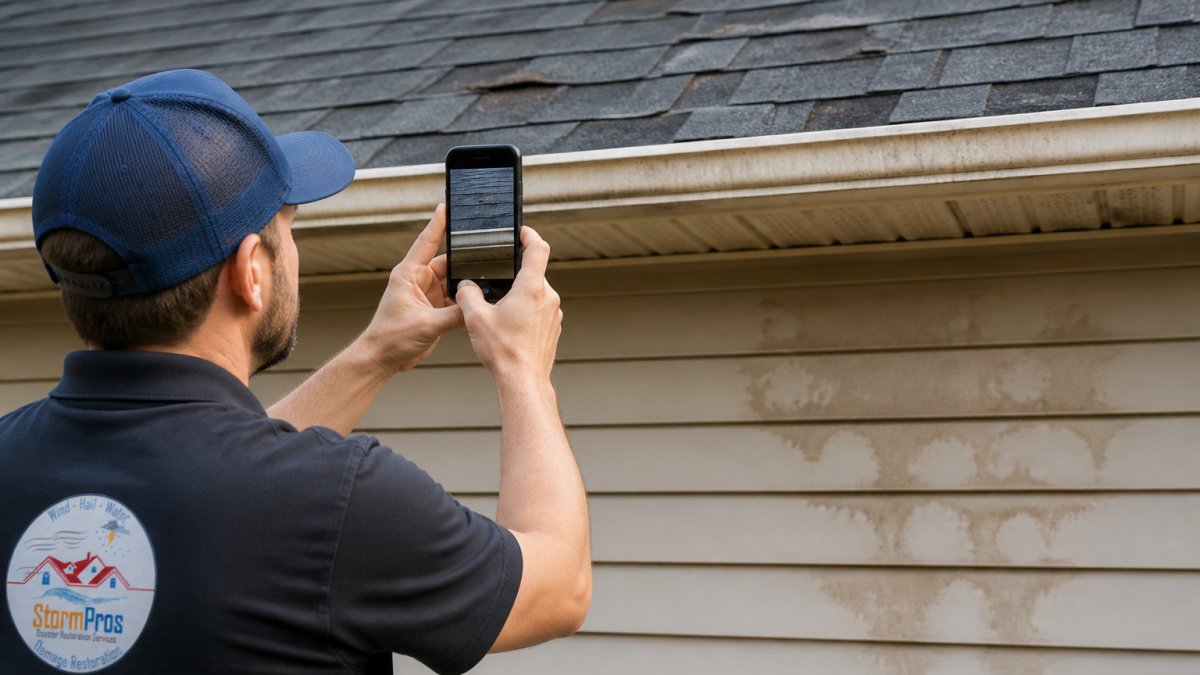
Start photographing immediately after the storm passes. Fresh damage photographs more clearly than faded marks or dried stains.
Use your smartphone camera with good lighting during daytime to capture excellent detail and avoid shadows.
Photograph from multiple angles and distances
Take wide shots showing overall damage, then close-ups of specifics. Adjusters need both perspectives.
Photograph roof damage from the ground looking up and from multiple sides of your home. Never climb a roof after a storm if conditions are unsafe; ground-level photos usually provide sufficient evidence without injury risk.
Photograph each damaged section from at least three angles, front, side, and back, to give your adjuster a complete view.
Capture close-ups of specific damage
Zoom in on individual damage: hail dents, torn shingles with exposed underlayment, wet drywall, stains, and mold growth.
Close-ups prove severity. Wide shots show damage exists; close-ups show how serious it is.
Include a dated piece of paper in at least one photo per area to timestamp your documentation independently.
Establish a photo naming and backup system
Organize photos immediately using a clear naming convention: [Storm Date]_[Room or Area]_[Damage Type]_[Angle] (e.g., 10-08-2026_Master-Bedroom_Water-Damage_Close-Up).
This system ensures clarity for adjusters and contractors. Avoid generic names like “Photo 1” or “IMG_2847,” which create confusion about timing and location.
Upload photos to cloud storage (Google Photos, Amazon Photos, or iCloud) without compression to preserve EXIF metadata, which includes exact timestamps and sometimes location, independent proof of documentation date.
Back up photos on at least two platforms (cloud storage and email or external hard drive). Multiple backup locations with consistent timestamps strengthen credibility if your phone is lost or damaged.
Document the storm event itself
If possible, photograph or video-record the storm as it occurs. If you capture hail, photograph hailstones next to a coin or ruler to show size, hail diameter helps insurers determine if damage is storm-related.
If you didn’t capture the storm, photograph weather-related evidence: fallen branches, debris, or damage patterns. National Weather Service storm reports can corroborate timing and intensity.
Record Video Walkthroughs and Timestamps
Video captures the full scope of damage across your property, giving your adjuster a complete tour.
Record slowly through each room, narrating the date, time, and visible damage: “This is October 8, 2026. The master bedroom has water damage on the ceiling and walls from the storm.”
Point your camera at specific damage and let it linger for a few seconds. Steady footage is better than shaky video.
Speak the date and time aloud in your narration to create a record independent of video file metadata.
Keep videos under five minutes per room for easier review and upload.
Create a Storm Damage Inventory Template
A written inventory lists every damaged item, room by room, recording the value of what was lost, information insurers use to calculate settlement.
Your inventory should include:
- Date the damage was discovered
- Room or area affected
- Specific items damaged
- Estimated age of each item
- Estimated replacement cost
- Photos or video reference numbers
- Condition before the storm (if known)
Be thorough. Include obvious damage and less obvious damage. Wet carpet, damaged drywall, ruined insulation, broken windows, and dented gutters all belong on the list.
Room-by-room personal property checklist
Start with your living room. List furniture, electronics, artwork, and other items. Note which items were damaged and how. Move to the kitchen. List appliances, cabinets, and contents. Continue through every room.
For each item, write when you bought it and what you paid. This helps establish replacement cost. If you don’t remember the exact price, estimate based on similar items today. Your adjuster understands that you may not have receipts for everything.
Here’s a structured approach:
Living Room Example:
| Item | Quantity | Condition Before Storm | Damage Type | Estimated Age | Estimated Replacement Cost | Photo Reference |
|---|---|---|---|---|---|---|
| Sectional sofa | 1 | Good | Water-soaked, mold growth | 4 years | $1,200 | LR_Sofa_01, LR_Sofa_02 |
| 55″ flat-screen TV | 1 | Excellent | Water damage, non-functional | 2 years | $600 | LR_TV_01 |
| Hardwood bookshelf | 1 | Good | Warped, water-stained | 8 years | $400 | LR_Shelf_01 |
| Books (collection) | ~150 | Good | Water-damaged, mold | Various | $800 | LR_Books_01, LR_Books_02 |
Include items in closets, attics, and basements. These spaces often sustain water damage that homeowners overlook. Damaged clothing, stored boxes, holiday decorations, and tools all count. Don’t skip the garage, tools, lawn equipment, and stored items have real value.
Estimating replacement cost without receipts
If you don’t have an original receipt, use these methods to estimate replacement cost:
Online research: Search for the item on retail websites (Amazon, Best Buy, Walmart, Target) or manufacturer sites. If you owned a 5-year-old refrigerator, find the current price for a similar model. Adjusters expect that replacement costs may be higher than what you originally paid due to inflation.
Depreciation: Some items lose value over time. A 10-year-old laptop may cost $300 to replace today, but your original cost was $1,200. Use the item’s age and condition to estimate current value. A general rule: electronics depreciate 15-20% per year; furniture depreciates 10-15% per year; appliances depreciate 8-10% per year.
Professional appraisals: For high-value items, artwork, jewelry, antiques, collectibles, consider a professional appraisal. The cost of an appraisal ($100-$300) is often recoverable in your claim if the item’s replacement cost justifies it. Appraisers provide detailed documentation that strengthens your claim for valuable items.
Contractor estimates: For structural damage (drywall, flooring, roofing, siding), get written estimates from at least two licensed contractors. These estimates become part of your inventory and substantiate repair costs.
Create a master inventory document
Compile all room-by-room lists into a single spreadsheet or document. Use a consistent format. Include a summary page that totals estimated replacement costs by category:
- Personal property: $X
- Structural/building damage: $X
- Temporary repairs and mitigation: $X
- Additional living expenses (if applicable): $X
Save this document in multiple formats: as a PDF (for easy sharing), as a spreadsheet (for easy updating), and as a printed copy (in case digital access is lost). Email yourself a copy with a timestamp. This creates a record that you completed your inventory on a specific date.
When you submit your claim, include this master inventory along with your photos, videos, and receipts. Organize everything in a folder labeled with the storm date and your address. A complete, organized inventory demonstrates that you took the claim seriously and provides your adjuster with the detailed information needed to process your settlement quickly.
Document Temporary Repairs After Storm Damage Insurance
When you document storm damage through temporary repairs to prevent further damage, record those efforts too. Your insurance may cover emergency repairs, but only if you have proof of what you did and why.
Take photos before you start temporary repairs. Show the damage in its original state. Then photograph the temporary fix. If you covered a hole in your roof with a tarp, photograph the tarp in place.
Keep receipts for all materials and labor. If you hired someone to install a temporary tarp or board, get an invoice. If you bought materials yourself, save the store receipt.
Write notes about why the temporary repair was necessary. “Roof has a 3-foot hole from fallen tree branch.
Organize Insurance Claim Receipts and Repair Estimates
Receipts and estimates are proof of cost. Organize them before you file your claim. Create a folder, digital or physical, labeled with the storm date.
Include:
- Receipts for temporary repairs and materials
- Repair estimates from contractors
- Invoices for professional inspections
- Receipts for emergency services
- Hotel or temporary housing receipts if you had to leave your home
Get written estimates from at least two contractors before major repairs. This shows the market rate for the work. Insurance companies use estimates to validate claim amounts.
Label each receipt with the date and what it covers. If you have digital copies, organize them in a folder on your computer or cloud storage. Back them up. If you have physical receipts, photograph them and store the originals in a safe place.
Separate Pre-Existing Damage from Storm-Related Damage
Insurance covers damage caused by the storm, not damage that existed before. Your adjuster will look for pre-existing issues. You need to prove which damage is new.
Before filing your claim, document any damage that existed before the storm. Take photos of old roof leaks, pre-existing water stains, or prior damage to siding. Date these photos clearly.
When you photograph storm damage, make clear notes about what is new. “New hail dents” versus “old dent from 2024.” This distinction matters.
If you’re unsure whether damage is old or new, ask your contractor. Professionals can often tell the difference between fresh impact damage and weathered damage. Their expertise protects your claim.
File and Back Up Your Documentation
Once you’ve gathered all your documentation, organize it and create backups. Don’t rely on one copy.
Create digital copies of everything. Photograph your written inventory. Scan receipts. Upload photos and videos to cloud storage. Use a service like Google Drive, Dropbox, or iCloud.
Create a folder on your computer labeled with the storm date and your address. Store all documentation there.
Email yourself a copy of your inventory and a summary list of photos and videos.
Keep physical copies of important documents. Store them in a waterproof container or safe. If another storm damages your home office, digital backups protect your claim records.
When you file your claim, submit your documentation in an organized package. Include a cover letter that lists what you’re submitting.
Documenting storm damage takes time, but it pays off. When you have clear documentation and professional guidance, you get the settlement you deserve. The National Association of Insurance Commissioners provides guidance on filing property damage claims.
Frequently Asked Questions
How do I document storm damage for an insurance claim?
Start by photographing all damage from multiple angles and distances, including close-ups of specific areas like roof damage, broken windows, and water intrusion. Record video walkthroughs with timestamps and audio narration describing what you see. Create a written inventory listing all damaged belongings and property areas affected. Keep receipts for any emergency repairs or temporary fixes, and note the date the storm occurred and when you discovered the damage. Back up all photos and videos to cloud storage before submitting your claim to your insurance carrier.
What should I include in a storm damage inventory template?
Your inventory should list every room affected, specific items damaged, estimated replacement cost, and current condition. Include categories for structural damage (roof, siding, gutters, windows), water damage (interior leaks, stains, affected belongings), and personal property loss. For each item, note the date discovered, photos taken, and any temporary repairs made. Organize by room to make it easier for your insurance adjuster to follow during the property inspection and claim evaluation.
Can I make emergency repairs before the insurance adjuster visits?
Yes, you can make temporary repairs to prevent further damage, but document everything first. Take photos and video of the damage before you repair it, then photograph the temporary repairs and keep all receipts and invoices. This shows your insurance carrier that you took steps to mitigate further damage, which is often required by homeowners insurance policies. However, avoid permanent repairs until your adjuster has inspected the property, as they need to see the original damage to properly evaluate your claim.
How should I organize receipts and repair estimates for my insurance claim?
Keep all receipts, invoices, and repair estimates in one organized file, either physical or digital. Label each document with the date, vendor name, and what it covers. If you obtain multiple estimates from contractors, include all of them, your insurance carrier will use these to determine claim payout. Store copies in cloud storage as backup, and bring originals when meeting with your insurance adjuster or filing your claim. This documentation supports your claim and helps ensure you receive fair compensation for repairs.


