 5.0 Out Of 250+ Reviews


 Financing Available


 (214) 227-2763

Table of Contents
- Signs of Wind Damage on a Roof
- How Wind-Damaged Shingles Expose Your Roof Deck
- Roof Leak After Wind Damage: The Water Intrusion Timeline
- How Soon to Repair Wind-Damaged Shingles
- How to Repair a Roof with Missing Shingles
- Interior Warning Signs and Moisture Checks
- Repair Costs and Insurance Documentation
- Frequently Asked Questions
Last Updated: October 17, 2026
Signs of Wind Damage on a Roof
Wind damage to shingles is the most common cause of roof leaks and structural problems. Identifying it early matters because the damage worsens over time.
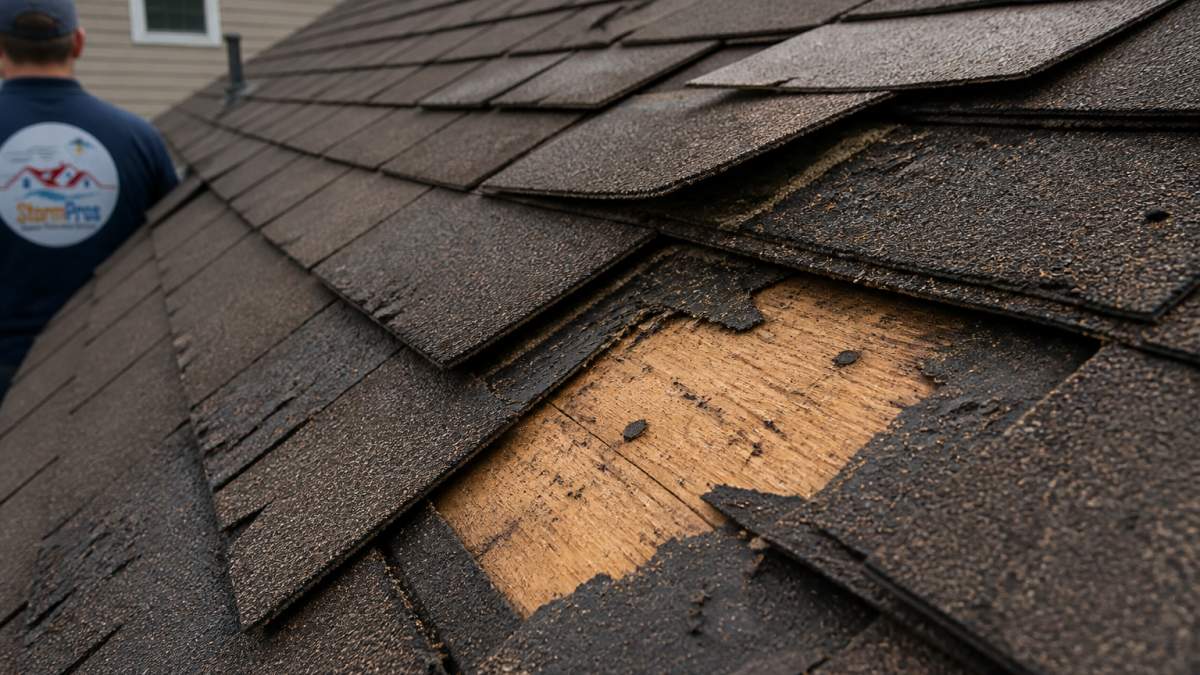
The first step is learning what wind-damaged shingles actually look like. Wind doesn’t just blow shingles off. It lifts them, cracks them, tears them, and breaks the seal strips that hold them in place. Each of these damage types exposes your roof deck to rain and moisture.
Missing, Lifted, and Creased Shingles
Missing shingles are the most obvious sign of wind damage. You’ll see bare patches where the shingle used to be. But missing shingles aren’t always the biggest threat. Lifted and creased shingles are often worse because homeowners miss them.
When wind lifts a shingle, it doesn’t always blow it away. Instead, the shingle peels up at the edges but stays partially attached. From ground level, you might not notice it. But underneath, the seal strip is broken.
Creased shingles have a visible fold or buckle. This crease breaks the protective layer and cracks the asphalt. Once cracked, the shingle loses its ability to shed water. Rain collects in the crease and seeps downward.
Look for these signs during a visual inspection:
- Shingles with upturned or peeling edges
- Visible creases or folds across the shingle surface
- Tabs that are bent or partially detached
- Shingles that look wavy or uneven compared to others
Granule Loss and Seal Strip Damage
Granules are the small, colored stones embedded in shingle surfaces. They protect the asphalt underneath from sun damage and help water roll off. When wind tears shingles, granules scatter. You’ll see them in your gutters or on the ground after a storm.
Losing granules matters because it speeds up deterioration. The exposed asphalt hardens in the sun and becomes brittle. The shingle fails faster than it should.
Seal strips are the adhesive strips that hold shingles down. Wind can break these seals even when the shingle itself looks intact. A broken seal strip means the shingle can lift in the next wind gust, no matter how mild.
Signs of seal strip damage include:
- Shingles that move or flex when you push on them
- Adhesive residue missing or cracked
- Shingles that appear loose despite no visible tears
- Granules concentrated in gutters or downspouts
How Wind-Damaged Shingles Expose Your Roof Deck
Your roof deck is the wooden base underneath the shingles. It’s typically plywood or oriented strand board (OSB). The shingles are meant to protect it completely.
Water doesn’t have to flow in a straight line. It moves sideways, backward, and under layers. Once water reaches the roof deck, it soaks in. Wet wood weakens. It warps, swells, and eventually rots.
This is why wind-damaged shingles aren’t just a cosmetic problem. Exposed deck means exposed structure. The damage spreads downward into the attic, into the insulation, and into the walls.
The roof deck also supports the weight of the shingles themselves, snow, and ice. When the deck weakens, it can’t support that load. Sagging roofs develop in weak spots.
If you find any, professional replacement is urgent.
Roof Leak After Wind Damage: The Water Intrusion Timeline
A roof leak doesn’t start the moment a shingle tears. Water intrusion happens in stages. Understanding this timeline helps explain why quick action matters.
Week One: Initial Water Entry
The first rain after wind damage allows water to enter. If a shingle is missing, water flows directly onto the roof deck. If a shingle is lifted or creased, water seeps underneath. At this stage, the damage is still localized. The wet area might be just a few square feet.
Most homeowners don’t notice anything yet. The attic stays dry because the water hasn’t penetrated deep enough. The interior ceiling shows no stains. But underneath the shingles, the wood is absorbing moisture.
Weeks Two to Four: Hidden Moisture Accumulation
Water continues to seep in with every rain. The wet area expands. Moisture moves sideways along the roof deck and into adjacent areas. The wood begins to swell and soften.
At this stage, the damage is still hidden. You won’t see a leak inside your home. But if you inspect the attic, you might notice damp spots on the underside of the roof deck or on the rafters. The smell might be musty.
Mold begins to grow in the damp wood. It’s invisible at first, but it’s spreading. The wood’s structural strength is already declining, even though the damage looks minor from outside.
Months Two to Six: Structural Damage and Mold Growth
By month two, the damage is severe. The wet wood has weakened significantly. The mold colony is established and visible. Spores are circulating in the attic air.
Water now drips through to the attic insulation. The insulation absorbs moisture and loses its R-value. Your heating and cooling efficiency drops. Energy bills rise.
Interior ceiling stains appear. Drywall absorbs water and begins to sag. Paint bubbles and peels. The smell inside becomes noticeably musty.
Structural rot sets in. The roof deck becomes soft and spongy in the damaged area. If left untreated, the rot spreads to the rafters and trusses. At this point, replacement becomes necessary instead of repair.
How Soon to Repair Wind-Damaged Shingles
The answer is simple: as soon as you identify the damage. Waiting is always more expensive.
If you have missing or lifted shingles, rain is entering your roof right now. Every day of delay allows more water to penetrate. Every rain event worsens the damage.
Insurance companies understand this. Most policies cover wind damage, but they expect you to act quickly. Delays can complicate claims.
For homeowners, the practical timeline is this: inspect your roof within one week after a storm. If you find damage, call a contractor within two weeks.
In urgent cases where shingles are actively leaking, temporary protection should start immediately. Tarps, roof patches, or temporary sealants can slow water entry until permanent repairs are scheduled.
How to Repair a Roof with Missing Shingles
Repairing wind-damaged shingles depends on the extent of the damage and the age of your roof.
Temporary Protection Steps
If you’re waiting for a contractor or if weather prevents immediate repairs, temporary measures can help:
-
Inspect the damage carefully. Climb into your attic with a flashlight. Look for wet spots, dark stains, or soft wood. This tells you how much water has already entered.
-
Tarping the roof. A heavy-duty tarp can cover the damaged area and redirect water. Use rope or bungee cords to secure it tightly. This is not a permanent fix, but it buys time.
-
Roof cement or patches. For small tears or lifted shingles, roofing cement can seal the gap temporarily. Apply it under the lifted shingle and press it down. This works for a few weeks or months, not longer.
-
Temporary sealant strips. Adhesive-backed waterproof strips can seal gaps where water enters. They’re visible and not attractive, but they work short-term.
These steps reduce water entry but don’t solve the problem. They’re meant to bridge the gap until permanent repairs happen.
When Professional Replacement Is Required
Most wind damage requires professional repair. Here’s when you need a contractor:
- Missing shingles: Always replace professionally. The surrounding shingles may also be damaged.
- Multiple lifted or creased shingles: If more than a few shingles are damaged, the roof may have widespread issues. A contractor can assess the full extent.
- Exposed roof deck: If the deck is visible or wet, professional repair is urgent.
- Roof age: If your roof is near the end of its lifespan (15-20 years), replacement may be more cost-effective than repair.
Professional repair includes:
- Removing damaged shingles
- Inspecting the deck for rot or damage
- Replacing the deck if necessary
- Installing new shingles with proper nailing and sealing
- Checking adjacent areas for hidden damage
StormPros handles all of this as part of the restoration process. We also work directly with insurance adjusters to document damage and ensure your claim covers the full scope of repairs.
Interior Warning Signs and Moisture Checks
Don’t wait for visible leaks. Interior warning signs tell you that water has entered your roof structure.
Look for these signals:
- Ceiling stains: Brown or yellow discoloration on the ceiling indicates water seeping through. Even small stains mean water has traveled through the attic.
- Peeling paint: Water under the paint causes bubbling and peeling. This often appears before a visible leak.
- Sagging drywall: Wet drywall becomes heavy and sags. This is a sign of significant water accumulation.
- Musty smells: Mold and mildew produce a distinctive odor. If your attic or upper floors smell musty, moisture is present.
- Visible mold: Black or green spots on wood or insulation indicate mold growth. This requires immediate action.
To check for hidden moisture:
-
Inspect your attic regularly. Go up there after storms. Look for wet spots, dark stains, or moisture on the underside of the roof.
-
Check the insulation. Wet insulation appears darker than dry insulation. Press on it gently. Wet insulation feels damp and heavy.
-
Look at the rafters and beams. Soft or discolored wood indicates water damage. Poke it gently with a screwdriver. If it’s soft, rot has set in.
-
Use a moisture meter. These tools measure moisture content in wood. Readings above 15% indicate a problem.
If you find any of these signs, call a professional immediately. Hidden moisture damage spreads quickly and becomes expensive if ignored.
Repair Costs and Insurance Documentation
Wind damage repair costs vary based on the extent of damage and your roof’s age. Costs depend on how many shingles need replacement, whether the deck is damaged, and whether mold remediation is required.
Insurance typically covers wind damage. Most homeowners policies include wind damage to roofs. Your deductible applies, but the insurance company pays the rest.
To maximize your claim:
-
Document the damage immediately. Take photos and videos of all visible damage. Show missing shingles, lifted shingles, and granule loss. Photograph the interior signs too: ceiling stains, wet insulation, soft wood.
-
Get a professional inspection. A contractor’s report carries weight with adjusters. It documents damage that isn’t visible to untrained eyes. StormPros provides detailed damage reports that support insurance claims.
-
Keep records. Save all receipts, photos, contractor estimates, and insurance correspondence. This documentation protects you if the claim is disputed.
-
Report the claim quickly. Most policies require notification within a specific timeframe. Delayed reporting can complicate claims.
-
Don’t accept the first estimate. Insurance adjusters sometimes underestimate damage. A second opinion from a contractor can reveal issues the adjuster missed. If estimates differ significantly, the insurance company may send another adjuster.
Roof damage from wind is urgent. What starts as a few missing shingles becomes structural rot, mold, and interior damage if left unrepaired. The timeline is measured in weeks and months, not years.
StormPros specializes in wind damage restoration and insurance claims. We inspect roofs thoroughly, document all damage, and work with your insurance company to ensure fair coverage.
Frequently Asked Questions
Can wind-damaged shingles cause a roof leak?
Yes. Damaged shingles lose their protective seal strips and allow wind-driven rain to penetrate beneath adjacent shingles. Water then flows onto the roof deck and underlayment, causing leaks that may not appear inside your home for days or weeks. Once moisture reaches the attic and interior framing, structural rot and mold growth accelerate rapidly.
How soon should missing shingles be replaced after a windstorm?
Missing shingles should be addressed within 24-48 hours if rain is forecast. Even one missing shingle exposes the roof deck and allows water intrusion during the next storm. If you cannot arrange immediate professional repair, use temporary tarping to prevent water entry. Permanent replacement should occur within one week to avoid hidden damage progression.
What are the signs of wind damage on a roof?
Look for missing shingles, lifted or buckled shingles, creased tabs, and visible granule loss (dark streaks or bare patches). Broken seal strips appear as gaps between shingle layers. From the ground, scan the roof line for shingles that appear raised or misaligned. Inside, check attic rafters and ceiling corners for water stains, soft spots, or mold growth.
What happens if I delay roof repair after wind damage?
Delaying repair allows water to penetrate the roof deck and underlayment within days. Moisture then spreads to attic insulation, wooden framing, and interior walls. Within weeks, mold colonies develop and wood rot begins. By month three, structural integrity weakens and repair costs can triple. Insurance claims may also be denied if damage is documented as pre-existing rather than storm-caused.


