 5.0 Out Of 250+ Reviews


 Financing Available


 (214) 227-2763

Table of Contents
- Why Professional Roof Inspection Matters
- What Does a Professional Roof Inspection Include
- Professional Roof Inspection Cost and Value
- How Often to Get a Roof Inspection
- Avoiding Free Roof Inspection Scams
- How to Vet a Professional Roof Inspector
- What Happens After Your Inspection
- Frequently Asked Questions
Last Updated: October 17, 2026
Why Professional Roof Inspection Matters
A professional roof inspection is one of the smartest investments a homeowner can make. Your roof protects your family, belongings, and home’s structure, yet most homeowners ignore it until something goes visibly wrong.
Small problems become expensive ones fast.
Early detection can save homeowners thousands in restoration costs. A professional roof inspection catches these hidden problems before they become structural damage. It’s the difference between a $500 repair and a $15,000 replacement.
Regular inspections also extend your roof’s lifespan. Most materials last 20-30 years, but only with maintenance (Resources).
The real cost of skipping inspections isn’t the inspection fee, it’s the emergency repairs, water damage, and premature replacement that follow when problems go undetected.
What Does a Professional Roof Inspection Include
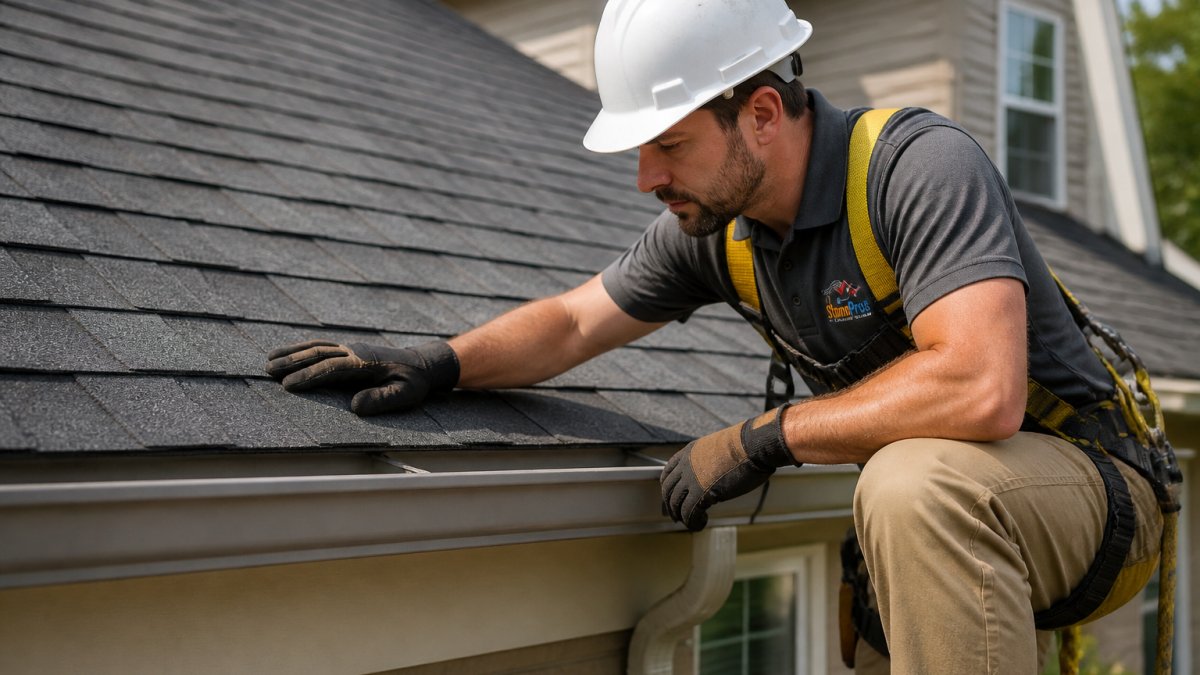
A thorough professional roof inspection covers far more than a quick glance from the ground. Knowing what a complete one looks like lets you compare proposals and spot a cut-rate job before you pay for it.
What a Complete Inspection Covers
A full inspection examines the roof as a system, not just the shingles. Use this checklist to compare what different inspectors promise:
- Roof surface: Missing, cracked, curling, or granule-depleted shingles; exposed fasteners; lifted or creased shingles that signal wind damage; rust or seam separation on metal panels; cracked or displaced tiles.
- Flashing and penetrations: Chimney flashing, step flashing at walls, vent boots, skylight seals, and valley flashing. These are the most common leak points and the areas most often skipped in a quick look.
- Gutters and drainage: Debris buildup, sagging, loose hangers, downspout discharge, and evidence of water backing up under the roof edge.
- Roof edges and trim: Fascia, soffit, drip edge, and rake boards for rot, pest damage, and separation.
- Attic and underside: Staining, active moisture, mold, daylight through the deck, sagging between rafters, and insulation or ventilation problems that shorten roof life.
- Structural indicators: Sagging ridgelines, uneven decking, and movement at valleys or hips that point to framing issues rather than surface wear.
- Storm-specific damage: Hail impact marks, wind-lifted shingles, and debris strikes, documented with photos and measurements that support an insurance claim.
How to Prepare for the Inspection
Preparation makes the visit faster and the report more useful:
- Clear access to the attic hatch and any interior ceiling stains so the inspector can trace leaks to their source.
- Note the roof’s age, material, and any past repairs, plus dates of recent storms.
- Collect any warranty paperwork and prior inspection reports.
- Ask whether the inspector will walk the roof, use a drone, or inspect from the ground and ladder, and confirm that the method matches your roof’s pitch and material.
- Confirm the inspector carries liability insurance and workers’ compensation coverage before anyone goes on the roof.
Documentation and Reporting
A professional inspection produces a written report, not a verbal summary. A report worth paying for includes photos of every problem area, damage location and size, a distinction between urgent and monitor-only items, and repair estimates tied to line items. Confirm the report will arrive in writing within a set number of days with photos included, since that documentation supports insurance claims, warranty requests, and buyer negotiations.
Ask for a sample report before you book. An inspector who cannot show you a real report with photos and prioritized findings is offering an opinion, not an inspection.
Professional Roof Inspection Cost and Value
Is a professional roof inspection worth the cost? The answer depends on what the inspection is priced at, what it documents, and what you do with the findings.
What Drives the Price
Pricing varies with scope rather than a single flat rate. The main factors:
- Roof size and pitch: Larger and steeper roofs take longer and require more safety setup.
- Access and height: Multi-story homes, tight lots, and steep driveways add time and equipment.
- Inspection method: A walk-over inspection, a drone survey, and an attic-plus-interior inspection are different scopes with different prices.
- Add-ons: Moisture readings, infrared scans, and detailed insurance documentation typically cost extra.
- Provider type: A dedicated inspection firm, a roofing contractor, and a home inspector bundle different services, so compare scope, not just the headline number.
A basic roof-only inspection sits at the low end, while a full roof, attic, and documentation package runs higher. Ask each provider to itemize inclusions so you compare the same scope.
The Value Case in Concrete Terms
A full roof replacement is a five-figure project for most homes, and water damage from a small leak can run into the thousands once drywall, insulation, and framing are involved. An inspection that catches a failed vent boot or lifted shingle before water reaches the attic turns a major repair into a minor one.
The value is not only in catching damage. A written inspection report also:
- Documents pre-storm condition, which strengthens an insurance claim after a later event.
- Supports a warranty claim if roofing materials fail prematurely.
- Gives you a defensible timeline for planning a replacement instead of reacting to a failure.
- Surfaces issues a buyer’s inspector will find anyway, so you can address them on your terms.
How Insurance and Warranties Treat Inspections
Homeowners insurance covers sudden damage from a covered peril like hail or wind, not wear and tear or lack of maintenance. An inspection report showing a maintained roof before a storm is useful evidence, while one documenting long-term neglect can complicate a claim. Most policies don’t require routine inspections but do reward documentation, so ask your insurer what records they want after a storm.
Manufacturer warranties typically require reasonable maintenance and may require proof of it. Keep inspection reports and repair receipts, because a warranty claim for premature material failure is much stronger with a maintenance record attached.
Reading the Repair Estimates
A good report separates findings into categories: safety issues, active leaks, items to repair before they worsen, and items to monitor. Treat the estimates as planning tools, not final bids. Get a second opinion on any recommendation for full replacement, and ask the inspector to explain the mechanism behind each finding, such as how a specific flashing detail is letting water in. If the report recommends replacement, ask what repair would buy you and for how long.
An inspection is worth it when the report gives you photos, prioritized findings, and estimates you can act on. Price the scope, not the sticker, and keep the report for insurance, warranty, and resale use.
How Often to Get a Roof Inspection
How often you need professional roof inspections depends on your roof’s age, materials, local weather, and storm history.
Inspection Frequency by Roof Age and Material
Newer roofs (under 10 years old) need inspection every 2-3 years. Asphalt shingle roofs in good condition should be inspected annually once they pass 15 years old.
Climate matters: homes in areas with frequent hail, high winds, or heavy rain should be inspected annually, while milder climates can extend to every 2-3 years.
After any significant storm, hail, high winds, heavy rain, or falling debris, get an inspection immediately. Storm damage isn’t always visible from the ground. Professional assessment catches impact damage that could lead to leaks months later.
Post-Storm and Pre-Sale Inspections
Even if your roof looks fine after a storm, hidden damage may exist. Hail dents that don’t break shingles still compromise their integrity, and wind can lift shingles without removing them, allowing water penetration that causes interior damage weeks or months later.
Pre-sale inspections matter too. A buyer’s inspector will examine the roof, so knowing its condition beforehand lets you address issues before they become deal-breakers and supports your asking price.
Avoiding Free Roof Inspection Scams
After storms, “free roof inspection” offers appear everywhere. Many are legitimate. Some are predatory.
Here’s how the scam works: someone offers a free inspection, finds extensive damage (real or exaggerated), pressures you to sign a contract immediately, and disappears after the insurance payment arrives. You’re left with poor work, incomplete repairs, or worse.
Red flags to watch for:
- Aggressive pressure to sign contracts the same day
- Inspectors who won’t provide written estimates or reports
- Offers that seem too good to be true (free inspection plus guaranteed insurance approval)
- Contractors who appear only after storms and vanish once work begins
- Promises to “fight your insurance adjuster” without understanding your policy
- High-pressure sales tactics focused on fear rather than facts
Legitimate inspectors provide written reports, answer questions patiently, never rush decisions, and stand behind their work with warranties and insurance.
If an inspector pressures you to sign a contract immediately after finding damage, walk away. Legitimate contractors understand you need time to review estimates, get second opinions, and make informed decisions.
How to Vet a Professional Roof Inspector
Not all roof inspectors are equally qualified. Here’s how to evaluate someone before hiring them.
Check credentials and licensing.
Request references. A qualified inspector should provide contact information for past clients willing to discuss their experience.
Verify insurance. Any inspector working on roofs should carry liability insurance and workers’ compensation coverage. Ask for proof before work begins.
Read online reviews for patterns. One negative review might be an outlier, but multiple complaints about high-pressure sales or incomplete work are warning signs.
Get multiple estimates and compare what each inspector includes, not just price.
Ask about the inspection process.
What Happens After Your Inspection
A professional roof inspection produces a report. Understanding what to do with that report matters.
Review the findings carefully.
Prioritize by impact. Roof leaks and water damage require immediate attention.
For insurance claims, your inspection report is critical documentation.
Before selling, address major issues from the inspection.
Schedule follow-up inspections as recommended. If the report identifies areas to monitor, plan a follow-up inspection in 6-12 months.
Your inspection report is a roadmap for maintenance and decision-making. File it safely, you’ll need it for insurance claims, warranty work, and future home sales.
| Inspection Timing | Best For | Why It Matters |
|---|---|---|
| Annual | Roofs over 15 years old | Catches age-related wear before failure |
| Every 2-3 years | Roofs under 15 years in mild climates | Identifies developing issues early |
| After storms | All roofs after hail, wind, or heavy rain | Documents damage for insurance claims |
| Before sale | Homes on market | Prevents deal collapse, supports pricing |
| Pre-purchase | Buying a home | Reveals hidden damage before commitment |
Is a professional roof inspection worth it? Absolutely.
StormPros helps homeowners navigate roof issues, insurance claims, and restoration decisions.
Frequently Asked Questions
What does a professional roof inspection include?
A professional roof inspection covers the roof surface (shingles, tiles, or metal), flashing around vents and chimneys, gutters and downspouts, attic interior for signs of moisture or leaks, and the overall structural condition. Inspectors document findings with photos and a detailed report. The scope depends on roof age, material, and any visible damage. This thoroughness is why professional inspections catch hidden problems homeowners miss during visual checks.
How often should you get a professional roof inspection?
Most roofs benefit from annual inspections, especially if they’re over 10 years old or in areas with severe weather. Newer roofs (under 5 years) may only need inspection every 2-3 years unless storm damage occurs. After hail, high winds, or heavy snow, schedule an inspection within days to document damage for insurance claims. Before selling your home, a pre-sale inspection protects your liability and supports your asking price.
Are free roof inspections legitimate?
Free inspections from licensed, insured contractors with established track records are legitimate. Avoid inspectors who appear unsolicited after storms, pressure you to file insurance claims immediately, or guarantee large payouts. Legitimate professionals provide detailed written reports and allow time for you to review findings. Red flags include vague estimates, requests for upfront payment before work, and contractors who disappear after signing paperwork.
How much does a professional roof inspection cost?
Inspection costs vary based on roof size, complexity, accessibility, and local market conditions. Some contractors offer free inspections as part of their service model, while others charge a fee that may be credited toward repair work. For accurate pricing, contact local contractors directly for quotes. The investment in a professional inspection typically pays for itself by preventing expensive water damage, extending roof lifespan, and supporting insurance claims with documented evidence.
What should you do after a roof inspection?
Review the inspection report carefully and ask your inspector to explain findings and prioritize repairs. If damage is storm-related, contact your insurance company with the report to file a claim. Get repair estimates from licensed contractors and compare recommendations. For minor issues, plan repairs before they worsen. If you’re selling, share the inspection report with your real estate agent and potential buyers. Document everything for warranty and resale purposes.


