 5.0 Out Of 250+ Reviews

 Financing Available

 (214) 227-2763
Table of Contents
- What Exterior Home Restoration Contractors Actually Do
- How to Choose a Roofing Contractor and Other Specialists
- Questions to Ask a Restoration Contractor Before Hiring
- Understanding Storm Damage Repair Estimates
- Working With an Insurance Claim Restoration Contractor
- Vetting Credentials, Licensing, and Warranties
- Why Exterior Home Restoration Matters for Property Value
- Frequently Asked Questions
Last Updated: October 9, 2026
What Exterior Home Restoration Contractors Actually Do
Exterior home restoration contractors handle the structural and protective elements exposed to weather: roofing, siding, gutters, painting, and storm or age-related damage restoration.
The scope of exterior home restoration contractors spans assessment, planning, and execution across multiple trades. A thorough contractor evaluates hidden issues like water seepage, wood rot, and foundation stress, incomplete restoration leads to costly secondary damage later.
Exterior systems are interconnected: a roof leak travels into siding, insulation, and framing, while a gutter failure affects foundation drainage. Proper exterior home restoration contractors address the entire envelope, not isolated symptoms.
What Counts as Exterior Restoration (and What Doesn’t)
Most directory lists blur restoration, remodeling, and general repair together, a problem when comparing bids, since trades, permits, and insurance treatment differ by project type. Use this scope test:
In scope, exterior restoration:
- Roofing. Shingle, tile, metal, and flat-roof repair or replacement after storm, hail, wind, or age-related failure. Includes decking, underlayment, flashing, and ventilation.
- Siding and cladding. Vinyl, fiber cement, wood, stucco, and engineered wood repair or replacement, including house wrap and moisture barriers.
- Windows and exterior doors. Frame repair, glazing, flashing, and full unit replacement where the failure is weather- or age-driven.
Out of scope, usually a different trade:
- Interior remodeling (kitchens, baths, basements)
- Additions and new construction
- Landscaping, hardscaping, and fencing
Why the Scope Line Matters in 2026
Three shifts heading into 2026 change how you should evaluate a contractor:
- Insurance carriers are tightening exterior claim documentation. Adjusters increasingly require itemized line-item estimates in industry-standard formats, photo documentation of hidden damage, and code-upgrade justification. Contractors who can’t produce that documentation slow your claim or shrink your payout.
- Material lead times have stabilized but pricing hasn’t fully normalized. Asphalt shingles, fiber cement siding, and impact-rated windows still vary widely by region and manufacturer. A contractor quoting from a stale price sheet will come back with change orders mid-project.
- Building code updates are catching up to storm events. Several states have adopted newer wind, hail, and flood provisions, so a like-for-like replacement may no longer be code-compliant. Contractors who track local code amendments can flag this before the adjuster does.
The Multi-Trade Coordination Problem
Exterior restoration rarely fits one trade. A single hail event can damage shingles, gutters, window seals, and siding, four trades, four scopes, one claim.
A general exterior restoration contractor coordinates trades under one contract, one schedule, and one point of accountability. When hidden damage surfaces mid-project, one contractor can absorb the scope change and re-sequence the crew; four vendors each pause and re-bid.
Ask any contractor to draw the scope line out loud. If they can’t tell you clearly which parts of your project are restoration versus remodeling, and why, they’re likely to blur the line in the estimate too. That blur is where budget surprises come from.
How to Choose a Roofing Contractor and Other Specialists
Choosing a roofing contractor or other exterior specialist means matching expertise to your project type. The best exterior home restoration contractors offer multiple services under one roof rather than forcing you to coordinate separate vendors.
Consider these factors when evaluating roofing contractors and other specialists:
- Experience with your damage type. Storm damage restoration differs from age-related deterioration, and insurance claim work requires different expertise than standard maintenance.
- Scope of services. Can they handle roofing, siding, gutters, and painting, or do they specialize narrowly? Coordination across specialists adds time and complexity.
- Local market knowledge. Codes, permits, and material availability vary by region; local contractors navigate these faster.
The mistake most homeowners make is hiring the cheapest option without verifying credentials. Price shopping alone leads to contractors who cut corners, miss hidden damage, or disappear mid-project.
Interview at least three contractors. Ask them to walk you through their assessment process, not just quote a price. How thorough are they? Do they ask about water damage history, previous repairs, or foundation concerns? Contractors who ask detailed questions catch problems others miss.
Questions to Ask a Restoration Contractor Before Hiring
Before signing with any exterior home restoration contractor, ask these questions to evaluate reliability and expertise:
On Project Scope and Timeline:
- “How long will this project take from start to finish?” Realistic timelines show experience.
- “What happens if weather delays the work?” Understand their contingency plan.
- “Will you pull permits, or is that my responsibility?” Permits protect you legally.
On Insurance and Claims:
- “Have you worked with insurance adjusters on similar claims?”
- “Can you help document damage for the insurance company?” Some contractors excel at this; others expect you to handle it alone.
- “What’s your process if the adjuster’s estimate differs from yours?” This directly affects your out-of-pocket costs.
On Credentials and Guarantees:
- “Are you fully licensed and insured?” Ask for proof and verify license status through your state’s contractor board.
- “What warranty do you provide on materials and labor?” Get it in writing. Reputable exterior home restoration contractors back their work for 5-10 years minimum.
- “What happens if something goes wrong after the project is complete?” Understand their warranty claim process.
On Hidden Damage:
- “What’s your inspection process for finding hidden damage?” Ask how they check for water seepage, rot, and structural issues.
- “If you find damage during the project that wasn’t in the original estimate, how do we handle that?” This prevents surprises.
If a contractor avoids these questions or gives vague answers, walk away. Evasiveness signals they don’t stand behind their work or lack the expertise to handle complications. Reliable contractors welcome detailed questions, it builds trust and sets clear expectations.
Understanding Storm Damage Repair Estimates
A storm damage repair estimate breaks down the work required and its cost. Estimates vary widely based on the contractor’s thoroughness and how they value labor versus materials.
When you receive an estimate from an exterior home restoration contractor, it should include:
- Itemized work: Specific repairs listed line-by-line (e.g., “Replace 12 squares of roofing,” “Install 80 linear feet of gutter”).
- Material specifications: What type and grade of materials will be used (asphalt shingles, metal gutters, paint brand, etc.).
- Labor breakdown: How many days the work will take and the hourly or daily rate.
Estimates differ because contractors assess severity differently. One may quote cosmetic repair for water staining; another finds wood rot requiring structural replacement. Thorough contractors find more damage, raising the estimate but preventing future problems.
An unusually low estimate often signals the contractor missed damage or plans to cut corners. A significantly higher estimate might reflect higher-quality materials or more thorough work. Compare estimates from at least three exterior home restoration contractors, but don’t choose based on price alone. The middle estimate from a reputable contractor usually reflects realistic scope and fair pricing.
Working With an Insurance Claim Restoration Contractor
If your damage is covered by homeowners insurance, an insurance claim restoration contractor changes the process significantly. These specialists understand how adjusters evaluate damage and advocate for your interests.
Here’s how the process typically works:
- Initial assessment. The contractor inspects damage and documents it with photos and detailed notes. This documentation supports your claim.
- Estimate preparation. They create a detailed estimate using industry-standard pricing. Adjusters compare this to their own estimate to determine coverage.
- Adjuster coordination. The contractor meets with the insurance adjuster, answers technical questions, and explains why certain repairs are necessary. This is where expertise matters.
- Scope negotiation. If the adjuster’s estimate differs from the contractor’s, the contractor can explain the discrepancy and request adjustment.
- Final approval. Once the insurance company approves the claim, work begins.
The value of an insurance claim restoration contractor is in steps 3 and 4. When a licensed, insured contractor explains that hidden water damage requires additional work, adjusters listen.
StormPros handles this process as part of our service.
Vetting Credentials, Licensing, and Warranties
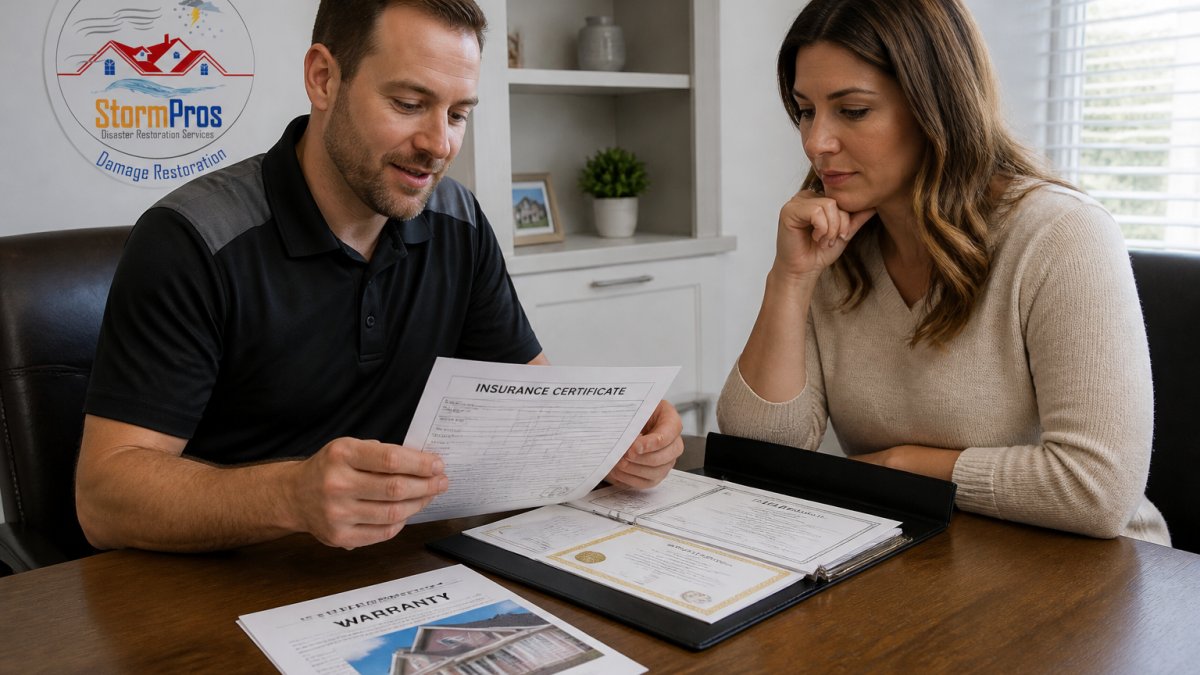
Before hiring any exterior home restoration contractor, verify credentials thoroughly. Licensing and insurance protect you legally and financially if something goes wrong.
What to Verify:
- State contractor license. Most states require general contractors to be licensed. Search your state’s contractor board website, verify the license is active, and check for complaints or disciplinary history.
- Insurance coverage. Ask for proof of general liability and workers compensation insurance, then call the insurer to confirm the policy is active. Liability insurance protects you if the contractor damages your property or gets injured on your home.
- Bonding. Some states require contractors to post a bond, which protects homeowners if the contractor fails to complete work or violates contract terms. Check your state’s requirements.
Warranty Standards:
Reputable exterior home restoration contractors offer two warranty categories:
- Material warranty. Typically 10-25 years, provided by the manufacturer of roofing, siding, or gutter materials.
- Labor warranty. Typically 2-10 years, guaranteeing workmanship. Longer labor warranties (5-10 years) indicate confidence in quality.
Get warranty terms in writing as part of your contract, and understand what’s covered (defects only, or weather damage too?) and how to file a claim.
Watch out for contractors who avoid discussing warranties or offer only the manufacturer’s warranty without their own labor guarantee. This signals they don’t stand behind their work. If a problem appears six months after completion, you want the contractor responsible, not just the material manufacturer.
Why Exterior Home Restoration Matters for Property Value
Exterior condition directly impacts appraisal value and resale appeal. Buyers notice damaged roofing and deteriorating siding immediately.
A well-maintained exterior increases perceived value by protecting the structural integrity buyers care about.
Real estate agents report that homes with recently restored exteriors sell faster and at higher prices than comparable homes with aging exteriors.
For homeowners planning to sell, exterior restoration is one of the highest-ROI improvements.
The Cost Side: What Drives an Exterior Restoration Estimate
Value only makes sense next to cost. Exterior restoration pricing is the sum of drivers that vary by project, region, and season. Understanding them lets you compare bids apples-to-apples.
Primary cost drivers:
- Square and linear footage. Roofing is priced per square (100 square feet), siding per square of wall area, gutters and trim per linear foot. Confirm the unit of measure on the estimate.
- Material tier. Asphalt shingles sit at the low end; architectural shingles, standing-seam metal, and synthetic slate sit higher. Fiber cement typically costs more than vinyl but less than cedar or engineered wood. Impact-rated windows and doors carry a premium.
- Access and tear-off. Steep pitches, multi-story elevations, tight lots, and full tear-off add labor hours. Layover versus tear-off is a major roofing line item.
What a Written Estimate Should Include
A written estimate is your best protection against mid-project surprises. Whether insurance-funded or out-of-pocket, it should include:
- Itemized line items with quantities and units of measure
- Material specifications (brand, grade, color, warranty tier)
- Labor breakdown by trade and phase
How to Compare Bids Without Getting Burned
Comparing three bids only works if they describe the same scope. The lowest bid is often lowest because it excludes tear-off, omits the hidden-damage allowance, or specifies a lower material tier, not because the contractor is more efficient.
A practical method: put all bids on one spreadsheet, list every line item from the most detailed bid, and mark which items each competing bid includes, excludes, or prices differently.
Don’t anchor on the bottom-line number. Anchor on the scope. Two bids that describe the same scope can be compared on price; two bids that describe different scopes cannot. When in doubt, ask each contractor to re-quote against the same written scope of work, then compare.
The 2026 Resale Angle
Appraisers and buyers in 2026 are more attuned to exterior condition than a decade ago, largely because insurers and lenders are.
Documented restoration, permits pulled, warranties registered, photos archived, travels with the home. A future buyer or inspector can verify the work, a stronger signal than a verbal assurance that “the roof was replaced a few years ago.” Keep the paperwork; it’s part of the asset.
Frequently Asked Questions
How do I know if an exterior home restoration contractor is legitimate and won’t disappear after the job?
Verify licensing through your state’s contractor board, confirm current insurance coverage directly with their carrier, and ask for references from completed projects in your area. Request a written warranty in your contract, reputable contractors stand behind their work with documented guarantees. Check how long they’ve been in business; established contractors with years of experience are less likely to vanish. Ask for a physical business address, not just a phone number, and confirm they’re registered with the Better Business Bureau.
Can a restoration contractor really help me get a better insurance estimate than my adjuster provided?
Yes, an experienced insurance claim restoration contractor can identify damage your adjuster may have missed, including hidden issues like water seepage or structural damage. They document findings with photos and detailed reports that support a revised claim. They don’t negotiate on your behalf, but they provide evidence that justifies a higher estimate. This is especially valuable after storms when initial assessments happen quickly. Many homeowners find supplemental estimates uncover additional damage.
Should I hire one contractor for all exterior repairs or separate specialists for roofing, siding, and gutters?
A single general contractor with expertise across multiple exterior services simplifies coordination, reduces scheduling conflicts, and ensures consistent quality. They manage permits, inspections, and insurance documentation as one project. However, verify they have licensed specialists on staff or trusted partners for each trade, don’t assume one contractor handles everything equally well. Ask about their experience with combined projects. Separate specialists may offer deeper expertise in one area but require you to manage multiple timelines and contractors.
What should I look for when comparing storm damage repair estimates from different contractors?
Compare scope of work, not just price. Each estimate should itemize materials, labor, timeline, and warranty terms. Watch for vague line items, detailed estimates show exactly what’s included. Check whether they address all visible damage plus potential hidden issues. Verify they’re using quality materials, not budget alternatives. Ask if the estimate accounts for permit costs and local building codes. Red flags include estimates significantly lower than others, pressure to sign immediately, or cash-only payment terms. Get at least three estimates to establish a realistic range.


