 5.0 Out Of 250+ Reviews


 Financing Available


 (214) 227-2763

Quick Summary
Yes, most standard homeowners policies cover storm damage from named perils such as wind, hail, lightning, and fallen trees, while flood damage is typically excluded. Whether does homeowners insurance cover storm damage in your case depends on the specific perils listed in your policy’s declarations page and form.
- Standard policies cover only the causes of loss the policy names, usually wind, hail, lightning, and fallen trees.
- Flood damage is typically excluded and requires a separate flood insurance policy.
- Hurricane coverage in coastal areas often carries a separate wind deductible, sometimes a percentage of the dwelling limit.
- Take dated photos of all damage before cleanup, and keep receipts for emergency repairs.
- Report the claim as soon as possible, since every policy has a filing deadline.
Table of Contents
- What Standard Homeowners Insurance Covers After a Storm
- Wind Damage to Roof Insurance Coverage Explained
- Storm Damage Tree Removal Insurance: What Is Paid For
- Storm Damage Exclusions and Deductibles That Change Your Payout
- How Insurers Separate Storm Damage From Wear and Pre-Existing Problems
- A Step-by-Step Claims Checklist After Storm Damage
- Storm Damage Insurance Claim Deadline and What to Do If Your Claim Is Denied
- Next Steps for Your Storm Damage Claim With StormPros
- Frequently Asked Questions
What Standard Homeowners Insurance Covers After a Storm
Yes, most standard homeowners policies cover storm damage, but only for the causes of loss the policy names. Whether does homeowners insurance cover storm damage in your case depends on the specific perils listed in your policy.
Storm damage claims are the most common reason people file on their home policy, so it helps to understand the basics before disaster strikes. The details below will help you know what to expect. For a full walkthrough of the restoration side, see our Storm Damage Repair Process Explained: 2026 Guide.
Most policies follow a standard structure:
- Dwelling coverage pays to repair the structure: roof, siding, gutters, and attached garage.
- Personal property coverage pays for belongings damaged by a covered event.
- Additional living expenses may pay for hotel stays if the home is unlivable during repairs.
- Deductibles apply before the insurer pays, and some storms carry a separate wind or hurricane deductible.
Wind, Tornado, and Hurricane Damage
Wind is the most common storm loss in most standard policies. Wind can tear off shingles, bend gutters, and lift siding, and tornadoes and hurricanes often cause the largest losses.
Hurricane coverage in many coastal areas comes with a separate wind deductible, often calculated as a percentage of the dwelling limit. Check your policy’s declarations page before a storm season arrives.
Flood damage is different. Standard homeowners policies generally exclude flood, so it usually requires a separate flood insurance policy through the National Flood Insurance Program or a private insurer (Buy a Flood Insurance Policy).
Hail and Lightning Damage
Hail is one of the most frequent causes of roof claims. Hail dents metal, cracks tiles, and pits asphalt shingles, and it often leaves damage that is hard to see from the ground.
Lightning strikes can damage electrical systems, appliances, and sometimes the structure itself. Lightning damage is typically covered as a named peril, but personal electronics may need a separate endorsement.
Wind Damage to Roof Insurance Coverage Explained
Most insurers cover wind damage to a roof when a windstorm causes shingles to lift, tear, or blow off.
Some policies use actual cash value, which subtracts depreciation from the payout. Others pay replacement cost, which covers the full cost of new materials once the work is done. Knowing which one you have makes a big difference in what you receive.
Here is what usually affects a wind roof claim:
- Roof age: Older roofs may be depreciated heavily.
- Shingle type: Some policies have limits on older or discontinued shingles.
- Proof of damage: Photos taken before and after the storm help support the claim.
- Wind speed records: Some insurers check local weather data for the storm date.
Before filing, take clear photos of every damaged area, including the roof, gutters, and siding. Keep your receipts for any emergency repairs, since those costs may be reimbursable.
Storm Damage Tree Removal Insurance: What Is Paid For
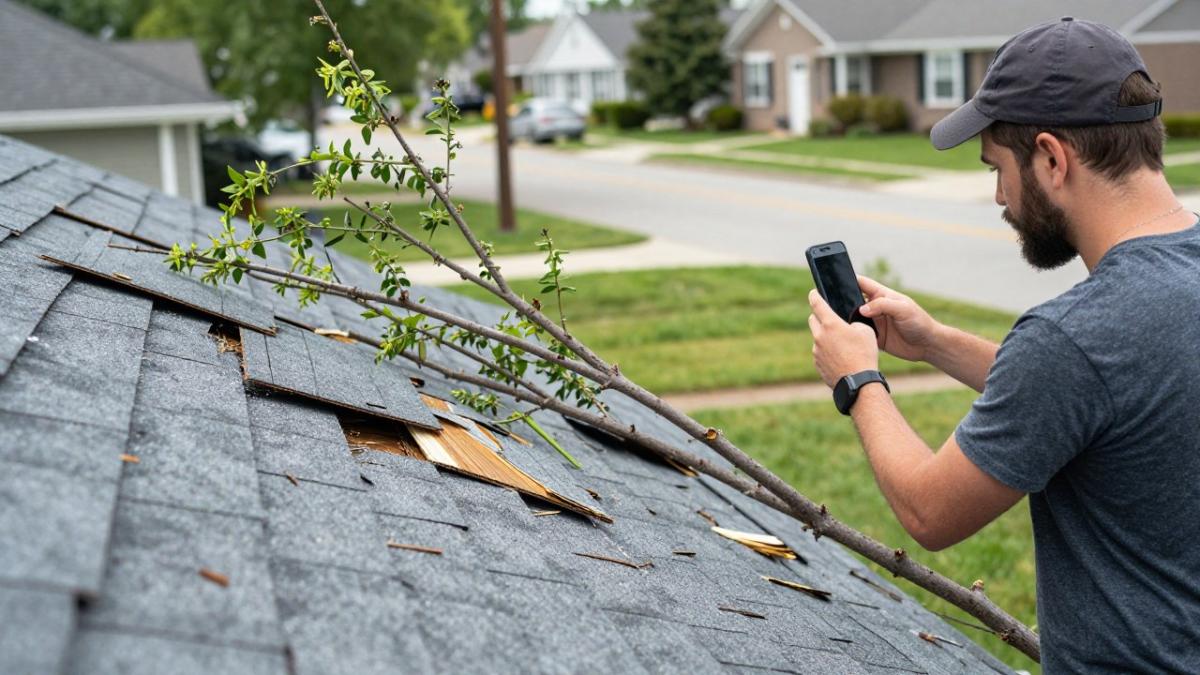
A fallen tree often triggers coverage, but the coverage depends on where the tree landed. Most standard policies pay to remove a tree that falls on a covered structure, such as the house, a detached garage, or a fence.
Tree removal coverage is usually limited, and it depends on your specific policy wording. A tree that falls in the yard without touching anything often has no coverage for the removal itself.
Common examples include:
- Tree hits the roof: Usually covered for both the roof repair and removal.
- Tree falls across a fence: Often covered for the fence, with limited removal costs.
- Tree lies in the yard: Removal is often not covered unless it blocks access.
- Tree was dead or diseased: Insurers may deny the claim if they consider the tree a maintenance issue.
Keep the tree’s condition in mind. A healthy tree that falls in a storm is treated differently from a long-dead one.
Storm Damage Exclusions and Deductibles That Change Your Payout
Exclusions and deductibles often decide how much you receive. Read the exclusions section of your policy carefully, because it lists what the insurer will not pay for.
Common exclusions include:
- Flood: Usually excluded from standard policies.
- Earth movement: Sinkholes and landslides are often excluded.
- Wear and tear: Gradual damage is not covered.
- Neglect: Damage from failing to make repairs may be excluded.
- Mold: Often excluded unless it results from a covered loss.
Deductibles come in several types. A standard all-perils deductible is often a flat dollar amount, such as $1,000 or $2,500. A percentage deductible, common for wind or hurricane damage in some regions, is calculated against your home’s insured value. For example, a 2 percent deductible on a $400,000 home equals $8,000.
Check which deductible applies before you file. A large deductible can mean a small claim may not pay anything at all.
How Insurers Separate Storm Damage From Wear and Pre-Existing Problems
Most coverage disputes come down to one question: did the storm cause this damage, or was it already there?
Siding. Storm-driven damage often appears as dents, cracks, or panels pulled from their fasteners, with bright or unweathered edges.
Leaks. A water stain on a ceiling after a single heavy storm may be covered if the water entered through a storm-created opening.
Maintenance records. These are often the deciding evidence.
The practical lesson is that documentation from before the storm matters as much as documentation after it.
A Step-by-Step Claims Checklist After Storm Damage
Most storm claims are won or lost in the first few days, and the steps below are arranged in the order they usually matter. Work through them in sequence, and note the date you complete each one.
-
Make the home safe first. Stay away from downed power lines and standing water near electrical outlets. If the home is unsafe to enter, document the exterior from the ground and wait for a qualified inspection before going inside.
-
Limit further damage, and keep receipts. Your policy almost always requires you to take reasonable steps to prevent additional loss. Tarp a torn roof, board a broken window, or extract standing water. Keep every receipt for these materials and labor, because emergency mitigation costs are often reimbursable as part of the claim.
-
Document the damage before any cleanup. Photograph and video every damaged area, including roof slopes, gutters, siding, fences, and interior ceilings. Include wide shots that show the location of each item, then close-ups with a reference object such as a coin or tape measure for scale. Date-stamped images are the strongest evidence.
-
Inventory damaged belongings. Create a room-by-room list with the item, the approximate age, the purchase price if known, and the current replacement cost. Keep original receipts, bank or card statements, and product manuals where you can find them.
-
Report the claim and record the details. Call your insurer or use its app or portal as soon as practical. Write down the claim number, the name of the representative, the date and time of the call, and a short summary of what was said. Ask when an adjuster is expected to visit.
-
Schedule a professional inspection. A licensed roofer or contractor can find damage that is not visible from the ground, such as lifted shingles, cracked flashing, or granule loss. Request a written estimate that lists materials, labor, and line-item costs so you can compare it with the adjuster’s figures later.
-
Track the claim through resolution. Keep one folder, digital or paper, containing every estimate, invoice, photo, letter, and email. Confirm in writing any verbal promises about timing or payment. If the insurer has not responded within the timeframe stated in your policy or state rules, send a dated written follow-up.
Watch out: a claim filed without any photographs taken before cleanup is much harder to prove, so do not begin removing debris until your documentation is complete.
The claims process has a clear order of steps, and each one has a timing that matters:
| Step | What to do | Timing |
|---|---|---|
| Make the home safe | Avoid downed lines and standing water near outlets | First, before entering |
| Limit further damage | Tarp roof, board windows, keep receipts | Promptly, as policy requires |
| Document before cleanup | Photograph and video all damage with scale references | Before any debris removal |
| Inventory belongings | List item, age, purchase price, replacement cost | Room by room |
| Report the claim | Record claim number, representative, date and summary | As soon as practical |
| Schedule inspection | Request written line-item estimate | After reporting |
| Track the claim | Keep one folder of estimates, invoices, letters | Follow up if no response in policy timeframe |
Storm Damage Insurance Claim Deadline and What to Do If Your Claim Is Denied
Every policy has a deadline for filing a claim, and it often starts on the date of the storm. Some states set their own time limits, so check your policy and local rules. Filing early protects your rights.
If your claim is denied or underpaid, you have options:
- Read the denial letter. It should state the specific policy language used.
- Request the adjuster’s report. Compare it against your own documentation.
- Get a second estimate. An independent contractor’s estimate can support your case.
- Ask for reconsideration. Send a written appeal with new evidence.
- Contact your state insurance department. Regulators can review how the claim was handled.
Keep copies of everything you send and receive, and note the dates of every phone call.
Next Steps for Your Storm Damage Claim With StormPros
Storm damage claims can be stressful, but you do not have to handle them alone. Read our 7 Ways to Document Storm Damage for Insurance guide to prepare your evidence, and see Why Was My Storm Damage Claim Denied if your insurer has turned you down.
To get started, request a free quote from StormPros and let our team inspect the damage and help you work through the claim.
Frequently Asked Questions
Is roof damage from a storm covered?
Usually yes, if a covered event like wind or hail caused it.
Does insurance pay to remove a fallen tree?
Often only when the tree damages a covered structure like your house or garage.
What if my storm damage claim is denied?
Read the denial letter, request the adjuster’s report, get an independent estimate, and file a written appeal.
Frequently Asked Questions
Does homeowners insurance cover wind damage to a roof?
Most standard homeowners policies cover roof damage caused by windstorms, including shingles torn off or lifted by strong gusts. Coverage depends on the wording of your policy and whether your deductible includes a separate wind or hurricane deductible, which is common in coastal states. Document the damage with dated photos, request an inspection, and compare the adjuster’s estimate against a written repair estimate from a licensed contractor before accepting the settlement.
Does homeowners insurance cover storm damage tree removal?
Standard policies often cover the cost to remove a fallen tree when it damages an insured structure, such as the house, a garage, or a fence. Many policies cap removal costs when the tree did not hit a structure, and trees that fall on a neighbor’s property may not be covered under your policy. Keep receipts from the removal company and ask your insurer to confirm limits in writing.
How long after storm damage can I file a homeowners claim?
Deadlines to file a claim vary by insurer and state, but many policies require prompt notice, often within a year of the loss, and some states set shorter limits. Report damage as soon as you discover it, even if repairs are not yet complete. Late reporting can reduce or deny your payout, so check your policy’s claim section and contact your insurer as soon as possible after the storm.
What damage is not covered by homeowners insurance?
Flood damage is typically excluded from standard homeowners policies and usually requires a separate flood insurance policy through the National Flood Insurance Program or a private insurer. Gradual wear, neglect, poor maintenance, and pre-existing damage are also generally excluded. Review your policy’s exclusions section to confirm which perils apply to your home.


