 5.0 Out Of 250+ Reviews


 Financing Available


 (214) 227-2763

Last Updated: October 29, 2026
Quick Summary
If a contractor abandons roof project work, first confirm the abandonment with dated records, then protect the home with emergency tarping and leak control. Next, document all payments and materials, send formal written notice with a clear deadline, and pursue refunds or complaints. Finally, hire a vetted, licensed replacement roofer.
- Confirm abandonment with a pattern of no-shows and unanswered calls, logged with dates.
- Give the contractor a written deadline of 5 to 10 business days to respond.
- Protect the home promptly; rain can soak decking and walls within hours.
- Send formal notice by certified mail with return receipt and keep a copy.
- Never make a final payment without a conditional or unconditional lien waiver.
Table of Contents
- Step 1: Confirm the Contractor Has Actually Abandoned the Project
- Step 2: Protect the Home From Further Roof Damage
- Step 3: Document the Work, Payments, and Materials
- Step 4: Review Your Contract and Send Formal Written Notice
- Step 5: Recover Payments and Pursue Your Legal Options
- Step 6: Find a Replacement Roofing Contractor and Finish the Job
- Get Your Roof Back on Track With a Vetted Replacement Plan
- Frequently Asked Questions
If a roofing contractor has stopped showing up, your house is exposed, your money is at risk, and you’re probably wondering what to do first.
Abandonment is a real problem, and it is one that homeowners face when a contractor abandons roof project work after storm damage because contractors take large deposits, get pulled to other jobs, or simply disappear.
Step 1: Confirm the Contractor Has Actually Abandoned the Project
Before you take legal action, make sure the contractor has truly stopped. Delays happen for permits, weather, and material shortages. A confirmed abandonment, though, is a pattern of no-shows and no answers.
Signs the contractor has walked away
Watch for these warning signs:
- No crew has returned to the site for two weeks or more
- Calls and texts go unanswered
- Materials have stopped arriving
Write down each date you tried to reach them. Those records matter later.
Setting a reasonable deadline for a response
Give the contractor a fair chance to respond before you escalate. Many homeowners set a deadline of 5 to 10 business days in writing. Check your contract first, since it may already define the response period or the schedule the contractor agreed to.
Step 2: Protect the Home From Further Roof Damage
Your first job is stopping more damage. Rain can soak into the decking, insulation, and walls within hours, and a small leak can turn into a ceiling collapse or mold problem before a replacement roofer is on site. Most homeowner policies require you to take reasonable steps to prevent further damage after a loss, so keep every receipt for emergency work and photograph the roof before and after each step.
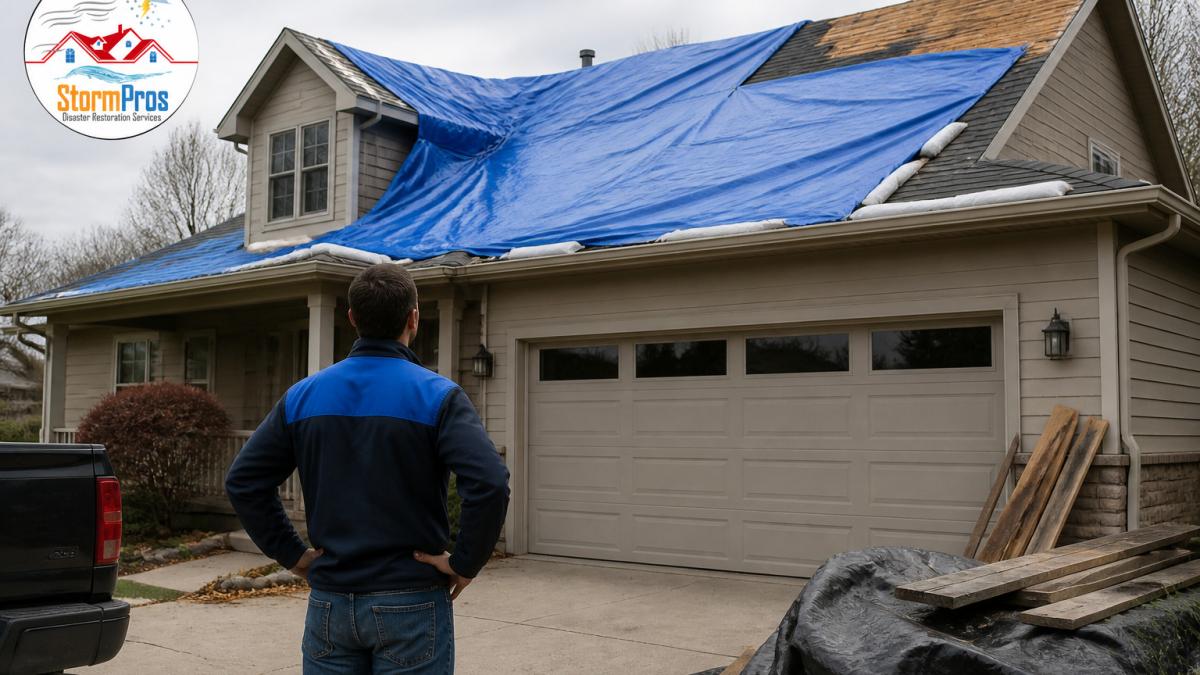
Emergency tarping and leak control
Emergency tarps should be fastened carefully rather than thrown over the damage. Nailing through shingles can create new leak points and may complicate the insurance adjuster’s damage assessment.
Practical steps that limit damage until a qualified roofer arrives:
- Tarp the exposed area and weight or fasten the edges so wind cannot lift it
- Move furniture, electronics, and valuables away from ceilings that are leaking
- Place buckets under drips and empty them often; a slow drip can saturate drywall in a day
Do not climb onto a steep, wet, or storm-damaged roof alone. Falls are the leading cause of injury in roof work, and a homeowner injury is not covered by the contractor’s policy. If the roof is unsafe, call a licensed roofer for emergency tarping and let them document the conditions.
Coordinating with your insurance claim and storm damage
If the roof was damaged in a storm, notify your insurer right away and ask the adjuster two questions before you spend money: what emergency mitigation they will reimburse, and whether they want to inspect before permanent repairs begin.
Storm claims often bundle roof, siding, gutter, and interior water damage together. Tell the adjuster about all of it, and ask for the claim number and the adjuster’s direct contact in writing.
Keep a simple log: date, time, who you spoke with, and what was said. Adjusters change assignments, and a written timeline is the fastest way to get a stalled claim back on track.
Step 3: Document the Work, Payments, and Materials
Strong records are the foundation of any dispute. They help you prove what was promised, what was paid, and what was actually done.
Roofing-specific evidence checklist
Collect and keep these items in one folder, digital or paper:
- The signed contract, plus any change orders
- Proof of every payment, including checks, bank transfers, and card receipts
- Photos and videos of the roof, dated and showing the work completed so far
Save original files with their date information intact. For a deeper guide, see how to document storm damage for insurance. Do not edit photos, and back them up somewhere safe.
Step 4: Review Your Contract and Send Formal Written Notice
Your contract sets the rules for what happens next. Read it carefully before you send anything. Look for the scope of work, payment schedule, completion date, termination clause, and any dispute process.
What to include in a contractor abandonment letter
A written notice creates a clear record. Keep the tone calm and factual. Include:
- Your full name, property address, and the date
- The contract date and the project scope
- A summary of what was agreed and what was not completed
Send the letter by certified mail with return receipt requested, and keep a copy. Email a copy too.
Step 5: Recover Payments and Pursue Your Legal Options
If the contractor does not respond or return to work, you may have several options for getting your money back. The right path depends on your contract, your state’s laws, and how much you paid. Before you choose a remedy, confirm the abandonment is documented and the deadline you set in Step 4 has passed without a cure. You can also review how to verify storm restoration warranties for guidance on checking contractor credentials and coverage terms.
Verifying abandonment and setting a defensible deadline
A delay is not abandonment. Permits, weather, and material backorders can stall a roof for weeks. A workable test is a pattern, not a single missed day: no crew on site, no materials delivered, no returned calls, and no written schedule update over a defined window.
Your written notice should state the cure deadline in calendar days, not “as soon as possible.” A common pattern is 10 business days to resume work or respond in writing, with a clear statement that you will terminate and pursue remedies if the deadline passes. Send it by certified mail with return receipt requested and by email, and keep the receipt. That record is what a licensing board, small claims judge, or insurer will ask for first.
Payment protections and lien considerations
Roofing payments are where most money is lost. Progress payments tied to completed stages (tear-off, decking, underlayment, shingles, cleanup) limit exposure compared with a large up-front deposit. If you have already paid, gather proof of every payment and confirm whether the contractor paid subcontractors and material suppliers.
In many states, unpaid subcontractors and suppliers can file a mechanic’s lien against your property even though you paid the general contractor. Lien waivers are one way to protect yourself:
- A conditional lien waiver takes effect only when your payment clears, and is the safer form for progress payments
- An unconditional lien waiver is effective on signing, so only sign one after you have confirmed the payment cleared and the work is done
- Ask for waivers from the contractor and from major subcontractors and suppliers at each payment
Never make a final payment without a conditional or unconditional final lien waiver covering all work and materials. A paid contractor who did not pay the supplier can still leave a lien on your roof.
Permits, inspections, and warranty continuity
Abandoned roof work often leaves permit and warranty problems behind. Check with your local building department whether a permit was pulled, what inspections were completed, and whether the permit can be closed or transferred to a replacement contractor.
Manufacturer warranties are another trap. Many shingle warranties require installation by a licensed contractor and inspection at defined stages.
Remedies and where to file
Common options include:
- Filing a complaint with your state’s contractor licensing board, which can suspend or revoke a license and sometimes trigger a recovery fund
- Filing a claim with your state attorney general’s consumer protection office
- Demanding a refund in writing and pursuing it in small claims court for amounts within your state’s limit
Bring your documentation folder to every step: the contract, payment proofs, dated photos, the written notice and its delivery receipt, permit records, and any replacement estimates. Those records are what turn a complaint into a recovery.
The options for recovering money depend on the remedy you choose, so here is how they compare.
| Remedy | Best for | Key point |
|---|---|---|
| Contractor licensing board complaint | License violations and abandonment | Can suspend or revoke a license; may trigger a recovery fund |
| State attorney general complaint | Consumer protection issues | Consumer protection office review |
| Written refund demand | Quick resolution attempts | Put the demand in writing with a deadline |
| Small claims court | Amounts within your state’s limit | Suitable for refund claims without a lawyer |
| Lawyer | Larger disputes, breach, or lien defense | For complex contract or lien problems |
Step 6: Find a Replacement Roofing Contractor and Finish the Job
Once the old contractor is out of the picture, you need a new team to finish the work. Choose carefully this time.
Verify the new contractor’s license, insurance, and local references before you sign anything. Learn why licensing matters before signing with anyone new. Ask for a written estimate and a clear payment schedule. Pay as the work is completed, not all up front.
Permits, inspections, and keeping warranty coverage
Ask whether the project needs a new permit, and confirm that the abandoned work was permitted. Your replacement roofer should document the existing work and pass any required inspections.
Hiring a licensed roofer also protects your coverage. Compare local contractors versus storm chasers to avoid a second bad experience. If the work is not done to code, your insurer or warranty provider may refuse to pay for future problems.
Get Your Roof Back on Track With a Vetted Replacement Plan
Abandoned roof projects are stressful, but they are solvable. Protect the home first, document everything, send formal notice, and then bring in a qualified team to finish the work. If you need a vetted replacement roofer for storm damage repairs, StormPros can help you plan the next steps. Visit a trusted Allen roofing company to get started.
Frequently Asked Questions
How do I know if my contractor has abandoned the project?
A contractor has likely abandoned the project if no crew has returned for two weeks or more and calls and messages go unanswered. Record the dates of each attempt to reach them.
How long should I wait before taking action?
Many homeowners give the contractor 5 to 10 business days to respond in writing. Check your contract for any agreed response or completion timeline.
Can I get my deposit back?
Possibly. Your options depend on your contract and state law. You can demand a refund in writing, file a complaint with your state licensing board or attorney general, or pursue small claims court.
Will my insurance still cover the damage if the contractor quit?
Often yes, but you must notify your insurer promptly and take reasonable steps to prevent further damage. Keep receipts and photos of all emergency repairs.
Frequently Asked Questions
How long can a contractor take to finish a roof job?
There is no single legal deadline that applies everywhere. Most roofing contracts state a start date and a completion window, and that window controls what counts as a delay. If the contract has no timeline, courts generally look for a reasonable time based on the scope of work, weather, and industry norms. A roof that has been stripped and left open for weeks without progress is a strong sign the contractor has stopped working. Check your contract first, then document any delays in writing so you have a clear record if you need to take action.
What should I do first if my roofing contractor stops showing up?
Start by protecting the house. If the roof is open or leaking, arrange emergency tarping or a temporary cover right away and photograph the damage before anything changes. Next, send a written message to the contractor asking for a return date, and keep a copy. Gather your contract, payment records, and any permits. Once you have documented the situation, you can decide whether to send a formal notice of breach. Acting quickly limits further water damage and strengthens any claim you later pursue.
Can I hire another roofer before ending my contract?
Many homeowners want to hire a replacement roofer while the original contract is still technically open. This can create legal and warranty complications, so review the contract’s termination clause first. If the contractor has clearly abandoned the project, a written notice that gives a reasonable cure period usually protects your right to terminate and hire someone else. Ask the new roofer to inspect the work already completed, and get the scope and cost to complete in writing. Keeping your records organized makes it easier to recover any additional costs from the original contractor.
What happens to my roof warranty if the contractor abandons the project?
A manufacturer warranty on shingles or materials often depends on proper installation by a qualified contractor, so an unfinished or improperly completed job can put that coverage at risk. Check whether the warranty requires registration, a specific installer, or an inspection before the work is accepted. Keep receipts and product documentation for every material delivered to the site. A replacement contractor can often inspect the existing work and document what needs to be corrected so the warranty remains valid for the finished roof.


