 5.0 Out Of 250+ Reviews

 Financing Available

 (214) 227-2763
Table of Contents
- Water Damage Restoration Timeline for Homes: What to Expect
- Emergency Water Extraction Process: First 24 Hours
- Structural Drying and Dehumidification: Days 2-7
- How Long Does It Take for Floors to Dry After Water Damage
- Water Damage Insurance Claim Timeline and Documentation
- Demolition, Sanitization, and Mold Prevention: Days 8-14
- Reconstruction and Repair Phases: Weeks 3-8
- Factors That Influence Your Restoration Duration
- Frequently Asked Questions
Last Updated: September 27, 2026
Water Damage Restoration Timeline for Homes: What to Expect
When water damage strikes your home, the clock starts immediately. Every hour matters. The difference between a swift restoration and a prolonged nightmare often comes down to understanding what happens next and how long each phase actually takes.
A water damage restoration timeline for homes typically spans 3 to 8 weeks from initial extraction to final reconstruction, depending on the severity of damage, water category, and structural complexity. The questions are always the same: How long will my home be uninhabitable? When can I file my insurance claim? What’s the real cost of delays?
The answer depends on several critical factors: whether the water came from a clean source (burst pipe) or contaminated source (sewage backup), how much structural material absorbed water, and whether your insurance adjuster’s timeline matches the actual drying requirements. Most homeowners underestimate how long structural drying takes, and many don’t realize that rushing this phase creates mold problems months later.
Below, we’ll walk you through each stage of the water damage restoration timeline for homes, from the first 24 hours through final reconstruction.
The water damage restoration timeline for homes depends on water category (clean, gray, or black water), structural saturation levels, and insurance processing speed. Most residential restorations take 3-8 weeks, but delays in documentation and adjuster approval can extend timelines significantly.
Emergency Water Extraction Process: First 24 Hours
The emergency water extraction process is your first critical window. Within the first 24 hours, restoration crews must remove standing water and begin the dehumidification process. This phase sets the tone for everything that follows.
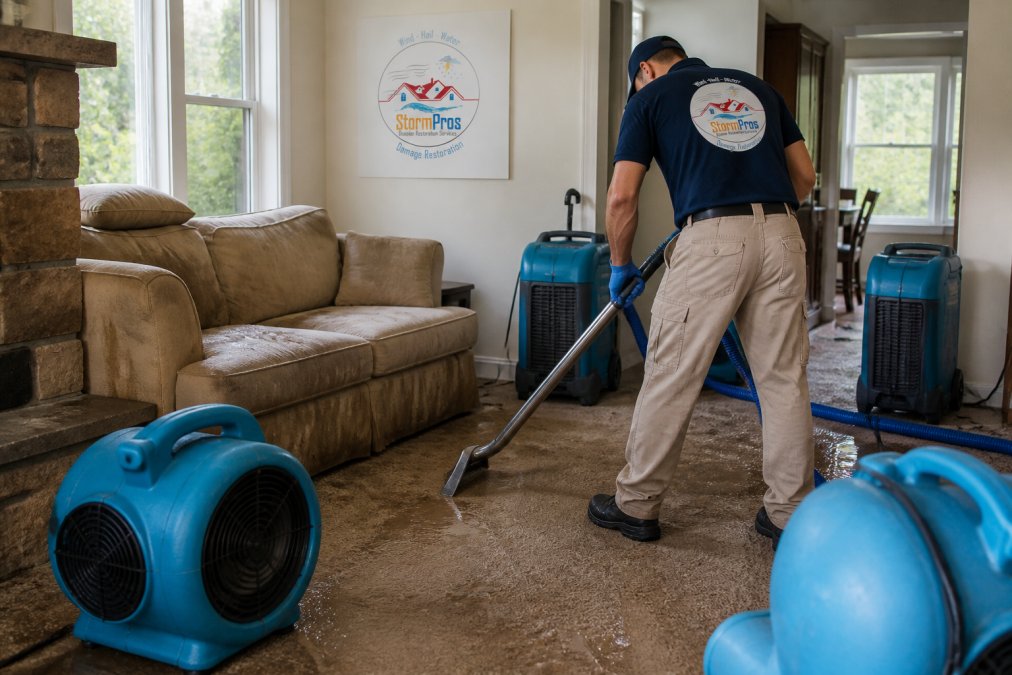
Here’s what happens during emergency water extraction:
-
Initial assessment and safety check, Technicians identify the water source and determine whether it’s Category 1 (clean water from pipes), Category 2 (gray water with some contamination), or Category 3 (black water from sewage or flooding). This classification drives the entire restoration approach.
-
Water removal, Industrial-grade pumps and wet vacuums extract standing water from carpets, subfloors, and structural cavities. Depending on water volume and accessibility, this can take 4-12 hours.
-
Equipment placement, Air movers and dehumidifiers are positioned throughout affected areas. These machines run continuously to begin the structural drying process.
-
Initial documentation, Photos and moisture mapping begin immediately. This documentation is essential for your insurance claim and establishes a baseline for the restoration process.
Delaying water extraction beyond 24 hours significantly increases mold risk and structural damage. Even “small” water events require immediate professional assessment, hidden moisture in walls or subfloors won’t show up until weeks later when mold becomes visible.
Structural Drying and Dehumidification: Days 2-7
After standing water removal, the real work begins. Structural drying and dehumidification is the longest phase of the water damage restoration timeline for homes, and it’s where most homeowners become impatient. This phase typically spans 5-7 days but can extend to 14 days depending on saturation levels and humidity conditions.
Here’s the daily breakdown:
-
Days 2-3: Air movers and dehumidifiers work around the clock. Moisture mapping occurs daily to track drying progress. If moisture readings aren’t dropping, equipment repositioning or additional units are deployed.
-
Days 4-5: Secondary drying begins. Some materials may be removed if saturation is severe. Wet insulation is typically removed and replaced, as it cannot be effectively dried in place.
-
Days 6-7: Final moisture readings are taken. If readings meet acceptable levels, equipment is removed. If not, the timeline extends.
Thermal imaging equipment can detect moisture hidden in walls and cavities that surface-level inspection misses. If your restoration team isn’t using thermal imaging during the drying phase, ask why. This technology prevents costly hidden damage from being discovered months later.
How Long Does It Take for Floors to Dry After Water Damage
Flooring is often the first casualty in water damage, and the drying timeline varies dramatically based on floor type and saturation depth.
Water Damage Insurance Claim Timeline and Documentation
The water damage insurance claim timeline often extends the overall restoration timeline more than the actual drying process. Understanding this phase prevents frustration and ensures you receive fair compensation.
Here’s the typical insurance claim timeline:
-
Initial claim filing (Day 1), Contact your insurance company within 24 hours of discovering damage. Document everything with photos and video before any cleanup begins. Your insurer will assign an adjuster.
-
Adjuster inspection (Days 2-5), The insurance adjuster visits to assess damage and estimate repair costs. This is where many homeowners encounter problems. Adjuster estimates are often lower than actual restoration costs, particularly for hidden damage like mold remediation or subfloor replacement.
-
Documentation submission (Days 5-10), Your restoration contractor submits detailed documentation including moisture readings, thermal imaging results, and a comprehensive repair estimate. This is where professional guidance matters significantly. A thorough estimate that accounts for all damage categories, water mitigation, mold prevention, structural repair, and reconstruction, is more likely to receive full approval.
-
Insurance review and approval (Days 10-20), The insurance company reviews the estimate. If the estimate exceeds their initial assessment, they may request additional documentation or a second inspection.
-
Approval and payment authorization (Days 20-30), Once approved, you receive authorization to proceed. Payment may be issued upfront, upon completion, or in phases depending on your policy.
Never accept the adjuster’s initial estimate without a second opinion. Adjuster estimates frequently undervalue hidden damage, mold prevention costs, and structural repairs. A professional restoration assessment often reveals additional necessary work that adjusters missed.
Demolition, Sanitization, and Mold Prevention: Days 8-14
Once structural drying is confirmed and insurance approval is secured, demolition and sanitization begin. This phase typically spans 3-7 days depending on damage extent.
- Subfloor sanitization with antimicrobial solutions
- Framing lumber treatment
- HVAC system cleaning and ductwork sanitization
- Hard surface disinfection
Reconstruction and Repair Phases: Weeks 3-8
Reconstruction is the final phase of your water damage restoration timeline for homes. This phase typically spans 3-6 weeks depending on damage scope.
Week 3-4: Structural repairs
- Subfloor replacement or repair
- Wall framing replacement if necessary
- HVAC system repairs and ductwork replacement
- Electrical system inspection and repair
Week 4-5: Interior installation
- New drywall installation and taping
- Insulation replacement
- Flooring installation (hardwood, tile, or carpet)
- Painting and finishing
Week 5-8: Final restoration
- Trim and baseboard installation
- Cabinet and fixture replacement
- Final inspections and testing
- Punch-list items and touch-ups
Factors That Influence Your Restoration Duration
Water category, Clean water (Category 1) from a burst pipe dries faster than gray water (Category 2) or black water (Category 3) from sewage or flooding. Category 3 damage requires extended mold remediation, adding 1-2 weeks.
Frequently Asked Questions
How long does water damage restoration typically take from start to finish?
Most water damage restoration projects take 2 to 8 weeks, depending on the severity and extent of damage. Emergency water extraction begins within hours, structural drying takes 5-7 days, and reconstruction can take 2-4 weeks. Insurance claim processing can add 1-2 weeks. Category 1 water damage (clean water) dries faster than Category 3 (sewage), which requires complete demolition and sanitization. Your restoration timeline depends on moisture content levels, affected materials, and whether hidden damage requires additional work.
How long does it take for floors to dry after water damage?
Hardwood and laminate floors typically require 7-14 days to dry completely with professional dehumidification and air movers running continuously. Concrete subfloors may take 10-21 days. Drying time depends on relative humidity levels, room temperature, and how saturated the materials became. A hygrometer reading below 50% relative humidity indicates the floor is ready for restoration. If floors remain wet beyond 48 hours, mold risk increases significantly. Professional moisture mapping identifies when materials are truly dry before reconstruction begins.
What delays water damage insurance claim timelines the most?
Documentation delays are the primary bottleneck. Insurance adjusters need detailed photos, moisture readings, and professional assessments before authorizing repairs. Scheduling adjuster inspections can add 3-7 days. If the estimate seems low, getting a second assessment or supplemental documentation extends the timeline by another 1-2 weeks. Working with a restoration company experienced in insurance claim coordination can help this process. Accurate initial documentation prevents back-and-forth disputes that can delay approval by weeks.
How quickly does mold start growing after water damage?
Mold can begin growing within 24-48 hours of water exposure in warm, humid conditions. This is why emergency water extraction and immediate dehumidification are critical. Professional restoration teams use antimicrobial treatment and moisture monitoring to prevent mold growth. If water damage isn’t addressed within 48 hours, mold mitigation becomes necessary alongside standard restoration, adding cost and timeline. Maintaining relative humidity below 50% and room temperatures below 75°F significantly slows mold development during the drying phase.
What’s the difference between DIY drying and professional water damage restoration?
DIY drying with household fans and dehumidifiers can take 2-3 weeks and often misses moisture in walls, subfloors, and insulation, leading to hidden mold and structural damage later. Professional restoration uses thermal imaging, moisture mapping with hygrometers, commercial-grade air movers, and desiccant dehumidifiers to dry materials in 5-7 days. Professionals also identify Category 3 water damage (sewage) that requires demolition, sanitization, and antimicrobial treatment. Insurance typically covers professional restoration but not DIY attempts that fail.
Can I live in my home during water damage restoration?
It depends on the damage severity. Minor water damage in one room may allow you to stay while that area dries, though noise and equipment operation are disruptive. Extensive damage affecting multiple rooms, structural areas, or involving Category 3 water (sewage backup or flood) requires evacuation due to health hazards and mold risk. If demolition and reconstruction are necessary, the home is typically unsafe to occupy. Your restoration company and insurance adjuster will advise whether the property is habitable during work. Temporary housing costs are usually covered by insurance in severe cases.
What are the main factors that affect water damage restoration duration?
The primary factors are water category (clean water dries faster than sewage), affected materials (drywall saturates faster than concrete), room size and ventilation, ambient temperature and humidity, and extent of hidden damage. Structural damage requiring demolition adds 2-3 weeks. Insurance claim delays can extend timelines by 1-2 weeks. Seasonal factors matter: cold weather slows evaporation, while high humidity in summer requires more aggressive dehumidification. Professional assessment using thermal imaging and moisture mapping determines the true scope before work begins, preventing timeline surprises.


