 5.0 Out Of 250+ Reviews


 Financing Available


 (214) 227-2763

Table of Contents
- What Homeowners Insurance Actually Covers for Water Damage
- Sudden vs. Gradual Water Damage Coverage: What’s the Difference?
- Common Homeowners Insurance Water Damage Exclusions
- How to File a Water Damage Insurance Claim
- Water Damage Remediation Process Steps and Coverage
- Policy Endorsements and Riders for Additional Water Damage Protection
- What to Avoid During the Claims Adjustment Process
- Frequently Asked Questions
Last Updated: September 21, 2026
What Homeowners Insurance Actually Covers for Water Damage
Water damage is one of the most common property insurance claims, yet many homeowners remain confused about what water damage remediation covered by their policy actually includes. The answer depends entirely on how the water entered your home and whether your policy includes specific protections.
Most standard homeowners insurance policies cover sudden and accidental water damage from burst pipes, appliance malfunctions, or firefighting efforts (Water Damage: Whats Covered; Whats Not). However, coverage typically excludes water entering from outside, flooding, seepage, or groundwater intrusion, unless you’ve purchased a separate flood insurance policy or endorsement.
Your dwelling coverage protects your home’s structure, while personal property coverage protects belongings inside. Both have water damage limitations that vary by policy. Understanding these boundaries prevents claim denials and helps you act correctly immediately after damage occurs.
Sudden vs. Gradual Water Damage Coverage: What’s the Difference?
Insurance companies distinguish between sudden water damage and gradual damage. Sudden damage like a burst pipe during freezing is usually covered. Gradual leakage from a deteriorating roof, foundation seepage, or wear-and-tear is almost always excluded.
A pipe bursting overnight qualifies as sudden and accidental; the same pipe leaking slowly for months does not. Insurance companies view gradual damage as the homeowner’s maintenance responsibility.
Gradual leakage is the most common reason for water damage claim denials. Seepage through foundation walls, slow roof leaks, or unnoticed plumbing leaks all fall into this category. Policy language specifies coverage applies only to sudden damage, not damage from lack of maintenance or neglect.
Address water intrusion immediately when discovered. Fast action helps prove the damage was sudden rather than ongoing, and documentation through photographs becomes critical in supporting your claim.
Common Homeowners Insurance Water Damage Exclusions
Most standard homeowners insurance policies exclude water damage in specific categories. The most common exclusions include flood damage, sewer and drain backup (unless endorsed), mold remediation, and groundwater seepage.
Flood Damage and the National Flood Insurance Program
Flood damage is the single largest exclusion in homeowners insurance policies. Water from rising levels, heavy rainfall, or storm surge is not covered by standard policies because flood risk varies dramatically by location.
The National Flood Insurance Program (NFIP) addresses this gap. If you live in a Special Flood Hazard Area (SFHA) designated by FEMA, your mortgage lender will require flood insurance. Even outside designated zones, flood insurance is advisable if your property has any flood risk. Flood policies cover water damage to your home’s structure and contents from external sources.
Flood insurance policies have their own deductibles, coverage limits, and exclusions. They typically cover the dwelling structure, personal property, and additional living expenses if displaced, but exclude damage from poor maintenance or sump pump failure unless specifically endorsed.
Sewer and Drain Backup Coverage
Sewer and drain backup is another common exclusion from standard homeowners policies. When sewage enters your basement or lower levels, the resulting damage is typically not covered unless you’ve purchased a specific endorsement.
Sewer backup coverage is relatively inexpensive to add to your policy and is highly recommended if your home has a basement or lower level. In cases of municipal sewer system failure, you may have a claim against the city or county.
Mold Damage and Remediation
Mold remediation is one of the most restricted coverages in homeowners insurance. Most policies exclude mold entirely or limit coverage to mold resulting directly from a covered peril, like growth following a burst pipe. Mold from chronic moisture, poor ventilation, or neglect is never covered.
Even when mold results from a covered water event, your policy typically limits mold coverage to $1,000-$10,000. Extensive mold remediation can quickly exceed this limit, leaving homeowners responsible for cleanup costs.
Insurance companies view mold as a maintenance issue rather than a sudden loss. Preventing mold through prompt water extraction and drying is far more cost-effective than covering remediation.
How to File a Water Damage Insurance Claim
Filing a water damage claim requires immediate action and thorough documentation. Steps taken in the first hours directly impact claim approval and payout. Delays can result in claim denial or reduced payouts.
Document Everything Immediately
Document the extent of damage through photographs and video before cleanup or repairs. Take pictures of all affected areas, including walls, flooring, and structural damage. Include timestamps when possible.
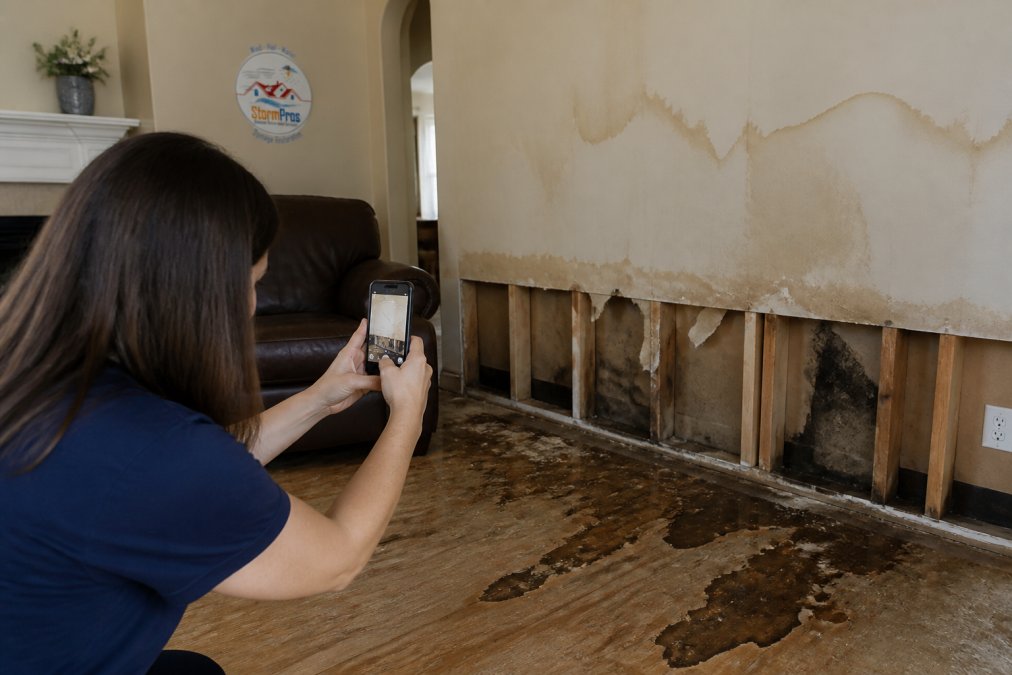
Create a written inventory of damaged personal property, including item descriptions, approximate age, and estimated replacement cost. This inventory becomes crucial when filing claims for contents coverage. Keep receipts, credit card statements, or other proof of ownership for high-value items.
Do not throw away damaged materials until your insurance adjuster has inspected them. Many adjusters need to see the actual damage to assess the claim properly. However, you should take reasonable steps to prevent further damage, this is called mitigation. For example, if water is actively leaking, you should stop the source if safely possible and remove items from standing water to prevent additional loss.
Contact Your Insurance Company Right Away
Report your water damage claim to your insurance company as soon as possible, ideally within 24 hours of discovery. Most policies require prompt notification, and delays can jeopardize your claim. Have your policy number available when you call, and be prepared to describe what happened, when it occurred, and what areas of your home were affected.
Your insurance company will assign a claims adjuster to your case. Ask for the adjuster’s contact information, expected timeline for inspection, and what documentation you should prepare. Many insurers now allow you to file claims online through their mobile apps or websites, which can speed up the process.
Work with the Insurance Adjuster
The insurance adjuster is responsible for inspecting your property, assessing damage, and determining what your policy covers. The adjuster represents the insurance company’s interests, not yours, so understanding their role is critical. Be present during the inspection and point out all damage, including areas that may not be immediately obvious.
Provide the adjuster with your documentation, photographs, and inventory of damaged items. If the adjuster’s estimate seems significantly lower than your repair quotes, you have the right to dispute it. Many policies include appraisal clauses that allow you to hire your own adjuster if you disagree with the insurance company’s assessment.
Water Damage Remediation Process Steps and Coverage
Water damage remediation involves multiple steps, and understanding which steps are water damage remediation covered by your insurance is essential to managing costs. The process typically begins with water extraction and drying, followed by assessment for hidden damage, and finally restoration of affected areas.
Mitigation vs. Restoration: What Insurance Pays For
Mitigation refers to the emergency steps taken immediately after water damage to prevent further loss. This includes water extraction, dehumidification, and removal of wet materials to prevent mold growth. Insurance policies typically cover mitigation costs because these steps reduce the total loss. Most insurers recognize that spending $5,000 on emergency mitigation prevents $50,000 in additional damage.
Restoration is the process of repairing or replacing damaged materials to return your home to its pre-damage condition. Insurance covers restoration costs for covered water damage, but the amount depends on your coverage limits and deductible. If you have replacement cost coverage, the insurer pays the full cost of replacing damaged items.
Actual Cash Value vs. Replacement Cost Coverage
Understanding the difference between actual cash value (ACV) and replacement cost coverage is crucial when filing a water damage claim. ACV coverage pays the current market value of damaged items minus depreciation. Replacement cost coverage pays what it actually costs to replace the damaged item with a new one of similar quality.
Policy Endorsements and Riders for Additional Water Damage Protection
Your standard homeowners policy provides a foundation of coverage, but endorsements and riders can significantly expand your protection against water damage. These optional additions allow you to customize your coverage based on your specific risks and concerns.
What to Avoid During the Claims Adjustment Process
How you handle yourself during the claims adjustment process can significantly impact your final payout. Common mistakes can result in reduced settlements or claim denials, so understanding what to avoid is as important as knowing what to do.
Frequently Asked Questions
What types of water damage are typically excluded from homeowners insurance?
Homeowners insurance excludes gradual leakage, seepage, and wear and tear. Flood damage is excluded unless you carry a separate National Flood Insurance Program policy. Sewer backup is excluded unless you add an endorsement. Damage from poor maintenance, such as neglected gutters or broken pipes left unrepaired, is also excluded. Insurance covers sudden and accidental water damage like a burst pipe or roof leak from a storm, but not damage that develops slowly over time.
How do I file a water damage insurance claim?
First, stop the water source and take immediate mitigation steps to prevent further damage. Document everything with photos and video. Contact your insurance company within 24-48 hours and provide your policy number. The adjuster will schedule an inspection and assess the damage. Submit proof of loss, including receipts and documentation of personal property affected. Keep all receipts for emergency repairs and mitigation work, as these are typically covered. Work with your contractor to provide detailed estimates for remediation and restoration work.
What’s the difference between sudden water damage and gradual seepage in insurance terms?
Sudden and accidental water damage, like a burst pipe or roof leak from a storm, is covered by homeowners insurance. Gradual seepage or leakage from ongoing maintenance issues is excluded. Insurance companies distinguish between these because sudden events are unpredictable and require immediate remediation, while gradual damage results from neglect or wear and tear. The timing and cause determine coverage: if the damage occurred unexpectedly over hours or days, it’s likely covered; if it developed slowly over weeks or months, it’s typically excluded.
Does homeowners insurance cover water damage remediation costs?
Yes, if the water damage is sudden and accidental and covered under your policy. Insurance covers the cost of professional water damage remediation, including water extraction, drying, and mold prevention. However, coverage depends on the cause and your specific policy terms. Mitigation costs (stopping the damage) are typically covered fully, while restoration costs may be subject to your deductible and policy limits. Gradual damage, flood damage, and sewer backup are excluded unless you have additional endorsements or a separate flood insurance policy.


