 5.0 Out Of 250+ Reviews


 Financing Available


 (214) 227-2763

Table of Contents
- Why Tree Damage to Your Roof Matters
- Sign 1: Cracked, Broken, or Missing Shingles
- Sign 2: Branches and Debris Resting on or Striking the Roof
- Sign 3: Visible Water Stains and Roof Leaks Inside Your Home
- Sign 4: Granule Loss and Debris Accumulation in Gutters
- Sign 5: Sagging Roof Sections or Structural Weakness
- What to Do If a Tree Branch Fell on Your Roof
- Does Homeowners Insurance Cover Tree Damage to Your Roof?
- Frequently Asked Questions
Last Updated: October 15, 2026
Why Tree Damage to Your Roof Matters
Tree damage to your roof isn’t just cosmetic. When branches fall or rub against your roofline, water seeps through cracks and broken shingles into your attic, walls, and foundation, leading to rot, mold, and repairs that cost far more than the original damage.
Here’s what you need to know: 5 signs of tree damage to roof tell you whether you need urgent attention or can schedule repairs at your convenience. Learning the difference protects your home and your wallet.
Most homeowners don’t inspect their roofs until water starts dripping inside. By then, hidden damage has already started. A quick visual check after storms or windy weather catches problems before they spread.
Sign 1: Cracked, Broken, or Missing Shingles
Cracked, broken, or missing shingles are the most visible sign of tree damage. When a branch strikes or rubs the roofline, it tears through the protective layer, exposing wood, torn asphalt, or gaps.
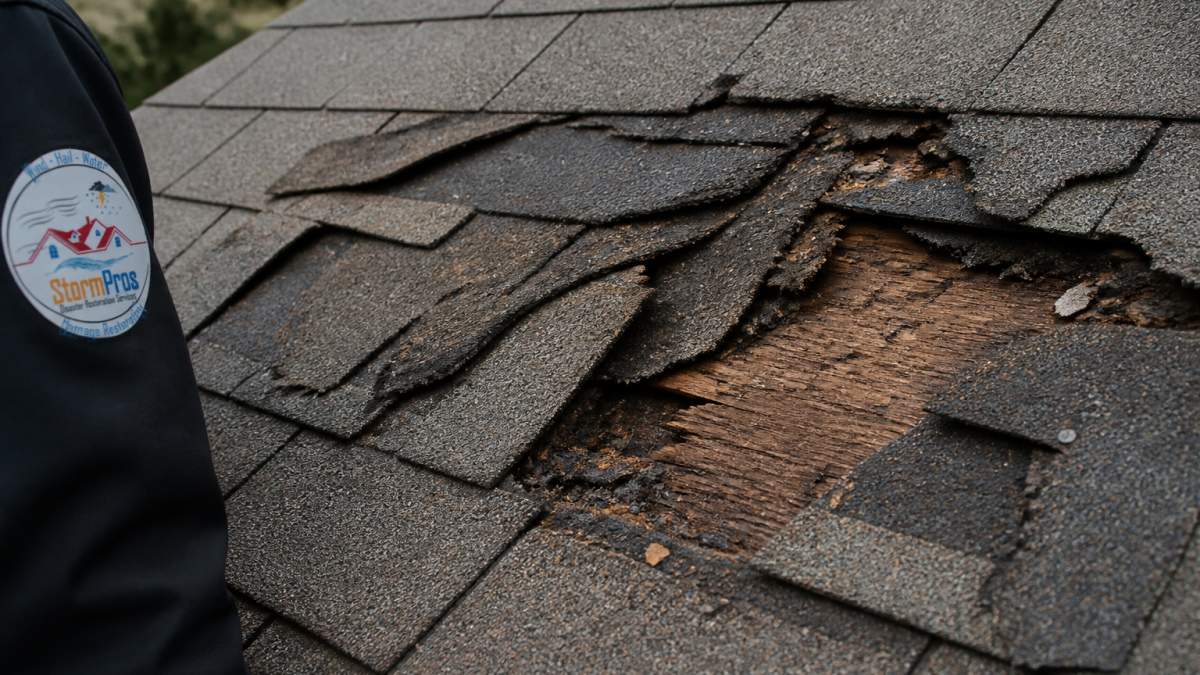
Look for these specific damage patterns:
- Cracked shingles, Long splits running across the shingle surface, usually in a straight line where a branch scraped
- Broken shingles, Shingles snapped in half or shattered into pieces
- Missing shingles, Gaps in the roof where shingles have been knocked loose or torn away
- Curled shingles, Edges lifting up, often from impact trauma or the stress of being struck
The danger is immediate. Exposed decking and underlayment have zero weather protection, so rain soaks into the wood. Within days you can have ceiling stains; within weeks, rot spreading through attic framing.
This is one of the clearest signs you need professional roof repair. Call a contractor for an inspection and quote as soon as you spot broken or missing shingles.
If you see exposed wood or underlayment, water intrusion has likely already started. Even if it hasn’t rained since the damage, moisture from humidity can seep in. Get this fixed to prevent structural damage.
Sign 2: Branches and Debris Resting on or Striking the Roof
Branches and debris resting on your roof cause ongoing damage. A heavy limb rubs and strips away the protective granule layer every time the wind blows, wearing through shingles and damaging the structure underneath.
Even branches that aren’t striking can trap moisture. Leaves and debris collect, water pools underneath, and moss grows while water seeps into seams and nail holes.
Look for these warning signs:
- Branches touching or resting on the roof, Even if they’re not actively breaking shingles, they’re causing wear
- Piles of leaves and twigs in gutters and on the roof, This debris holds moisture and promotes decay
- Visible scrape marks on shingles, Where branches have been rubbing back and forth
- Broken tree limbs hanging over the roofline, Dead or diseased branches that could fall in the next storm
The action here is prevention. Have overhanging branches trimmed back 6-10 feet from the roofline to stop ongoing damage and reduce the risk of a branch falling in the next storm.
If debris is already piled on your roof or in gutters, hire a professional to clear it. A contractor can clear the debris, inspect underneath, and recommend repairs.
Sign 3: Visible Water Stains and Roof Leaks Inside Your Home
Water stains on your ceiling or in your attic mean water has already breached your roof. This is urgent: the protective barrier has failed and moisture is actively moving into your home.
Look for these interior warning signs:
- Brown or yellowish stains on ceilings, Usually appearing first in corners or along seams
- Damp spots on attic insulation or framing, Check your attic after rain or during humid weather
- Visible mold or dark discoloration on wood, Often appears on rafters or roof decking
- Peeling paint or bubbling drywall, A sign moisture is trapped behind the surface
- Musty odors in the attic or upper floors, Indicates active moisture and possible mold growth
The cause could be tree damage or something you can’t see from outside. A branch may have punctured the roof weeks ago, or the impact created a hairline crack that only shows during heavy rain.
This is where a professional inspection becomes critical. StormPros inspects the full path of water intrusion, from the damaged area on the roof through the attic and into the walls, identifying where the water has traveled and what damage has started.
Get this checked within 48 hours of noticing stains (the EPA). Water damage spreads fast, and mold can start growing quickly.
Interior water stains are always a sign of active or recent water intrusion. Do not assume the problem will go away on its own. Water damage compounds exponentially, the longer you wait, the more expensive the repair.
Sign 4: Granule Loss and Debris Accumulation in Gutters
Granules are the small colored particles on asphalt shingles that protect the asphalt from UV damage and weathering. When branches strike or scrape shingles, they knock granules loose, and you’ll find them in gutters and downspouts like coarse sand or gravel.
Granule loss signals impact damage and a protective layer wearing away faster than normal aging.
Look for these signs in your gutters and downspouts:
- Piles of granules that look like coarse sand, Especially if they accumulate after windy weather or storms
- Gutters clogged with granules and debris, More than the normal seasonal leaf and twig buildup
- Visible bare spots on shingles where granules are missing, The underlying asphalt looks darker or shinier than surrounding areas
- Gutters that are difficult to clean because of heavy granule buildup, A sign shingles are deteriorating faster than normal
The risk is premature aging. Bare spots break down faster and let water penetrate more easily, so a 20-year roof can become a 10-year roof once tree damage removes the protective layer.
Granule loss alone doesn’t always mean immediate replacement, but repairs are needed soon. Schedule an inspection to determine whether damaged shingles can be replaced or larger sections need attention.
If you see significant granule loss after a storm, don’t assume it’s normal. Collect a sample from your gutter and compare it to granules from an undamaged area of your roof. If the difference is obvious, tree damage is likely the cause.
Sign 5: Sagging Roof Sections or Structural Weakness
Sagging is the most serious warning sign. It means the structural support underneath has been compromised, either by a heavy branch damaging rafters or prolonged water intrusion weakening the wood.
Sagging roof sections indicate structural failure. This is an emergency.
Look for these structural warning signs:
- Visible dips or sags in the roofline when viewed from a distance, The roof should be straight; any visible curve is a problem
- Interior ceiling sagging or cracking, Especially along walls or in the center of rooms
- Doors or windows that no longer close properly, A sign the framing has shifted
- Cracks in interior walls or where walls meet ceilings, Often appears as the structure settles unevenly
- Visible damage to rafters or roof decking in the attic, Splintered wood, breaks, or compression damage
Sagging means the weight load is no longer properly supported, either suddenly after a major impact or gradually as water damage weakens the wood.
Do not wait. Call a contractor immediately. A sagging roof can collapse, especially if another storm hits or snow accumulates, making this a safety issue for everyone in the home.
Sagging roof sections are a structural emergency. Do not attempt repairs yourself. Do not delay getting professional assessment. This is one of the few roof problems where waiting even a few days increases the risk of catastrophic failure.
What to Do If a Tree Branch Fell on Your Roof
If you see a tree branch on your roof or suspect tree damage, here’s the step-by-step process:
Step 1: Document the damage, Take photos and videos from multiple angles, including close-ups of any visible damage. Document the date and any weather events that may have caused it. This documentation is critical for insurance claims.
Step 2: Remove immediate hazards, If a large branch is on your roof, don’t try to remove it yourself. Hire a professional tree service or contractor. Climbing on a damaged roof is dangerous.
Step 3: Schedule a professional inspection, Contact a contractor within 24-48 hours. They’ll inspect the roof, attic, and interior to identify all damage, including damage you can’t see.
Step 4: Contact your insurance company, Report the damage to your homeowners insurance. Provide the photos, inspection report, and contractor’s assessment.
Step 5: Get repair quotes, Obtain quotes from at least two contractors. Compare the scope of work, materials, and timeline.
Step 6: Schedule repairs, Once you’ve selected a contractor and insurance has approved the claim, schedule the work. Don’t delay, water damage compounds daily.
The key is speed. The faster you identify and repair tree damage, the less secondary damage spreads. Water intrusion, mold, and structural decay all accelerate over time.
Does Homeowners Insurance Cover Tree Damage to Your Roof?
Yes, homeowners insurance typically covers tree damage to your roof if the tree was healthy and the damage resulted from a storm event. However, coverage depends on your policy and the specific circumstances.
Coverage typically includes:
- Damage from a tree branch that falls during a storm
- Damage from a tree that falls due to wind, lightning, or heavy snow
- Damage from a healthy tree that was struck by another falling object
- Emergency repairs needed to prevent further damage
Coverage typically does NOT include:
- Damage from a diseased or dead tree that falls due to poor maintenance
- Damage from a tree on your property that you failed to maintain (dead branches, disease)
- Damage from a tree you knew was hazardous and did nothing about
- Routine tree trimming or removal (unless it’s emergency cleanup after a storm)
- Damage that occurred gradually over time (not from a single storm event)
The key distinction is whether the tree was healthy and the damage sudden and storm-related. If a dead tree on your property fell during a windstorm, insurance may deny the claim for negligent maintenance.
How to maximize your insurance claim:
- Document all damage with photos and video before any cleanup
- Get a professional inspection that identifies all damage, including hidden damage
- Provide your insurance company with the inspection report and repair estimates
- Keep records of any tree maintenance you’ve done (pruning, disease treatment)
- Report the damage promptly, don’t wait weeks to file a claim
StormPros works directly with insurance companies as claim specialists. We document damage thoroughly, handle the claim process, and ensure you receive fair compensation for repairs.
Tree damage to your roof is serious, but manageable if you catch it early.
If you’ve noticed any of these signs on your roof, don’t wait for the problem to get worse. Get a free professional inspection from StormPros.
Frequently Asked Questions
What should you do if a tree branch falls on your roof?
First, ensure your safety and stay off the roof. Document the damage with photos for insurance purposes. Remove loose debris if safe to do so, then contact a professional roofer to assess structural damage and check for leaks. Report the incident to your insurance company promptly. Avoid temporary patches unless the roof is actively leaking; improper repairs can complicate claims.
Does homeowners insurance cover tree damage to a roof?
Most homeowners insurance policies cover roof damage from fallen trees or branches if the damage results from a covered peril like storms or high winds. However, coverage typically excludes damage from neglected trees on your property or trees that were obviously dead or diseased. Review your policy details and contact your agent immediately after tree damage occurs to file a claim.
How do you tell if tree damage caused your roof leak versus regular wear?
Tree-impact damage usually appears as localized, concentrated damage directly under the impact zone, with broken or crushed shingles and visible debris marks. Regular wear spreads across the roof over time and shows gradual granule loss and curling. If you see fresh splintered wood, torn shingles, or debris embedded in the roof, tree damage is likely. A professional inspection can confirm the cause.
Should you inspect your roof after a storm?
Yes, a roof inspection after storm events is essential to catch damage early and prevent water intrusion. Perform a visual inspection from the ground using binoculars to look for missing shingles, debris, or sagging sections. For safety reasons, do not climb onto the roof yourself. Contact a professional inspector to document damage thoroughly for insurance claims and to identify hidden issues like compromised decking or structural damage.


