 5.0 Out Of 250+ Reviews


 Financing Available


 (214) 227-2763

Table of Contents
- Interior Warning Signs of Roof Water Seepage
- Attic and Structural Indicators of Roof Water Seepage
- Exterior Roof Damage That Causes Water Seepage
- Water Stains on Ceiling From Roof Leak: How to Identify the Source
- How to Find a Roof Leak: A Step-by-Step Inspection Process
- Distinguishing Roof Leaks From Plumbing, Condensation, and HVAC Issues
- What to Do When Your Roof Is Leaking: Immediate Steps and Urgency Levels
- How Long Can a Roof Leak Go Unnoticed and What Happens if Ignored
- Frequently Asked Questions
Last Updated: October 10, 2026
Interior Warning Signs of Roof Water Seepage
Water stains on ceilings and walls are often the first visible clue that your roof has developed a problem. Learning what to look for and acting quickly prevents escalation into structural damage.
Water stains on ceilings and walls
Water stains appear as yellow, brown, or rust-colored marks on interior surfaces, typically spreading outward from a central point and worsening after heavy rain or snowmelt.
Look for these patterns:
- Circular or irregular-shaped marks on ceilings
- Stains that reappear after painting
- Discoloration spreading across drywall or plaster
- Soft or bubbling paint near the stain
Water travels along roof structure, attic framing, and insulation before dripping through, so stain location may not match the leak’s source directly above, professional inspection helps trace it accurately.
Active dripping water and puddles
Dripping water or visible puddles inside your home mean the roof water seepage has reached an active stage, requiring immediate action to prevent rapid damage to insulation, framing, and electrical systems.
Signs of active leaks include:
- Water dripping into buckets or pooling on floors
- Wet spots appearing during or immediately after rain
- Visible moisture running down interior walls
- Puddles forming in attics or crawl spaces
Place buckets under drips immediately, document with photos, and move valuables away from affected areas.
Mold, mildew, and musty odors
Persistent musty smells often signal hidden moisture from roof water seepage, indicating mold and mildew growth that pose health risks.
Warning signs include:
- Musty, earthy odors in upper floors or attics
- Black or green spots on wood framing or insulation
- Visible fuzzy growth on ceiling materials
- Allergic reactions or respiratory irritation indoors
If you notice musty odors, inspect your attic immediately or call a professional to stop the moisture source and prevent mold spread.
Mold exposure can trigger asthma, allergies, and respiratory issues (the EPA). If you see mold growth, avoid touching it and contact a professional for safe removal.
Attic and Structural Indicators of Roof Water Seepage
Your attic reveals roof problems early, a flashlight and 15 minutes can detect roof water seepage before it reaches living spaces.
Moisture, dampness, and staining in the attic
Wet insulation, damp wood framing, and water stains on attic surfaces all point to roof water seepage, with early detection preventing structural damage.
Look for these indicators:
- Insulation that feels wet or compressed
- Dark stains on roof decking or rafters
- Visible water pooling on attic floors
- Frost or condensation on roof structure in winter
Document signs with photos and contact a professional for assessment, as damaged insulation loses thermal value and wet framing weakens structural integrity.
Daylight visible through the roof structure
If you can see daylight streaming into your attic, water can enter too, gaps, holes, or separated roof seams allow both light and water to penetrate.
Common sources of daylight leaks:
- Separated roof decking at seams
- Holes around roof penetrations (vents, chimneys)
- Gaps where roof sections meet
- Deteriorated flashing allowing light through
Daylight visible in the attic means your roof’s weather barrier is compromised. This requires professional repair to prevent water intrusion during the next rain.
Exterior Roof Damage That Causes Water Seepage
Binoculars and ground-level inspection can reveal significant roof damage safely, without climbing.
Missing, cracked, or curling shingles
Damaged shingles are the primary culprit behind roof water seepage, exposing roof decking and losing water-shedding ability.
Signs of shingle damage include:
- Shingles missing entirely, exposing dark underlayment
- Cracks or splits running through shingles
- Shingles curling upward at edges
- Shingle tabs separating from the main body
- Shingle edges lifting or peeling
Excessive granules in gutters indicate shingles are deteriorating; even a few damaged shingles accelerate roof water seepage over time.
Damaged flashing and granule loss
Flashing seals joints where your roof meets chimneys, vents, and walls. Damaged flashing is a leading cause of roof water seepage around penetrations, and granule loss indicates aging shingles losing protective coating.
Flashing problems include:
- Rust or corrosion on metal flashing
- Gaps between flashing and roof surface
- Flashing pulling away from walls or chimneys
- Caulking cracked or missing around flashing edges
Excessive granules in gutters indicate deteriorating shingles, as granules protect against UV damage.
Water Stains on Ceiling From Roof Leak: How to Identify the Source
Trace ceiling stains by examining the attic directly above for wet insulation, water trails, or roof decking stains. Follow moisture upward toward the roof surface, checking for daylight penetration, damaged flashing, or missing shingles. Note which direction stains appear after rain, wind-driven rain often enters from specific angles. Document location, size, and appearance with photos before and after rain to help professionals diagnose accurately.
How to Find a Roof Leak: A Step-by-Step Inspection Process
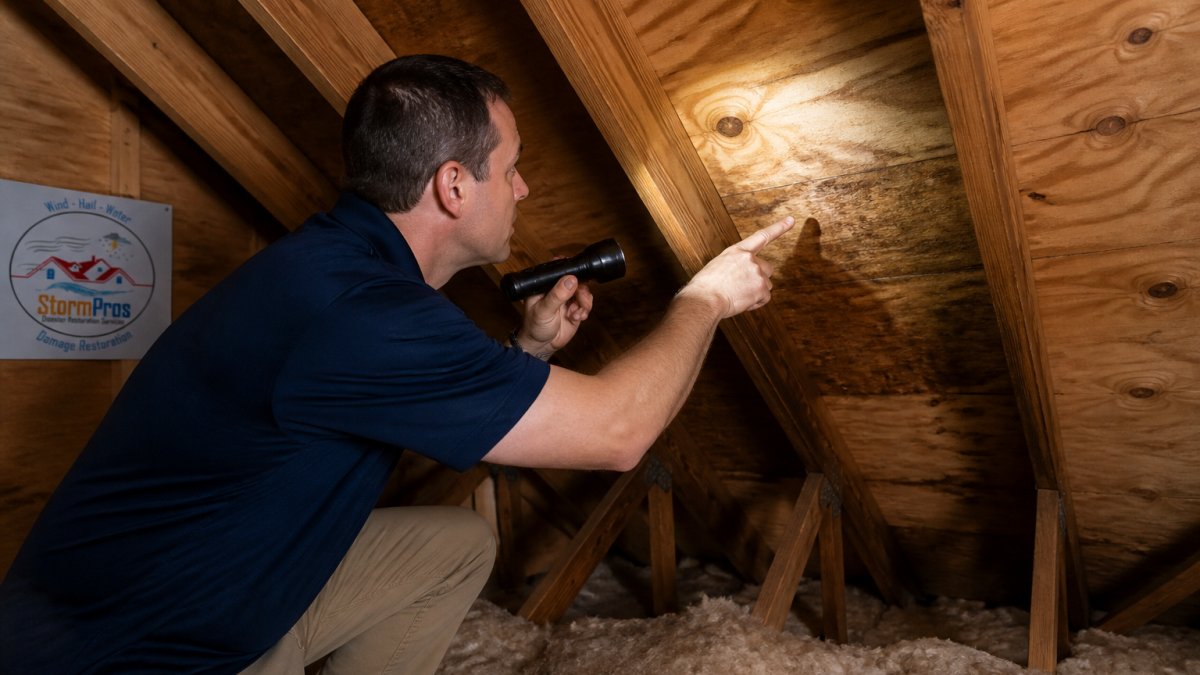
Finding a roof leak requires systematic inspection from inside and around your home, though professional inspectors have equipment and experience to locate hidden roof water seepage.
Indoor inspection checklist
Start your investigation inside your home where you can spot visible signs safely.
- Check all ceilings for water stains, discoloration, or soft spots
- Look for stains on upper-floor walls, particularly near corners
- Smell for musty odors indicating hidden moisture
- Inspect closets and storage areas on upper floors
- Check around light fixtures and ceiling fans for discoloration
- Examine attic insulation for wet or compressed areas
- Look for mold or mildew growth on any surfaces
- Document all findings with photos and notes
Mark stain locations on a sketch to correlate interior damage with exterior roof features.
Attic inspection checklist
The attic reveals the path water takes before entering living spaces.
- Use a flashlight to examine all roof decking for stains
- Check for wet or damp insulation
- Look for daylight penetrating through roof seams
- Inspect around roof penetrations (vents, chimneys, skylights)
- Examine attic ventilation for blockages or damage
- Check for frost accumulation in winter months
- Trace water stains upward toward the roof surface
- Look for evidence of previous repairs or patching
Pay special attention to roof valleys and areas where roof sections meet, these concentrate water flow and are common roof water seepage entry points.
Roof exterior inspection checklist
Ground-level and binocular inspection can reveal significant roof damage safely.
- Scan all roof slopes for missing or damaged shingles
- Look for shingles curling, cracking, or peeling
- Check flashing around chimneys, vents, and walls
- Examine gutters for excessive granule accumulation
- Look for debris, branches, or moss growth on roof
- Check roof valleys for damage or deterioration
- Inspect where roof meets walls or additions
- Note any patches or repair areas
Never climb on a wet roof or during storms. Falls from roofs cause serious injuries. If you’re uncomfortable with heights, hire a professional inspector instead.
Distinguishing Roof Leaks From Plumbing, Condensation, and HVAC Issues
Not every ceiling stain or attic moisture comes from your roof. Plumbing leaks, condensation, and HVAC system issues can mimic roof water seepage symptoms. Identifying the actual source prevents unnecessary roof repairs.
Plumbing leaks appear directly below bathrooms or kitchens in localized areas. Condensation forms in poorly ventilated attics as uniform dampness affecting large insulation areas. HVAC issues drip near equipment locations. Roof water seepage creates stains worsening after rain, following roof structure patterns (valleys, penetrations, seams).
When in doubt, have a professional inspect your home. Misidentifying the moisture source wastes time and money on incorrect repairs. Professionals can distinguish roof water seepage from other moisture sources quickly and accurately.
What to Do When Your Roof Is Leaking: Immediate Steps and Urgency Levels
Your response to roof water seepage depends on the leak’s severity. Some leaks require immediate action while others allow time for professional scheduling.
Immediate damage control
Active dripping or visible water intrusion requires immediate action to prevent further interior damage.
Take these steps now:
- Place buckets or tarps under drips to catch water
- Move furniture, electronics, and valuables away from affected areas
- Turn off electricity to wet areas if safe to do so
- Open windows to increase ventilation and reduce moisture
- Document damage with photos for insurance purposes
- Contact a professional roofer immediately
Temporary tarping may prevent additional water entry, but permanent repairs are necessary.
When to call for professional help
Contact a professional roofer if you discover any of these conditions:
- Active dripping or water pooling inside your home
- Water stains spreading rapidly across ceilings or walls
- Visible mold or mildew growth in the attic
- Daylight visible through the roof structure
- Multiple damaged or missing shingles
- Damaged flashing around penetrations
- Soft or spongy spots on roof decking
At StormPros, we can assess damage, document it for insurance, and recommend repairs that restore your roof to pre-damage condition. We handle the insurance claim process, simplifying your recovery.
Most roof leaks worsen rapidly if left unrepaired. What starts as a small stain can become structural damage within weeks. Professional inspection and repair prevent costly long-term damage to your home’s foundation and structure.
How Long Can a Roof Leak Go Unnoticed and What Happens if Ignored
Without intervention, roof water seepage causes cascading damage:
Weeks 1-4: Insulation absorbs moisture and loses thermal value. Attic wood framing begins showing stains. Mold spores start germinating in damp areas.
Weeks 5-12: Mold growth accelerates. Wood framing weakens as moisture penetrates deeper. Drywall and ceiling materials begin deteriorating.
Months 3-6: Structural framing shows visible rot. Ceiling materials sag from water weight. Mold spreads to living spaces.
Beyond 6 months: Roof structure integrity fails. Attic framing requires replacement. Foundation damage may require expensive stabilization. Mold remediation costs escalate significantly.
Early detection saves thousands in repair costs.
Regular attic inspections catch problems early. Seasonal inspections after winter and spring storms help identify new damage quickly.
According to the National Association of Home Builders, water damage is among the most common and costly homeowner insurance claims.
Roof water seepage doesn’t announce itself loudly. It starts quietly with a small stain, then spreads through your attic and walls.
At StormPros, we specialize in identifying and repairing roof water seepage.
Frequently Asked Questions
How can you tell if your roof is leaking water?
Look for water stains on ceilings or walls, active dripping during or after rain, and mold or mildew growth. In the attic, check for moisture, dampness, or staining on wood framing and insulation. Exterior signs include missing or curled shingles, damaged flashing, and granule accumulation in gutters. A musty odor often indicates hidden roof water seepage that may not yet show visible stains.
How can you tell whether a water stain is from a roof leak or plumbing?
Roof leaks typically appear near the roof line, peak, or along walls that face weather exposure. Plumbing leaks cluster around bathrooms, kitchens, or directly under fixtures. Roof leaks often follow a pattern traced back to damaged shingles or flashing, while plumbing stains are usually circular and appear suddenly after water use. Attic inspection helps confirm roof water seepage, you’ll see staining on rafters or roof decking, not just drywall.
How long can a roof leak go unnoticed?
A slow roof leak can progress undetected for months or even years if it’s in an unfinished attic or hidden cavity. However, active water intrusion typically causes visible signs within weeks: ceiling stains, mold growth, or musty odors. The longer a leak goes unaddressed, the greater the risk of structural rot, mold contamination, and foundation damage. Early detection during roof inspections prevents costly repairs and protects your home’s integrity.
What should you do first when you discover a roof leak?
Stop water from spreading inside by placing buckets under drips and moving valuables away from the affected area. Open windows to improve air circulation and reduce moisture buildup. Locate the leak source by inspecting the attic during daylight or after rain. Document damage with photos for insurance purposes. Contact a professional contractor immediately for a thorough inspection and repair plan, especially if the leak is active or the damage is widespread.


