 5.0 Out Of 250+ Reviews


 Financing Available


 (214) 227-2763

Table of Contents
- What Is a Storm Damage Assessment
- When to Conduct a Storm Damage Assessment
- Safety First: Post-Storm Access and Hazards
- How to Document Storm Damage for Insurance
- Using a Storm Damage Assessment Checklist
- Trees, Utilities, and Infrastructure
- Storm Damage Assessment and Your Insurance Claim
- From Assessment to Storm Damage Repair Process
- Visible Damage vs. Hidden Damage: What Gets Missed
- Frequently Asked Questions
Last Updated: October 19, 2026
What Is a Storm Damage Assessment
A storm damage assessment is a systematic inspection of your property to identify, document, and evaluate all damage caused by severe weather events. It forms the foundation of your insurance claim and repair planning. Think of it as a detailed inventory of what the storm broke, where it broke, and how badly.
The assessment serves multiple purposes. It protects your insurance claim by creating an official record of losses. It helps contractors understand the full scope of work needed. It also reveals hidden damage that isn’t visible at first glance, water seeping into walls, structural weakening, or foundation cracks that could worsen over time.
Purpose and Scope
An assessment answers specific questions: What damage occurred? How extensive is it? What needs immediate attention versus what can wait? When you work with StormPros, we use this assessment to simplify your entire claim process.
The scope depends on the storm type. Hail damage focuses on roof, siding, and windows. Wind damage examines structural integrity and loose or missing materials. Flooding requires checking foundation, basement, crawl spaces, and water intrusion points. Tornado damage is comprehensive, it affects everything from roof to landscape.
Documentation is critical. Your assessment becomes the evidence your insurance adjuster reviews. Clear photos, measurements, and detailed notes make the difference between a full payout and a reduced claim. This is where many homeowners fall short, they rush through documentation or miss areas entirely.
Who Conducts Assessments
Multiple professionals may conduct assessments, each with different expertise and goals.
Homeowner assessments are your initial walkthrough. You’re looking for obvious damage and safety hazards. This is not a complete assessment, but it’s your first critical step.
Insurance adjuster assessments are conducted by professionals hired by your insurance company. They determine what the policy covers and estimate repair costs. Their goal is accuracy, though their estimates sometimes run low.
Contractor assessments go deeper. Professional contractors like StormPros conduct thorough inspections that identify visible and hidden damage. We document everything needed for your claim and repair planning.
Government and disaster assessments happen after major events. FEMA and local authorities conduct preliminary damage assessments to determine disaster declarations and aid eligibility. These are broad surveys, not property-specific.
When to Conduct a Storm Damage Assessment
Timing matters. Conduct your initial assessment within 24-48 hours after the storm passes and it’s safe to do so. Early documentation prevents further damage from weather exposure and captures the damage in its original state.
Don’t wait weeks. Rain continues entering through roof damage. Wind can worsen structural cracks. Debris attracts pests. The sooner you assess, the sooner you can prevent secondary damage.
Your insurance company typically requires an assessment within a specific timeframe, check your policy. Many policies give you 30-90 days to file a claim. Waiting too long can complicate the process or result in claim denial.
If major structural damage is visible, call a professional immediately. Don’t attempt a comprehensive assessment yourself when safety is at risk. A contractor can assess safely while protecting your property.
Safety First: Post-Storm Access and Hazards
Never rush into damage assessment without checking for hazards first. Storm damage creates serious risks that can injure you or worsen property damage.
Downed power lines are deadly. Stay at least 10 feet away. Assume any line on the ground is live, even if it’s not sparking.
Unstable structures pose collapse risks. If your roof has large holes, walls are cracked, or the foundation appears shifted, stay out. Call a professional structural engineer or contractor.
Sharp debris is everywhere. Wear heavy gloves, sturdy boots, and long sleeves. Watch for nails, broken glass, and metal edges hidden in piles.
Mold and contamination develop quickly in water-damaged areas. If flooding occurred, assume contamination. Wear a respirator and gloves when entering wet spaces.
Electrical hazards extend beyond downed lines. Water and electricity don’t mix. Don’t touch electrical panels, outlets, or appliances in wet areas.
Gas leaks smell like rotten eggs. If you detect gas odor, evacuate immediately and call your gas company from outside. Don’t use electrical switches or create sparks.
Take photos and video from safe distances. Document damage from your yard or the street if interior access isn’t safe. Your insurance adjuster understands these hazards, they won’t penalize you for prioritizing safety.
How to Document Storm Damage for Insurance
Documentation makes or breaks your claim. Here’s how to do it right.
Take photos and video from multiple angles. Photograph each damaged area from close-up and wide shots.
Photograph undamaged areas too. This proves the condition before the storm. Insurance adjusters compare before-and-after. Without baseline photos, they may assume pre-existing damage.
Date your documentation. Write the date on a piece of paper and include it in photos. This proves when the damage occurred and when you documented it.
Create a written inventory. List each damaged item or area. Include location, description, and estimated age or replacement cost.
Keep receipts and records. If you paid for temporary repairs (tarping the roof, boarding windows), keep those receipts. Insurance may cover emergency mitigation.
Don’t throw away damaged items. Insurance adjusters sometimes want to see physical evidence. Keep a pile of damaged materials until your claim is settled.
Avoid making permanent repairs immediately. Your adjuster needs to see the damage. Temporary fixes are fine, permanent repairs can wait until after the assessment.
File your claim promptly. Contact your insurance company within 24-48 hours. Provide your documentation package immediately. The faster they receive it, the faster they can process your claim.
Using a Storm Damage Assessment Checklist
A structured checklist ensures you don’t miss damage. It keeps you organized and gives your insurance adjuster a complete picture.
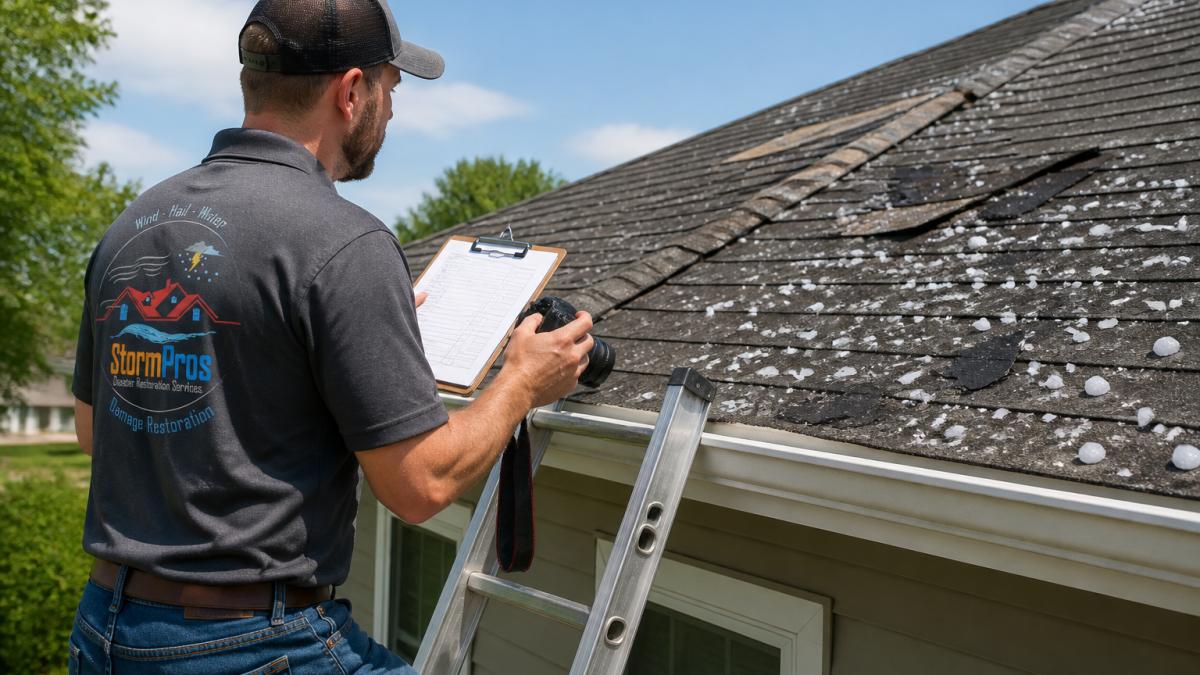
Roof and Attic Inspection
Start with the roof, it’s the most vulnerable to storm damage.
From the ground: Use binoculars to scan for missing shingles, visible damage, debris, or discoloration. Photograph any obvious issues.
Inside the attic: Look for water stains, leaks, mold, or light coming through the roof. Water stains indicate past or active leaks. Mold suggests moisture has been present for days or weeks.
Gutters and downspouts: Check for debris, dents, separation from the house, or standing water. Clogged gutters prevent drainage and cause water damage.
Chimney and vents: Look for cracks, missing flashing, or separation from the roof. These are common leak points.
Document everything with photos. Measure visible holes or missing sections if safe to do so.
Exterior and Structural Elements
Move beyond the roof to examine the full exterior.
Siding and walls: Look for dents, cracks, missing pieces, or color changes indicating water damage. Check all four sides of the house.
Windows and doors: Check for broken glass, cracked frames, bent hardware, or misalignment. Test operation to see if they open and close properly.
Foundation and basement: Look for new cracks, water intrusion, or efflorescence (white mineral deposits indicating moisture). Check basement corners and low points where water collects.
Decks and patios: Inspect for cracked boards, loose railings, or separated connections. Storm winds can shift structures.
Landscaping and hardscape: Note fallen trees, broken branches, damaged fencing, or cracked concrete. These count as damage too.
Trees, Utilities, and Infrastructure
Storm damage extends beyond the house structure.
Trees: Document uprooted trees, broken branches, or trees leaning against the house. Note which trees pose safety risks and which can wait for removal.
Power lines and utility poles: Report downed lines to your utility company immediately. Document the location and take photos from a safe distance.
Detached structures: Check sheds, garages, carports, or fences for damage. These are typically covered under homeowners insurance.
Drainage systems: Verify that gutters, downspouts, and grading still direct water away from the foundation. Shifted soil or debris can alter drainage.
Storm Damage Assessment and Your Insurance Claim
Your assessment directly impacts your claim outcome. Here’s how they connect.
Submit your documentation to your insurance company immediately. Include photos, video, written inventory, and receipts for temporary repairs. The more complete your package, the faster they can process your claim.
Your insurance adjuster will conduct their own assessment. They’ll compare your documentation with their findings. If discrepancies exist, your thorough documentation strengthens your position.
Many homeowners discover that initial insurance estimates undervalue damage. This is where professional assessment becomes invaluable. When StormPros conducts a comprehensive assessment, we often identify damage the adjuster missed. We can request a supplemental inspection and provide detailed documentation to support a higher claim value.
Don’t accept the first estimate if you believe it’s incomplete. Request a supplemental inspection. Provide additional photos or contractor assessment. Insurance companies expect this process, it’s normal and appropriate.
From Assessment to Storm Damage Repair Process
Assessment leads directly into repair planning. Once damage is documented, you and your contractor create a repair timeline and budget.
Immediate repairs address safety hazards and prevent further damage. A leaking roof needs tarping. Broken windows need boarding. These happen first.
Phase 1 repairs tackle major structural damage. Roof replacement, siding repair, foundation work. These are typically the largest expenses and take the most time.
Phase 2 repairs address secondary damage. Interior water damage, mold remediation, flooring replacement. These happen after the structure is sealed.
Phase 3 repairs restore and improve. Painting, landscaping, finishing touches. These complete the restoration.
Your insurance settlement should cover all necessary repairs. If your estimate comes up short, request supplemental assessment. Document any additional damage discovered during repairs.
When working with StormPros, we manage this entire process. We conduct the assessment, work with your insurance adjuster, coordinate repairs, and ensure your property is restored to exceed pre-damage condition.
Visible Damage vs. Hidden Damage: What Gets Missed
The most dangerous gap in storm damage assessment is hidden damage. What you can’t see often costs more than what you can.
Water intrusion is the silent killer. A small roof leak can saturate attic insulation, rot roof decking, and promote mold growth, all invisible from the ground.
Structural shifting happens gradually. A foundation crack from wind pressure might seem minor initially. Over months, it worsens as the house settles unevenly.
Electrical and plumbing damage is completely hidden. Water in walls can corrode wiring or pipes. Vibration from wind can loosen connections.
Attic damage is overlooked because homeowners rarely inspect attics thoroughly. Roof leaks, structural cracks, and moisture accumulation happen overhead and out of sight.
Secondary water damage develops after the initial storm. A partially damaged roof lets rain in during the next storm.
This is why professional assessment matters. Experienced contractors know where hidden damage typically occurs. We inspect spaces homeowners miss.
When you work with StormPros, our assessment includes a complete evaluation for hidden damage.
Storm damage assessment isn’t just about filing an insurance claim, it’s about protecting your home and understanding the full scope of what needs repair.
Frequently Asked Questions
What counts as storm damage that needs assessment?
Storm damage includes visible harm from wind, hail, heavy rain, ice, flooding, or tornadoes. Common examples are roof shingle loss, bent gutters, broken windows, water intrusion, tree limbs on structures, siding dents, and foundation cracks. Secondary damage like mold growth or rot from water seepage also counts. A professional storm damage assessment identifies all these types so nothing gets overlooked during your insurance claim.
Should I document storm damage before making repairs?
Yes. Document all damage with photographs and written notes before repairs begin. Take photos from multiple angles, capture close-ups of specific damage, and record the date and weather conditions. This evidence supports your insurance claim and prevents disputes over pre-existing versus storm-caused damage. If you make repairs first, your insurer may deny claims, assuming the damage was pre-existing or unrelated to the storm.
How does a storm damage assessment help with my insurance claim?
A thorough storm damage assessment creates a detailed record of all damage, which strengthens your claim and helps ensure the insurance company doesn’t underestimate repair costs. Professional assessments often reveal hidden damage that homeowners miss, leading to higher claim payouts. When your assessment shows comprehensive damage documentation and severity ratings, adjusters are less likely to dispute your claim or offer artificially low estimates.
What’s the difference between a homeowner assessment and a professional inspection?
Homeowners can perform an initial visual inspection to identify obvious damage and document it for insurance. A professional storm damage assessment goes deeper, using specialized tools and protocols to detect hidden damage, measure extent, classify severity, and produce a formal report that meets insurance standards. Professionals also understand local building codes and what repairs are necessary versus cosmetic, which protects you from overpaying or underclaiming.


