 5.0 Out Of 250+ Reviews


 Financing Available


 (214) 227-2763

Table of Contents
- What Gutter Hangers Do and Why They Matter
- Visible Sagging or Pulling Away from the House
- How to Fix Sagging Gutters
- Rust, Corrosion, and Fastener Damage
- Water Pooling and Signs of Water Damage from Overflowing Gutters
- Leaking Seams, Cracks, and Hanger Spacing Issues
- Cost of Seamless Gutter Installation and Hanger Replacement
- When to Call a Professional
- Frequently Asked Questions
Last Updated: October 3, 2026
What Gutter Hangers Do and Why They Matter
Gutter hangers are the fastening system that holds your gutters securely to your home’s fascia board. Without them, your gutters would simply fall away from the house, leaving your foundation and siding exposed to water damage. Gutter hangers are often the first component to fail during storms or under the weight of debris and standing water.
These metal brackets come in several styles: spike and ferrule systems (older, less reliable), hidden hangers (mounted inside the gutter), and bracket-style hangers (bolted to fascia). Knowing when yours are failing prevents costly water damage.
The real problem is recognizing when gutter hangers fail. Sagging gutters aren’t cosmetic, a gutter pulling away from your house allows water to pool behind it, seeping into the fascia board and creating rot that spreads into structural framing.
Visible Sagging or Pulling Away from the House
The most obvious sign you need new gutter hangers is visible sagging. If you look at your gutters from the ground and notice they’re no longer level, if they dip in the middle or pull away from the fascia board, the hangers are failing.
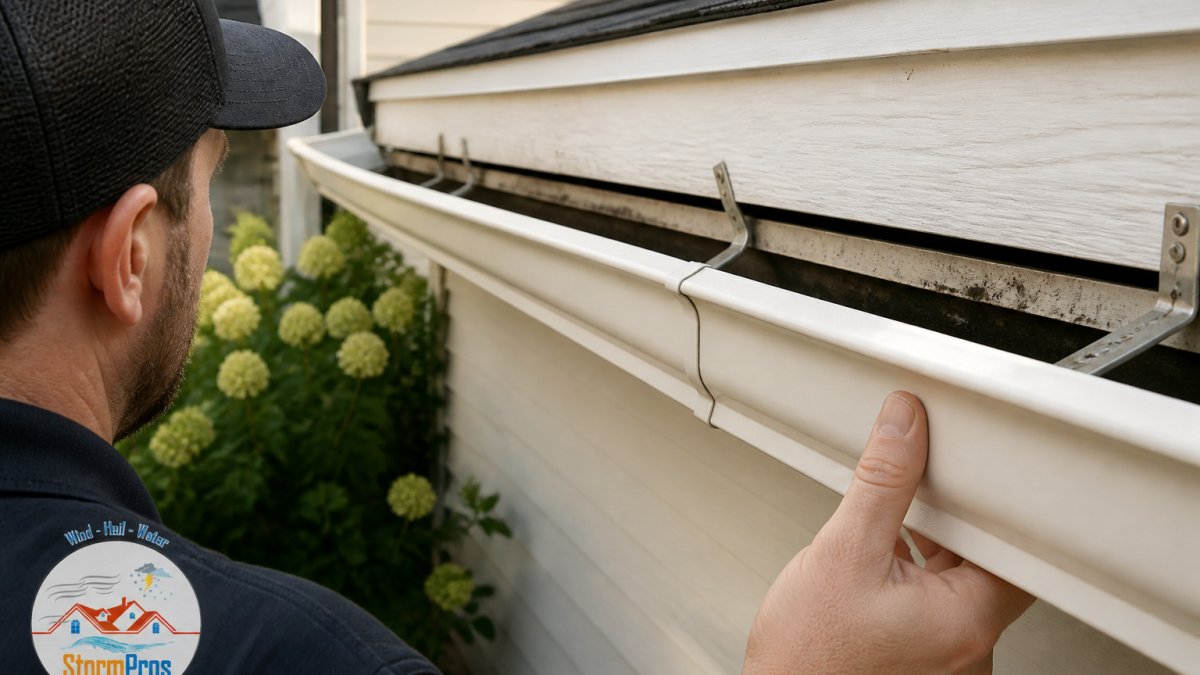
Sagging occurs when spike and ferrule hangers corrode or work loose, or when heavy snow, ice, and debris overwhelm weakened hangers. Improper original spacing also causes uneven load distribution and early failure.
The gap between the gutter and fascia is the critical detail. Even a quarter-inch gap allows water to flow behind the gutter instead of into it. That water then saturates your fascia board, creating the perfect environment for rot. Once rot starts, it spreads quickly through the wood and can eventually compromise the structural integrity of your home’s exterior wall.
How to Fix Sagging Gutters
Start by determining whether the hanger has failed completely or simply needs tightening, this distinction saves time and money.
DIY Hanger Diagnosis: Tighten vs. Replace
Before calling a professional, inspect each hanger. Spike-and-ferrule hangers often loosen rather than fail outright. Look for these signs:
- Visible gap between ferrule and fascia board: If the ferrule (the metal sleeve around the spike) has pulled away from the wood, the hanger is loose. Try tightening the spike by hand or with a wrench, if it turns, you may only need to re-secure it.
- Spike still firmly seated but gutter still sags: This indicates the ferrule has corroded or the wood has compressed. Tightening won’t help; replacement is necessary.
- Hidden hangers (inside the gutter): These cannot be tightened. If the gutter is sagging and you have hidden hangers, they’ve failed and must be replaced.
- Bracket-style hangers with visible bolts: Check if bolts are loose by attempting to tighten them with a wrench. If they’re already tight but the gutter still sags, the bracket itself has bent or the fascia has rotted.
When Professional Replacement Is Necessary
Replacement becomes necessary when:
- Corrosion is visible on the hanger or ferrule: Orange, brown, or white deposits indicate metal degradation. Corroded hangers cannot be safely re-tightened and will fail again under load.
- The fascia board is soft, discolored, or spongy: Press the fascia with a screwdriver tip. If it sinks in easily, the wood has rotted and cannot hold a new hanger securely. The fascia must be replaced first.
- Multiple hangers in the same run are failing: This suggests a systemic problem, either improper original spacing, a structural issue with the gutter, or widespread corrosion. A professional assessment is essential.
- The hanger type is spike-and-ferrule and the home is over 20 years old: These hangers have a typical lifespan of 15-25 years. Replacement with a modern hanger type (hidden or bracket-style) is often the best long-term solution.
Hangers should be spaced 24 to 32 inches apart; closer spacing (18-24 inches) is critical in heavy snow or high-rainfall regions. If original hangers exceed 32 inches apart, that’s a primary cause of sagging. When replacing, follow tighter spacing standards for your climate.
When replacing, consider upgrading materials: galvanized steel (15-25 years), stainless steel (30+ years, ideal for humid/coastal areas), or aluminum (lightweight, corrosion-resistant). For seamless gutters, hidden hangers distribute load more evenly and resist corrosion better than visible brackets.
Rust, Corrosion, and Fastener Damage
Rust and corrosion kill gutter hangers, with failure mechanisms varying by hanger type and regional climate. Understanding these patterns helps predict which hangers fail first.
Hanger-Type-Specific Corrosion Patterns
Spike-and-ferrule hangers are most vulnerable because dissimilar metals (steel spike and aluminum/copper ferrule) corrode via galvanic action. The ferrule corrodes first, loosening the spike. White or green powdery deposits indicate oxidation and imminent replacement need.
Hidden hangers are shielded from rain but corrode from inside if water pools or debris traps moisture. Corrosion is harder to detect until sudden failure.
Bracket-style hangers corrode at bolt connections and bracket-gutter joints. Stainless steel bolts resist corrosion better than galvanized; galvanized bolts typically fail first.
Regional climate dramatically affects hanger lifespan. High-humidity regions (Southeast, Pacific Northwest) reduce galvanized hanger life to 15-20 years; stainless steel is better. Coastal areas accelerate corrosion exponentially; stainless steel is strongly recommended. Heavy snow regions stress hangers under load; closer spacing (18-24 inches) and stainless steel are advisable. Arid regions see slower corrosion; galvanized hangers typically last 25+ years.
Orange or brown discoloration indicates rust penetrating the protective coating; mid-to-late stage degradation. White or green powdery deposits signal active oxidation and failing protective layer. Black or dark staining indicates water pooling and internal corrosion acceleration. Pitting or small holes indicate advanced corrosion with compromised structural integrity; replacement is urgent.
Corrosion reduces load-bearing capacity by 30-50% or more. A hanger appearing 60-70% corroded may fail suddenly under heavy rain, debris, or snow load. Regular inspection is critical to catch corrosion at the 20-40% stage before failure.
Bolts, screws, and nails corrode independently of the hanger. Galvanized fasteners degrade faster than the hanger body. Rust stains running down fascia indicate corroded fasteners. Replace with stainless steel bolts or screws, a quick, inexpensive upgrade that extends hanger life.
Slow corrosion through preventive maintenance: clean gutters twice yearly to prevent moisture-trapping debris; ensure proper pitch (0.5 inches per 40 feet) for free water flow; inspect after storms to catch early corrosion; consider rust-inhibiting coatings in high-corrosion environments (coastal or high-humidity regions).
Water Pooling and Signs of Water Damage from Overflowing Gutters
Failed hangers allow water to pool and overflow, running down fascia and siding. Dark stains, soft spots, mold, or peeling paint indicate water damage underway. Water pooling in the gutter (visible when raining) signals lost pitch; stagnant water breeds mold and mosquitoes. Consistent overflow pools water around the foundation, creating hydrostatic pressure that leads to basement leaks, foundation cracks, and settling, a long-term structural threat.
Leaking Seams, Cracks, and Hanger Spacing Issues
Leaking seams often develop as a secondary problem when gutter hangers fail. As the gutter sags or pulls away, the stress concentrates at the seams where two sections of gutter meet. The constant movement causes the seam sealant to crack, and water begins to drip through.
Visible cracks or splits in the gutter itself are also a sign that structural stress from failed hangers is putting too much pressure on the gutter material. Aluminum and steel gutters are designed to flex slightly, but when hangers fail, the gutter moves too much, and the material fatigues and cracks.
Improper hanger spacing is often the root cause of these problems. If hangers are spaced too far apart, the gutter sags between them, creating stress at the seams and allowing water to pool in the low spots. When you inspect your gutters, count the distance between hangers. If it’s more than 32 inches, that’s likely contributing to your problems.
Replacing hangers with proper spacing, typically 24 inches for most homes, closer in areas with heavy snow or rainfall, will eliminate the stress that causes seams to leak and gutters to crack.
Cost of Seamless Gutter Installation and Hanger Replacement
The cost of seamless gutter installation and hanger replacement varies based on the extent of damage, the materials you choose, and whether your fascia board needs replacement.
For hanger replacement alone, pricing depends on how many hangers need to be replaced and the type of hanger you choose. Bracket-style hangers are generally less expensive than hidden hangers, but hidden hangers are often a better choice for seamless gutters because they’re more durable and don’t show.
If your fascia board has rotted, replacement becomes necessary. Fascia replacement adds significant cost because the board must be removed, the rotted wood disposed of, and new material installed and painted. This is where professional assessment matters, a contractor can identify rot early and give you an accurate estimate.
For a complete seamless gutter system with new hangers and fascia replacement, the investment is substantial, but it’s far less than repairing water damage to your foundation, siding, or interior. The key is catching hanger failure early before secondary damage spreads.
When to Call a Professional
Gutter hanger replacement is not a DIY project. Working at height, handling fasteners, ensuring proper alignment, and assessing fascia damage all require professional expertise and equipment.
Call a professional if you notice any of the signs covered in this guide: visible sagging, water stains on your fascia or siding, corrosion on hangers, water pooling in gutters, or leaking seams. A professional inspection will identify exactly which hangers have failed and whether there’s hidden damage to your fascia board or home’s exterior.
StormPros specializes in gutter inspection and replacement as part of comprehensive storm damage restoration. Our team can assess your gutter system, identify failing hangers, and handle the complete replacement process, including fascia repair if needed. We work with your insurance claim to simplify the restoration process and protecting your home’s foundation and structure.
Gutter hanger failure isn’t just a cosmetic problem, it’s a structural threat that accelerates water damage to your home. If you’re seeing signs of sagging, corrosion, or water damage, don’t wait. Get a professional inspection and address the problem before secondary damage becomes expensive. Contact StormPros for a free quote.
| Sign of Hanger Failure | What It Means | Next Step |
|---|---|---|
| Visible sagging or pulling away | Hangers are losing load-bearing capacity | Schedule professional inspection |
| Rust, corrosion, or discoloration | Metal fasteners are degrading | Replace hangers soon |
| Water pooling in gutter | Loss of proper gutter pitch | Check hanger spacing and alignment |
| Water stains on fascia or siding | Water running behind gutter | Inspect fascia for rot |
| Leaking seams or cracks in gutter | Structural stress from failed hangers | Replace hangers and assess gutter condition |
Hanger spacing is critical. Most homes need hangers every 24-32 inches. If yours are farther apart, that’s likely why you’re seeing sagging. When you replace hangers, ensure proper spacing for your climate, areas with heavy snow or rainfall need closer spacing.
Don’t ignore water stains on your fascia board. Once water starts running behind your gutter, rot spreads quickly. A small fascia repair today prevents a structural replacement later.
Frequently Asked Questions
What are the signs of failing gutter hangers?
Failing gutter hangers show visible sagging, rust on fasteners, water pooling in the gutter, and gaps between the gutter and fascia board. You may also notice seam leaks, cracks in the gutter body, or hangers that have loosened from improper spacing. These signs indicate the hangers can no longer support the gutter’s weight and water load, risking foundation erosion and structural damage.
Can you replace gutter hangers without replacing the whole gutter?
Yes, you can replace individual gutter hangers if the gutter itself is still in good condition. However, if the gutter is old, corroded, or has multiple weak points, replacing only the hangers may be a temporary fix. A professional inspection can determine whether hanger replacement alone will restore proper gutter pitch and alignment or if a full gutter system replacement is more cost-effective long-term.
How do I know if my gutters are pulling away from the house?
Look for visible gaps between the gutter and the fascia board along the roofline. Water may drip behind the gutter instead of flowing through it. You might also notice the gutter tilting downward at an angle or sagging in the middle of runs. These signs mean the hangers have lost their load-bearing capacity and are no longer holding the gutter firmly against the house.
What causes gutter hangers to break or loosen?
Gutter hangers fail due to improper bracket spacing, rust and corrosion from moisture exposure, freeze-thaw cycles that weaken fasteners, and excessive weight from debris, ice, or water pooling. Climate stress and age also contribute to fastener degradation. Over time, the combination of weight and weather exposure causes the spike and ferrule or hidden hangers to lose their grip on the fascia board.


