 5.0 Out Of 250+ Reviews


 Financing Available


 (214) 227-2763

Table of Contents
- Why Siding Replacement Matters for Your Home
- 1. Visible Cracks, Chips, and Severe Peeling Paint
- 2. Warping, Buckling, and Blistering Panels
- 3. Signs of Water Damage Behind Siding
- 4. Mold, Mildew, and Pest Infestations
- 5. Rising Energy Bills and Thermal Efficiency Loss
- When to File an Insurance Claim for Siding Damage
- Using a Siding Replacement Cost Estimator
- Frequently Asked Questions
Last Updated: October 2, 2026
Why Siding Replacement Matters for Your Home
Your siding is your home’s first line of defense against weather, pests, and water damage. When it fails, the problems multiply fast. Water seeps behind panels. Mold grows in hidden spaces. Your heating and cooling costs spike. The structural integrity of your home gets compromised.
Most homeowners don’t realize how serious siding damage becomes until it’s too late. Small cracks turn into major water infiltration. Peeling paint signals deeper problems underneath. By the time you notice interior wall damage, you’re looking at expensive repairs that could have been prevented.
The good news: you don’t have to guess whether your siding needs repair or full replacement. There are clear warning signs.
This guide walks you through each indicator. You’ll learn what to look for, why it matters, and when replacement becomes the only smart choice.
1. Visible Cracks, Chips, and Severe Peeling Paint
Cracks and chips in your siding aren’t just cosmetic problems. They’re entry points for water.
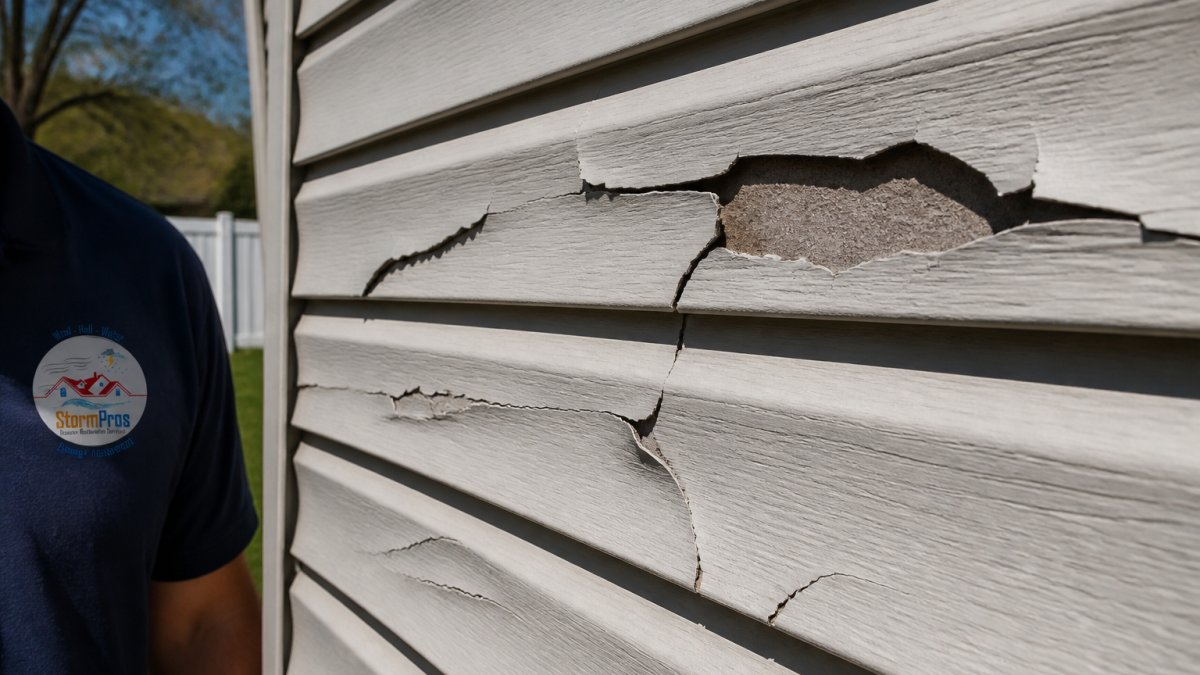
(/services/siding-wood-rot-repairs/) or decay is beginning underneath
When paint peels across large sections of your home, replacement is usually the right call. Repainting won’t solve the underlying moisture problem.
Look for these specific patterns:
- Cracks longer than 1/8 inch that run horizontally or vertically
- Chips that expose the substrate material underneath
- Paint peeling in patches rather than isolated spots
- Blistering or bubbling across multiple panels
If you’re seeing these signs, your siding’s protective coating has failed. Water resistance is compromised.
2. Warping, Buckling, and Blistering Panels
When siding panels warp, buckle, or blister, the structural integrity of your exterior cladding is already compromised.
Warping happens when panels absorb moisture unevenly. One side of a panel gets wet while the other stays dry.
Buckling occurs when panels are installed too tightly or when moisture builds up behind them. The panels have nowhere to expand, so they bow outward. These bulging sections catch wind differently, creating stress points that eventually crack.
Blistering looks like bubbles under the paint. It means water vapor is trapped between the siding material and its protective coating.
Check for these warning signs:
- Panels that don’t sit flat against the wall
- Visible gaps between siding panels
- Bulging or bowed sections that catch your eye
- Blisters or bubbles under the paint surface
- Panels that move when you push on them
Warping and buckling panels also compromise thermal efficiency. Gaps allow air to escape. Your heating and cooling system works harder. Energy bills rise.
If multiple panels show these signs, patching won’t work. Individual panel replacement often fails because the underlying moisture problem remains.
3. Signs of Water Damage Behind Siding
Water damage behind siding is the most dangerous problem because you can’t see it developing.
The first sign is usually soft spots on your exterior wall. Press gently on the siding.
Interior moisture intrusion shows up as:
- Discoloration or staining on interior walls
- Damp spots that appear after rain
- Soft drywall or plaster that crumbles when touched
- Visible mold or mildew inside your home
- A musty smell in walls or attics
Water damage progresses quickly once it starts. Moisture wicks into insulation, reducing its effectiveness. It soaks into wood framing, creating conditions for dry rot.
The real problem: once water gets behind your siding, repair is nearly impossible. You’d need to remove siding, replace damaged framing, add new insulation, and reinstall everything.
If your inspector finds evidence of water damage behind siding, replacement is the only reliable fix. New siding with proper installation prevents future water infiltration.
4. Mold, Mildew, and Pest Infestations
Mold and mildew on your siding indicate moisture problems. But when you find them growing behind panels or inside your walls, it’s a sign that replacement is necessary.
Fungus growth thrives in damp environments. Surface mold on siding might be cleanable, but mold growing inside your walls is a different problem. It means moisture is trapped behind your exterior cladding.
Pest infestations follow moisture. Insects and rodents are attracted to damp wood. If you find evidence of termites, carpenter ants, or other wood-boring insects, it means:
- Your siding has absorbed moisture
- Wood has softened enough for pests to tunnel through
- Structural damage is likely already occurring
Common signs of pest damage:
- Small holes in siding panels
- Sawdust or frass (insect droppings) around the base
- Soft spots where insects have tunneled
- Visible insects or insect nests in siding gaps
Mold behind siding is particularly serious. It spreads through walls. It releases spores into your home’s air.
When mold is growing behind your siding, cleaning the surface won’t solve the problem. The moisture source must be eliminated. Your siding’s ability to shed water has failed.
5. Rising Energy Bills and Thermal Efficiency Loss
Your siding provides insulation value. When it fails, your home loses thermal efficiency. You’ll notice this immediately on your utility bills.
Energy bills spike when:
- Gaps between panels allow air to escape
- Moisture has damaged insulation behind siding
- The protective coating no longer seals properly
- Warped or buckled panels create air leaks
A home with compromised siding works like a building with broken windows. Your HVAC system runs constantly trying to maintain temperature.
Over time, these higher energy costs add up. A 20-30% increase in heating or cooling costs isn’t unusual for homes with failed siding.
New siding restores thermal efficiency. Modern materials with proper insulation backing reduce energy consumption. Many homeowners see energy bill reductions of 10-20% after replacement.
Beyond cost savings, better thermal efficiency means:
- More consistent indoor temperatures
- Improved comfort throughout your home
- Reduced strain on your HVAC system
- Lower carbon footprint
If your energy bills have risen significantly and you’ve ruled out HVAC problems, your siding is likely the culprit.
When to File an Insurance Claim for Siding Damage
Storm damage often triggers siding failure. Hail, high winds, and falling debris all damage exterior cladding. If your siding damage resulted from a covered event, your insurance may pay for replacement.
Document everything immediately. Take photos of all visible damage before weather conditions change. Photograph cracks, chips, impact marks, and any water intrusion.
Contact your insurance company promptly. Most policies have time limits for filing claims. Provide your documentation and a detailed description of the damage.
Here’s where many homeowners lose money: insurance adjusters often underestimate damage. They might approve payment for repairs when replacement is actually necessary.
This is where working with experienced contractors matters. We help document damage thoroughly.
Key points for your claim:
- File promptly after damage occurs
- Document everything with photos and dates
- Get a detailed estimate from a qualified contractor
- Don’t accept the first adjuster estimate without review
- Work with professionals who understand insurance processes
Many homeowners don’t realize they can request a second opinion if they disagree with the adjuster’s estimate.
Using a Siding Replacement Cost Estimator
Estimating replacement costs helps you budget and understand what fair pricing looks like.
Material choice is the biggest variable. Vinyl siding costs less than fiber cement.
Square footage determines material quantity. Your home’s size directly impacts total cost.
Complexity affects labor costs.
Regional pricing varies. Labor rates differ between regions. Material availability affects pricing.
Additional work often becomes necessary during replacement. Installers might discover rot or water damage.
A reliable cost estimator accounts for these factors:
- Your home’s total square footage
- Material selection and quality grade
- Your geographic location
- Complexity of your home’s design
- Current labor rates in your area
We inspect your home thoroughly. We identify any hidden damage.
| Factor | Impact on Cost | What to Watch |
|---|---|---|
| Material type | Varies $3-12 per sq ft | Higher quality lasts longer |
| Square footage | Direct multiplier | Measure carefully |
| Complexity | Increases labor time | Multi-story homes cost more |
| Hidden damage | Discovered during work | Budget 10-15% contingency |
| Regional rates | Significant variation | Get multiple quotes |
Replacing your siding is one of the biggest home maintenance decisions you’ll make.
Ignoring these warning signs leads to structural damage, mold growth, and escalating repair costs.
Frequently Asked Questions
Do I need new siding or just a repair?
If damage is isolated to one or two panels and your siding is less than 15 years old, repair may be sufficient. However, if you notice multiple signs like widespread cracks, buckling, or water infiltration across different areas, full siding replacement is usually the better choice. A professional inspection can identify whether your home’s structural integrity is at risk from moisture or pest damage, which often requires complete replacement rather than patching individual sections.
What are the most common signs of siding failure?
The most common signs include visible cracks and chips, warping or buckling panels, peeling or fading paint, mold or mildew growth, and rising energy bills. Water damage behind siding is particularly concerning because it indicates moisture infiltration that can compromise your home’s insulation and structural integrity. If you notice any combination of these signs, have a professional evaluate whether your siding panels need replacement to prevent long-term damage.
Can water damage behind siding lead to structural issues?
Yes. Water infiltration behind siding can cause dry rot in wood framing, compromise insulation effectiveness, and create conditions for mold growth. Over time, this moisture intrusion weakens the structural integrity of your home’s exterior cladding and interior walls. If caught early, targeted repairs may suffice, but extensive water damage typically requires full siding replacement to restore proper weather resistance and protect your foundation and home value.
How long does modern siding typically last?
Vinyl siding generally lasts 20-40 years, fiber cement lasts 25-40 years, and wood siding lasts 15-40 years depending on maintenance and climate exposure. If your siding is approaching or past these timelines and showing multiple failure signs, replacement becomes more cost-effective than ongoing repairs. Material-specific failure indicators, like vinyl becoming brittle or fiber cement developing cracks, often signal that full replacement is necessary to maintain your home’s curb appeal and protective coating.


