 5.0 Out Of 250+ Reviews


 Financing Available


 (214) 227-2763

Last Updated: November 4, 2026
Quick Summary
You should replace roof shingles when they are cracked, curled, missing, or losing granules, since these signs mean the protective top layer is failing. Water stains inside the home are the most urgent sign, because water is already past the shingles and underlayment. Shingles failing across multiple slopes call for replacement rather than repeated patches.
- Roofs past the 15-year mark are especially prone to brittle, cracked shingles from UV exposure.
- A gritty granule buildup in gutters season after season signals the shingle top layer is gone.
- Inspect from the ground with binoculars and from the attic with a flashlight instead of climbing the roof.
- Curling along one slope often points to poor attic ventilation rather than a shingle problem alone.
- Repeated repairs in the same area over 2 to 3 years usually mean the assembly, not the shingle, is failing.
Table of Contents
- 1. Cracked, Broken, or Brittle Shingles
- 2. Curled, Buckling, or Raised Shingles
- 3. Missing Shingles and Granule Loss
- 4. Water Stains, Leaks, and Interior Damage
- 5. Roof Age, Discoloration, and Moss Growth
- 6. How to Inspect Roof Shingles for Damage Safely
- 7. Signs of Storm Damage on Your Roof
- 8. Repair or Replace? What the Average Cost of Roof Replacement Tells You
- Frequently Asked Questions
1. Cracked, Broken, or Brittle Shingles
Cracked, broken, or brittle shingles are the clearest early warning that your roof is nearing the end of its service life. When asphalt shingles dry out, they lose the flexibility that lets them expand and contract with temperature swings.
Here is what to look for from the ground with a pair of binoculars:
- Hairline cracks running across individual shingle tabs
- Chunks missing from shingle edges, especially near the ridge or valleys
- Shingles that snap instead of bending when you press a corner
- Cracked ridge caps along the peak of the roof
A common mistake is treating one cracked shingle as a one-off repair. One crack usually means the surrounding shingles are the same age and the same condition. If you are finding cracks in several spots, the shingle field is failing as a whole.
Roofs past the 15-year mark are especially prone to this, particularly after several summers of intense UV exposure. If you are unsure whether what you are seeing is normal wear or a real problem, our guide on the warning signs of a leaking roof walks through what each symptom means.
2. Curled, Buckling, or Raised Shingles
Curled and buckling shingles point to a roof that is either drying out or trapping moisture underneath. The fix depends on which one it is, and that is why this sign deserves a closer look rather than a quick patch.
Curling usually means the shingles have simply aged out.
Watch for these patterns:
- Edges lifting away from the shingle below
- A wavy, uneven look across a whole slope
- Shingles rising along a straight line, which can follow a seam in the roof deck
- Nails backing out and lifting the shingle above them
Raised shingles let wind-driven rain get underneath the layers. Once water is under the shingles, it has a clear path to the decking and eventually into your ceiling. That is the point where a repair turns into a replacement conversation.
3. Missing Shingles and Granule Loss
Missing shingles and heavy granule loss are two of the most reliable signs it is time to replace roof shingles, because both mean the protective top layer is gone. Granules shield the asphalt from UV rays.
Check your gutters and downspouts after a rain. A handful of granules is normal on a new roof. A gritty buildup that looks like coarse sand, season after season, is not.
Where to look:
- Gutters: granule piles collecting at the bottom of the run
- Downspout splash blocks: dark grit washed out after storms
- Bare patches on the roof: dark spots where the asphalt shows through
- Missing tabs: visible gaps in the shingle pattern, often after high wind
Missing shingles also open the door to water intrusion at the exact spot where the seal failed.
4. Water Stains, Leaks, and Interior Damage
Water stains inside the home are the most urgent sign on this list.
Look for these interior clues:
- Brown or yellow rings on ceilings and walls
- Bubbling or peeling paint
- Damp, musty smells in the attic
- Daylight showing through the roof boards
- Sagging spots in the ceiling
Interior damage rarely stays put. If you have an active leak, our guide on preventing interior water damage from a roof leak covers the steps to limit the damage before the roof is replaced.
Watch out: never ignore a stain because it is not actively dripping. A stain that appears once and dries can still mean a slow leak that only shows up during certain storms.
5. Roof Age, Discoloration, and Moss Growth
Roof age is the single most predictable factor in whether shingles need replacing.
Discoloration comes in a few forms:
- Dark streaks from algae, common on north-facing slopes
- Faded or chalky patches where granules have worn away
- Green or black growth from moss and lichen holding moisture against the shingles
- Rust-colored stains near vents or flashing
Moss and algae do more than look bad. Moss traps water and its roots work into the shingle surface. Algae streaks signal moisture retention.
If you are unsure how often your roof should be checked given its age, our guide on how often to have your roof inspected breaks down the schedule by roof type and age.
6. How to Inspect Roof Shingles for Damage Safely
You can inspect roof shingles for damage without climbing onto the roof. Most of what matters is visible from the ground with binoculars, and the rest you can check safely from inside the attic.
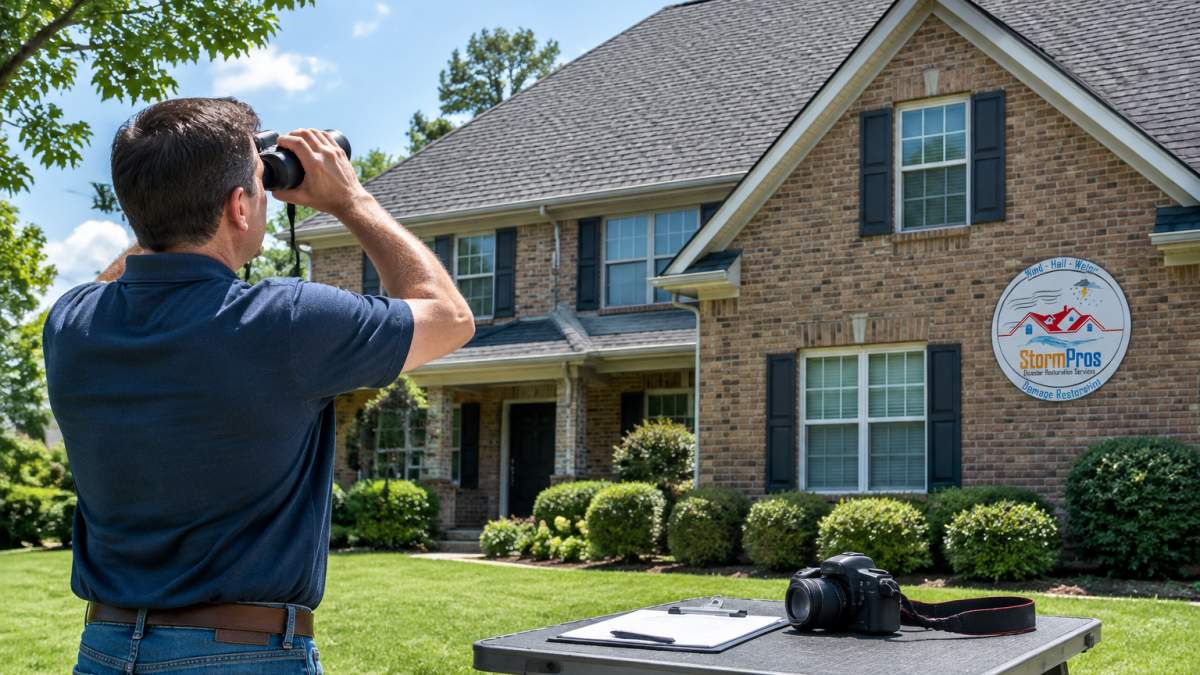
Here is the safe routine we recommend:
- Walk the perimeter with binoculars and scan each slope for missing, curled, or discolored shingles.
- Check the gutters for granule buildup and shingle debris.
- Look at the flashing around chimneys, vents, and skylights for gaps or rust.
- Step into the attic with a flashlight and look for stains, daylight, or damp insulation.
- Photograph anything suspicious so you have a record for an insurance claim or a contractor visit.
Read the symptom, not just the shingle. Shingles are the top layer of a roof assembly, and many shingle symptoms trace back to a component underneath or beside them:
- Curling along one slope often points to poor attic ventilation. If the attic cannot vent heat and moisture, the deck stays hot and damp, and the shingles above it age faster than the rest of the roof.
- Buckling in a straight line can follow a seam in the roof deck or a deck board that has shifted, which is a decking problem, not a shingle problem.
- Stains near a chimney, skylight, or vent usually mean the flashing has failed. New shingles over bad flashing will leak again.
- Granule loss concentrated in one area can mean the shingles there were installed poorly, or that a prior repair disturbed the surrounding field.
- Damp insulation or a musty attic smell points to a moisture path that may start at the underlayment or at a penetration, not at the shingle surface.
That distinction matters because it changes the fix. Replacing shingles over failing flashing or a rotting deck buys you a short window before the same symptom returns.
Watch out: roofs are steep, and a fall from even a single story causes serious injury. If you want a full walkthrough, see our step-by-step guide on how to inspect your roof for storm damage yourself.
7. Signs of Storm Damage on Your Roof
Storm damage often looks different from ordinary wear. Hail, high wind, and flying debris leave distinct marks, and catching them early is what makes an insurance claim go smoothly.
Look for these signs after a storm:
- Bruised or dented shingles with soft spots where hail struck
- Granule loss in patches, often in a scattered pattern
- Lifted or torn shingles along ridges and edges
- Dented gutters, vents, or flashing
- Debris impact marks from branches or hail
Hail damage is easy to miss from the ground because a bruised shingle can look fine until you press it. That is one reason a professional inspection after a major storm matters. If you are weighing a claim, our article on how to get insurance to pay for roof replacement explains the process.
8. Repair or Replace? What the Average Cost of Roof Replacement Tells You
The repair-versus-replace decision comes down to age, extent, and cost over time. Patching makes sense when damage is isolated and the roof has years left.
Use this framework to sort the situation before you call anyone:
| Situation | What It Usually Points To | Why |
|---|---|---|
| One or two damaged shingles, roof under 10 years old | Repair | Isolated damage, plenty of life left |
| Curling or granule loss on one slope | Repair or partial replacement | Localized wear, worth a closer look |
| Shingles failing across multiple slopes | Replace | Field-wide failure, patches will not hold |
| Active leak plus roof past its rated lifespan | Replace | Water is already inside the assembly |
| Storm damage with insurance involvement | Full inspection first | Claim scope depends on the damage |
| Repeated repairs in the same area over 2-3 years | Replace | Recurring failures usually mean the assembly, not the shingle, is the problem |
What drives the cost of a replacement. Roof replacement cost depends on several factors. The main cost factors are:
- Roof size and pitch. A steep roof takes more labor, more safety setup, and more material waste than a low-slope roof of the same square footage.
- Material choice. Asphalt shingles are the most common and least expensive option; architectural shingles cost more than three-tab; metal, tile, and synthetic systems cost more again.
- Decking condition. If the inspection finds soft or rotted decking, that sheathing has to be replaced before new shingles go down, which adds material and labor.
- Layers to tear off. A roof with two or three existing layers costs more to remove than a single-layer roof.
- Flashing, vents, and penetrations. Chimneys, skylights, and vent stacks need new flashing, and each one is a line item.
- Permits and disposal. Most jurisdictions require a permit for a full replacement, and dumpster and disposal fees are part of the job.
How to budget without a quote. A common pattern is to get two or three written estimates that itemize tear-off, underlayment, shingles, flashing, decking repair, and disposal separately. That lets you compare bids on the same scope instead of on a single lump sum. Ask each contractor whether the price includes permit fees and whether decking repair is billed per sheet or included. Those two questions alone often explain a large gap between bids.
When repair stops making sense. A single repair is almost always cheaper than a replacement. The math changes when repairs repeat.
Insurance and storm claims. If the damage came from a single storm event, the claim scope depends on what the adjuster documents.
That is where StormPros comes in.
Frequently Asked Questions
What are the most common signs of roof shingle failure?
The most common signs include cracked or broken shingles, curled or buckling edges, missing shingles, and granule loss that shows up as bald patches or grit in your gutters. Water stains on ceilings or walls and moss or algae growth also point to failure. If you notice more than one of these, it’s worth having a professional inspect the roof before smaller problems turn into leaks or structural damage.
Can I repair a few shingles or do I need a full replacement?
A small number of damaged shingles on an otherwise young, sound roof can often be repaired. Replacement makes more sense when damage covers a large area, the shingles are near the end of their lifespan, or leaks have already caused interior damage. An inspection can confirm whether a spot repair will hold or whether the roof is failing across the board.
Does insurance cover roof replacement due to age?
Most policies cover sudden damage from storms, hail, or fallen debris, but not wear and tear from normal aging. If your shingles are simply worn out, the cost usually falls to you. If a storm caused the damage, document it with photos and contact your insurer promptly. A contractor experienced with insurance claims can help you understand what your policy is likely to cover.
How do I know if my roof has storm damage?
Look for bruised or dented shingles, granule loss in concentrated areas, cracked shingles, and debris like hail hits on gutters or vents. Storm damage often appears in patterns on one slope of the roof. Check for water stains inside after heavy rain. If you suspect storm damage, get an inspection before filing a claim so you have clear evidence of what happened.
If you have spotted cracked, curled, or missing shingles, do not wait for the next storm to make it worse. StormPros is family-owned, fully insured, and has handled storm restoration and insurance claims for over 20 years of combined experience. Get started with StormPros and get a free quote on a roof inspection and a clear plan for repair or replacement.


