 5.0 Out Of 250+ Reviews


 Financing Available


 (214) 227-2763

Last Updated: November 2, 2026
Quick Summary
Homeowners insurance often covers roof replacement when a sudden event such as a hailstorm, windstorm or falling tree causes the damage. Gradual wear, aging and lack of maintenance are usually not covered. Your policy’s valuation method, deductible and coverage limits determine the final payout.
- Storm damage from wind, hail, fire or falling objects is commonly covered.
- Wear, aging and skipped maintenance are generally excluded from coverage.
- Document damage with dated photos before making any temporary repairs.
- Actual cash value policies subtract depreciation, which can shrink the payout substantially.
- Request your depreciation breakdown in writing and check the appeal deadline in your policy.
Table of Contents
- Covered Perils: Wind, Hail, Fire, and Falling Objects
- Will Insurance Cover a 20-Year-Old Roof?
- Does Homeowners Insurance Cover Roof Leaks From Rain?
- How to Get Insurance to Pay for Roof Replacement, Step by Step
- How Much Does Insurance Pay for Roof Replacement?
- Challenging a Denial or a Low Settlement
- Scheduling Your Roof Inspection With StormPros
- Frequently Asked Questions
Whether a homeowners policy pays for a new roof depends mostly on what damaged the old one. A sudden event such as a hailstorm, windstorm or falling tree is often covered, while gradual wear, aging and poor upkeep usually are not. The answer to this question almost always starts with the cause of the damage.
Most policies cover a loss that is sudden and accidental. Your policy wording, deductible and coverage limits decide the final payout, so read the declarations page before you file. This guide walks through the process step by step, from first check to final settlement.
Covered Perils: Wind, Hail, Fire, and Falling Objects
Covered perils are the named events your policy agrees to pay for. Storm damage from wind and hail is a common type of claim. Fire and falling objects, such as a tree limb, are also often covered.
Common covered events include:
- Wind: shingles lifted, torn or creased by a storm
- Hail: dents, cracks and granule loss from ice stones
- Fire: roof damage from a fire or smoke
- Falling objects: branches or debris that break through the roof
Many homeowners find their coverage applies even when the damage is not visible from the ground. A professional roof inspection can help confirm the cause.
What Usually Isn’t Covered: Wear, Aging, and Lack of Maintenance
Insurers generally do not pay for damage that builds up over time. This includes normal wear, deterioration from age, and problems caused by skipped maintenance. A roof that leaks because flashing failed years ago is usually treated as a maintenance issue, not a storm loss.
Watch out: an adjuster may call a storm loss “wear and tear” if there is no clear recent event. Keep photos and a dated record of the storm to support your claim.
Will Insurance Cover a 20-Year-Old Roof?
Age alone does not decide coverage. A 20-year-old roof that was damaged by a recent hailstorm may still qualify for a claim. However, many insurers pay based on actual cash value for older roofs, which subtracts depreciation from the payout.
We recommend asking your agent two questions: how your policy values roof losses, and whether an age-based endorsement applies to your home. Some insurers require a full roof replacement once a roof reaches a set age, regardless of the cause of damage. Check your policy before assuming your roof is covered.
Does Homeowners Insurance Cover Roof Leaks From Rain?
Rain alone rarely qualifies. Most policies cover water damage that results from a covered peril, such as a storm that tears off shingles and lets water in. A slow leak from a worn seal or clogged gutter usually falls outside coverage.
- Likely covered: a storm opens a hole and rain damages the ceiling
- Likely not covered: a long-running leak from failed flashing
- Unclear: a leak after a storm where the source is hard to prove
Stop the leak right away with a temporary repair, such as a tarp, and keep receipts.
How to Get Insurance to Pay for Roof Replacement, Step by Step
Filing a claim goes faster when you follow a clear order. Here is a common process:
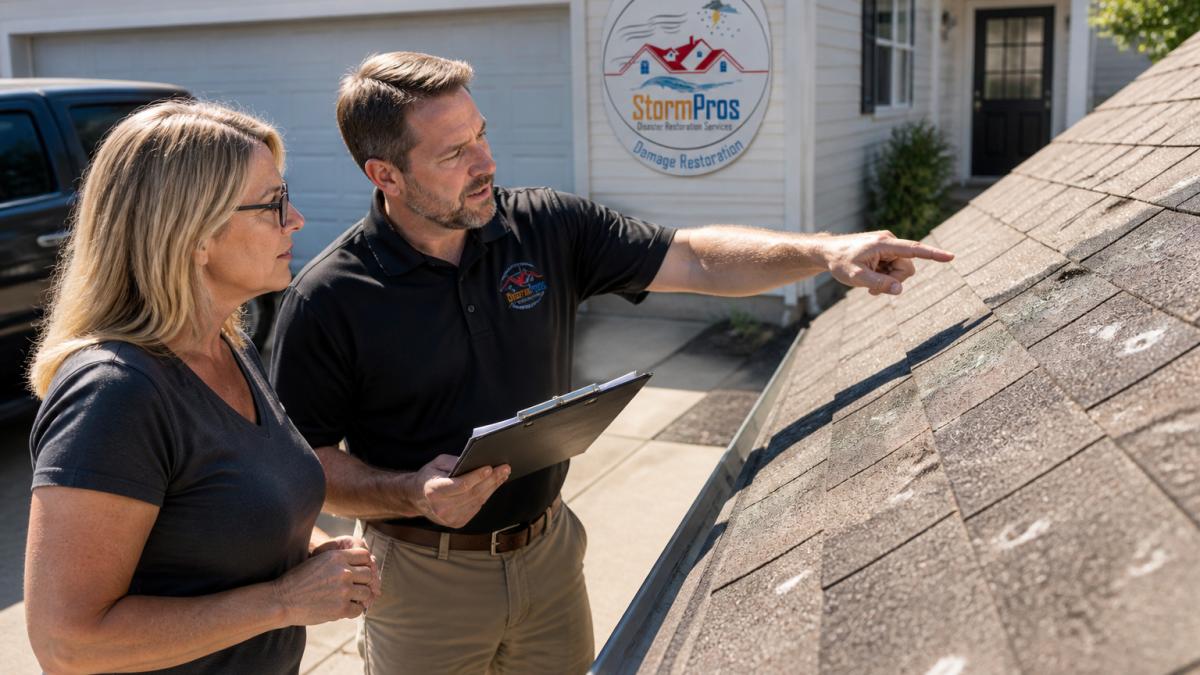
- Document the damage. Take dated photos of the roof, gutters, siding and interior ceilings. For a thorough approach, learn seven ways to document storm damage for insurance.
- Make temporary repairs. Cover openings with a tarp and keep receipts.
- Contact your insurer. Report the storm loss and ask for a claim number.
- Get a professional inspection. A licensed roofer can document hail hits and wind lift.
- Meet the adjuster. Walk the roof with the adjuster and point out each damaged area.
- Review the estimate. Compare the insurer’s scope with the contractor’s estimate line by line.
- Accept settlement and schedule work. Confirm the payment terms before work begins.
Worked Example: Estimating What a Claim Could Cost
Suppose hail damages a roof that requires replacement. The contractor estimates the job at $14,000. Your deductible is $2,000. The adjuster approves $11,500 after depreciation.
- Contractor estimate: $14,000
- Approved payout: $11,500
- Deductible: $2,000
- Estimated out-of-pocket: $2,500 (the $14,000 bill less the $11,500 payout, which already includes your $2,000 deductible)
These figures are illustrative. Your actual costs depend on your policy, roof materials and local labor rates.
Filing a claim goes faster when you follow a clear order, and the steps below show what to do at each stage. For hail specifically, review the fundamentals of a successful roof hail damage insurance claim. If you find additional roof damage after your claim is approved, learn how to file a supplemental insurance claim in five steps.
| Step | What to do | Timing |
|---|---|---|
| Document the damage | Take dated photos of roof, gutters, siding and ceilings | Before repairs |
| Make temporary repairs | Cover openings with a tarp and keep receipts | Immediately |
| Contact your insurer | Report the storm loss and get a claim number | Promptly |
| Get a professional inspection | Licensed roofer documents hail hits and wind lift | Before adjuster visit |
| Meet the adjuster | Walk the roof and point out each damaged area | At adjuster visit |
| Review the estimate | Compare insurer scope with contractor estimate line by line | Before accepting |
| Accept settlement and schedule work | Confirm payment terms before work begins | Before work starts |
How Much Does Insurance Pay for Roof Replacement?
The payout depends on two things: how your policy values the loss, and how much of the replacement cost your deductible absorbs. Most policies use one of two valuation methods, and the difference can be thousands of dollars on the same roof.
Actual cash value (ACV). The insurer pays replacement cost minus depreciation for the roof’s age and condition. A 15-year-old asphalt shingle roof that would cost $14,000 to replace might be valued at $6,000 after depreciation, and your deductible is then subtracted from that figure. ACV policies are common on older roofs and are the single biggest reason homeowners are surprised by a small check.
Replacement cost value (RCV). The insurer pays what it actually costs to replace the roof with like kind and quality, up to your coverage limit, after the deductible. Many RCV policies are paid in two stages: an initial check for the ACV amount, then a recoverable depreciation payment once the work is complete and you submit the contractor’s final invoice. That second check is not automatic, you usually have to request it and document that the work was finished.
A few mechanics decide the final number:
- Deductible. Subtracted from the payout, not added to it. A $2,000 deductible on an $11,500 approved loss means a $9,500 check, and you cover the rest of the contractor’s bill.
- Recoverable depreciation. The gap between ACV and RCV that the insurer releases after completion. Ask your adjuster in writing whether your depreciation is recoverable.
- Coverage limits. Your dwelling coverage (Coverage A) caps the total payout. A roof claim that exceeds the limit is paid only up to that limit.
- Matching and code upgrades. Some policies pay to match undamaged shingles or to meet current building codes; many do not unless you added that endorsement.
Ask your adjuster three questions before you accept anything: which valuation method applies, whether depreciation is recoverable, and what documentation is required to release the holdback. Request the depreciation breakdown in writing so you can compare it line by line with your contractor’s estimate.
These figures are illustrative. Your actual payout depends on your policy language, roof material, and local labor rates, so read the declarations page and the loss settlement section of your policy before you sign a settlement.
Challenging a Denial or a Low Settlement
A denial is not the end of the claim. If the offer feels too low, get concrete steps to dispute an estimate and negotiate a fair settlement. If your roof claim was denied, learn the top reasons insurers reject claims and how to read a denial letter before you respond.
Step 1: Get the denial in writing. Ask the insurer for the specific policy language and the factual reason behind the decision.
Step 2: Build the record. Gather your dated storm photos, the contractor’s inspection report, the adjuster’s estimate, and any weather records (hail reports, wind gust data) that place the event at your address on the date in question.
Step 3: Request a re-inspection. Ask for a second adjuster visit with your contractor present. Walk the roof together and point out each damaged area.
Step 4: Submit a written appeal. Reference the specific policy language that grants coverage and attach your evidence. Send it by a method that creates a delivery record, and keep a copy.
Step 5: Use the appraisal clause. Many homeowners policies include an appraisal provision that lets you and the insurer each hire an independent appraiser when you disagree on the amount of the loss (not on whether coverage applies).
Step 6: Contact your state insurance department. Every state has a consumer services division that takes complaints and can explain your rights under state law. This is free and creates a record.
Watch out: deadlines matter. Most policies require you to file suit or demand appraisal within a set period after the loss, so check your policy for the deadline. Missing that window can end your claim regardless of merit.
Keep every communication in writing, and do not cash a settlement check you believe is too low without first confirming whether doing so waives your right to dispute the rest. A second inspection or a formal appraisal can change the outcome.
Scheduling Your Roof Inspection With StormPros
A documented inspection is the foundation of a strong claim. StormPros, a family-owned and operated general contractor with over 20 years of combined experience, handles storm damage restoration and works directly with insurance adjusters. Our team is fully insured and locally owned, and we can help you prepare the documentation your claim needs.
Contact StormPros today for a free quote.
Frequently Asked Questions
Will insurance cover a 20-year-old roof?
Insurance can cover a 20-year-old roof when a covered event such as hail, wind, or fire damages it, but the policy will usually pay the actual cash value rather than full replacement cost. Age alone is rarely a covered cause of loss. Many policies also depreciate roofs by age, so the payout may reflect how much useful life remained before the damage. Check your declarations page for replacement cost versus actual cash value coverage, and document the roof’s condition with dated photos before and after the storm.
Does homeowners insurance cover roof leaks from rain?
Standard homeowners policies generally cover sudden leaks caused by a covered peril, such as wind that tears off shingles and lets rain in. Leaks that develop slowly from worn flashing, failed sealant, or lack of maintenance are typically excluded. The insurer will usually ask whether the damage was sudden or gradual. Keep records of when you first noticed the leak, and get a roof inspection report that identifies the cause.
How much does insurance pay for roof replacement?
The payout depends on your policy’s coverage type, your deductible, and the adjuster’s estimate of the damage. Under replacement cost coverage, the insurer typically pays the full cost to replace the roof with similar materials, minus your deductible, often released in stages. Under actual cash value coverage, depreciation is subtracted from that amount. Because roofing prices, labor, and local code requirements vary, StormPros can provide a written estimate for your specific roof, and you can compare it with the insurer’s figure.
How do I get insurance to pay for roof replacement after a storm?
Start by documenting the damage with dated photos and video, then file a claim promptly with your insurer. Make temporary repairs to prevent further damage and keep receipts. Request a copy of the adjuster’s estimate and compare it line by line with an independent contractor estimate. If the insurer denies the claim or offers a low settlement, you can request a re-inspection, submit additional evidence, or file a formal dispute. Many states also have insurance departments that accept consumer complaints.


