 5.0 Out Of 250+ Reviews


 Financing Available


 (214) 227-2763

Last Updated: November 12, 2026
Quick Summary
A dehumidifier water damage recovery works by pulling moisture out of the air so wet materials release their water faster, but it does not remove standing water. You must first extract that water with a wet/dry vacuum or pump, then close the room up and let the machine pull vapor from the air. Homes dried quickly and correctly are far less likely to develop lasting problems, while homes that sit wet can grow mold.
- Mold can begin growing on wet surfaces within 24 to 48 hours, so the first two days matter most.
- Match pint capacity to the wet area: 20-30 pints/day for a damp basement up to 1,000 sq ft.
- A flooded basement with wet drywall calls for 50-70 pints/day and hose or condensate pump drainage.
- Expect three to five days of drying for a typical room, longer for wet framing or a crawl space.
- Renting a heavy-duty LGR unit wins for one-time emergencies; buying wins if your property floods more than once.
Table of Contents
- Will a Dehumidifier Help With Water Damage?
- How to Size a Dehumidifier for Water Damage
- Best Dehumidifiers for Water Damage: What to Compare
- Best Dehumidifier for Basement Flooding
- How Long to Run a Dehumidifier After Water Damage
- Dehumidifier for Water Damage Rental vs. Buying
- When to Stop Drying and Call a Restoration Pro
- Frequently Asked Questions
Will a Dehumidifier Help With Water Damage?
Yes. A dehumidifier is one of the most effective tools for dehumidifier water damage recovery, pulling moisture out of the air so wet materials release their water faster.
Here is the part most guides skip. A dehumidifier does not remove standing water.
Water damage is the presence of unwanted moisture in building materials, and structural drying is the process of removing it before mold growth begins.
How to Size a Dehumidifier for Water Damage
Sizing comes down to two numbers: pints pulled per day and square feet kept dry. Too small runs nonstop without catching up; too large wastes power. Size by measured moisture conditions, not room dimensions alone, because two 500-square-foot rooms can need very different equipment depending on what got wet.
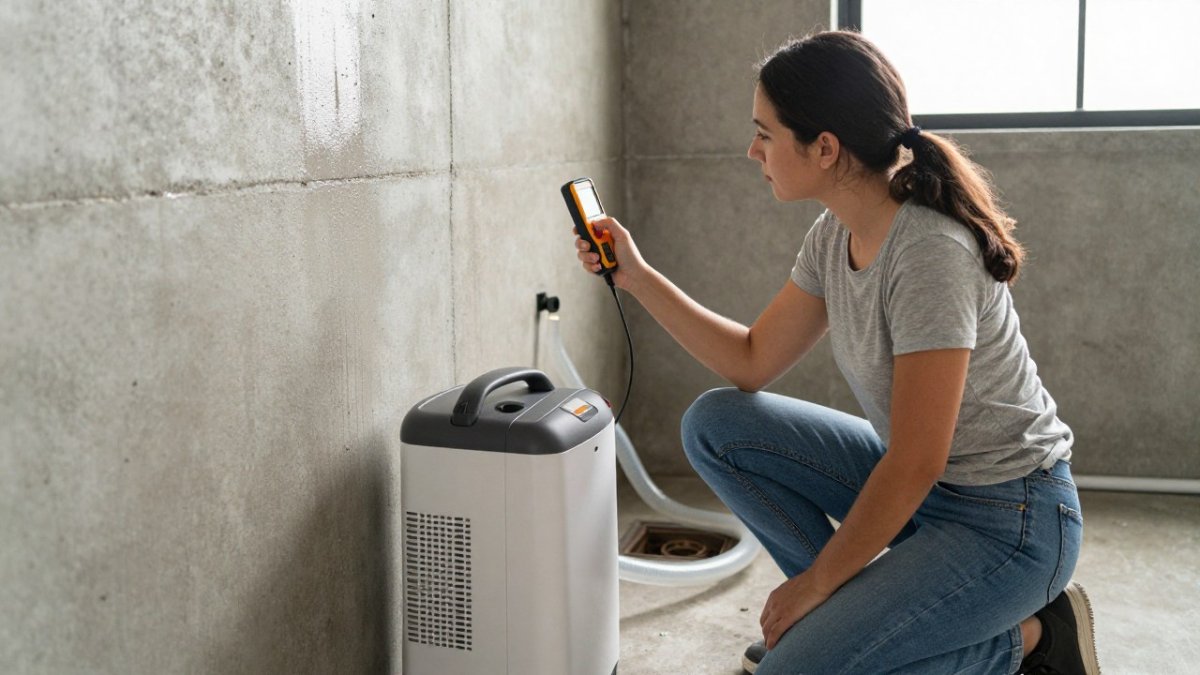
Match pint capacity to the severity of the wet area. Light dampness in a small closed room calls for a smaller unit; a flooded basement with wet drywall and soaked carpet needs a heavy-duty machine rated well above household size.
Pint Capacity and Coverage Area
Pint capacity tells you how much water the unit removes in 24 hours under standard test conditions; coverage area tells you how much floor space it can realistically dry. The room’s condition matters as much as its size.
| Situation | Pint Capacity to Look For | Typical Coverage | Drain Setup |
|---|---|---|---|
| Damp basement, no standing water | 20-30 pints/day | Up to 1,000 sq ft | Tank or hose |
| Wet carpet and padding | 30-50 pints/day | 1,000-1,500 sq ft | Hose preferred |
| Flooded basement, wet drywall | 50-70 pints/day | 1,500-2,500 sq ft | Hose or condensate pump |
| Multiple rooms, soaked framing | 70+ pints/day | 2,500+ sq ft | Hose plus air movers |
Watch out: a “50-pint” label on a retail box and a “50-pint” rating on a restoration unit are not measured the same way. Restoration equipment is typically rated at higher temperature and humidity than consumer units, so pint ratings are not directly comparable across the two.
A Measured Sizing Method
Instead of guessing from square footage, size in four steps using readings you can take with an inexpensive moisture meter and a thermo-hygrometer.
- Map the wet area. Walk the space with a moisture meter and mark elevated readings. Note the affected square footage and which materials are wet: concrete, drywall, framing, carpet, or padding. Wet drywall and framing hold far more water than a damp concrete floor.
- Record the conditions. Write down temperature and relative humidity before you start. Capacity ratings assume warm, humid air; a cold basement in winter reduces real-world output for refrigerant units, which is why desiccant or LGR equipment is often specified in cool spaces.
- Classify the water. Clean supply-line water is a different job than Category 2 gray water or Category 3 contaminated water from a sewer backup or outdoor flood. Contaminated water usually means removing porous materials rather than drying them, which changes the equipment list and often means calling a professional.
- Match capacity to the load, then add margin. Use the table above as a starting point, then size up one step when framing or drywall is wet, when the space is cool, or when the affected area spans more than one room.
Reading the Numbers on the Job
A moisture meter gives a relative reading, not a percentage of water content, so compare wet versus dry in the same material. Take a baseline in an unaffected section and compare wet-area readings against it.
A thermo-hygrometer adds temperature and relative humidity in the drying chamber.
For a basement job, look for a portable dehumidifier with a hose port and enough pint capacity to match the table above.
Dehumidifier pint capacity by wet-area situation
Best Dehumidifiers for Water Damage: What to Compare
The best unit matches your space, your power, and how long you can babysit it. Rather than chase brand names, compare these six specs side by side.
- Water removal rate: pints per day at the rated conditions, not the marketing number
- Coverage area: square feet the unit can hold dry, not just the room’s footprint
- Continuous drainage: a drain hose port, and whether a condensate pump is included or sold separately
- Portability: wheels, a top handle, and weight once the tank is full
- Airflow: cubic feet per minute, which determines how well it reaches wall cavities and floor drying setups
- Controls: a humidistat and digital controls so the unit cycles on and off on its own
Two more specs matter on a real job. Low-grain refrigerant (LGR) dehumidifiers are the restoration standard because they keep extracting moisture as the air dries out, exactly when a basic refrigerant dehumidifier slows to a crawl. Desiccant dehumidifiers work better in cold spaces, like an unheated crawl space in winter. Automatic defrost keeps a refrigerant unit from icing up in a cool basement.
For a basement job, look for a portable dehumidifier with a hose port and enough pint capacity to match the table above. For a crawl space, prioritize a low-profile unit that fits through the access hatch and can drain by gravity.
Best Dehumidifier for Basement Flooding
A flooded basement is the hardest common job, because water wicks up into drywall, baseboards, and framing where you cannot see it.
Placement matters more than most people expect.
If the flood came with a sewer backup or dirty water, this is not a DIY drying job. Contaminated water carries risks that a dehumidifier cannot fix, and porous materials usually have to come out.
For ventilation steps that keep a damp basement from turning into a mold problem after the water is gone, see our guide to improving basement ventilation to stop mold.
How Long to Run a Dehumidifier After Water Damage
Expect three to five days for a typical room, and longer for a flooded basement with wet framing. You run it until the materials are dry, not until a set number of hours passes. Drying time depends on how wet the structure got, how much airflow you have, and the humidity outside. Moisture readings and a simple log tell you when the job is finished better than any calendar.
Here is the timeline we work to on a water damage call:
- Hour 0-24: Extract standing water, pull wet carpet and padding, and start air movers and the dehumidifier. This is the window that decides whether mold takes hold.
- Day 1-3: Run the dehumidifier continuously with a drain hose attached. Check the moisture meter daily on walls, framing, and subfloor.
- Day 3-5: Most rooms reach dry standard. Keep measuring, because surfaces can feel dry while the framing behind them is still wet.
- Day 5+: Wet framing, soaked insulation, or a crawl space can take a week or more.
Verifying Dryness With Readings
A surface that feels dry is not proof. Use a moisture meter to compare wet-area readings against a baseline taken in an unaffected section of the same material. The target is a narrowing gap: readings in the wet area should fall toward the baseline day by day. When the gap stops shrinking, the material has reached its dry standard.
A thermo-hygrometer completes the check. Record temperature and relative humidity in the drying chamber each day. As materials dry, the space should trend toward normal indoor conditions.
Keeping a Simple Drying Log
You do not need restoration software to document a dry-out. A notebook or spreadsheet with four columns, date, location, moisture reading, and temperature/relative humidity, is enough to show progress and support an insurance claim.
Watch out: if readings plateau for two days of continuous drying, or if the wet area includes walls, subfloor, or ceiling cavities, stop adding equipment and reassess. Hidden moisture in cavities is the most common reason a DIY dry-out fails, and it is the point where a professional with thermal imaging and cavity drying equipment earns their fee.
Mold prevention is the whole point of the timeline. The CDC guidance on mold and dampness notes that controlling moisture is the most reliable way to prevent mold growth, so the drying job is not finished until your readings say it is.
Dehumidifier for Water Damage Rental vs. Buying
Renting wins for one-time emergencies; buying wins if you own a basement, crawl space, or rental property that floods more than once. A dehumidifier water damage rental makes sense when you need a heavy-duty LGR unit for a few days and do not want to store a machine afterward.
Buying makes sense when the math runs the other way. If you have flooded before, or you own property in an area that floods, a mid-size unit that lives in the basement pays for itself over a couple of events.
If the water reached the walls or the subfloor, the equipment cost is only part of the job, and our breakdown of water damage restoration costs shows what a full professional dry-out involves. When you are ready to stop drying and hand the job to a crew, you can get a free inspection and find out what your home actually needs.
When to Stop Drying and Call a Restoration Pro
Stop and call a professional when water has reached the walls, subfloor, or ceiling, when the water was contaminated, or when moisture readings stop falling after a couple of days of continuous drying.
Other clear triggers:
- Sewage or outdoor floodwater entered the home
- Mold is already visible, or you smell it
- The wet area is larger than one room
- You cannot verify dryness because you have no moisture meter
- The insurance claim is bigger than a shop-vac and a fan
If you are wondering whether the mold cleanup is worth paying for, our article on whether professional mold remediation is worth it walks through what the work involves. And before you authorize anything, check whether the work is covered: our guide to whether insurance covers water damage remediation explains what policies typically include and how to file.
StormPros is a family-owned general contractor with more than 20 years of combined experience, fully insured, and acts as a dedicated insurance claim specialist. StormPros restores properties to exceed pre-damage condition.
Water damage gets worse every hour it sits, and the difference between a quick dry-out and a full rebuild is usually a matter of days.
Frequently Asked Questions
Will a dehumidifier help with water damage if I only have a small household unit?
A standard 20-30 pint portable dehumidifier can help with minor dampness, but it will struggle after a real flood. Water damage cleanup requires pulling large volumes of moisture fast, so look for a unit rated at 50 pints per day or more, ideally a low-grain refrigerant (LGR) model. A small unit running nonstop may keep humidity down without actually drying soaked drywall, subfloor, or framing.
How long should I run a dehumidifier after water damage?
Plan on several days, not hours. Most flooded rooms need three to five days of continuous running with air movers, and wet drywall or thick carpet can take longer. Empty or drain the tank continuously so the unit never shuts off. Check readings with a moisture meter rather than guessing, and keep the space as dry as you can to slow mold growth.
Should I rent or buy a dehumidifier for water damage cleanup?
Rent when the job is a one-time event and you need commercial capacity fast. Rental units can save you from storing a large machine afterward. Buy if your basement or crawl space floods repeatedly or stays humid year-round. Compare the rental period against the purchase price before deciding.
What size dehumidifier do I need for a flooded room?
Match pint capacity to the space and how wet it is. Match pint capacity to how wet the space is and its size, and when in doubt, size up. When in doubt, size up: an oversized dehumidifier runs less and dries faster than an undersized one running flat out.


