 5.0 Out Of 250+ Reviews


 Financing Available


 (214) 227-2763

Last Updated: November 4, 2026
Quick Summary
To negotiate a roof insurance claim settlement, first learn whether your policy pays actual cash value or replacement cost value, then document the damage with dated photos and an independent inspection report. Compare the adjuster’s estimate line by line, dispute missing items in writing, and use the appraisal clause if you still disagree.
- Check your declarations page to see whether your policy pays actual cash value or replacement cost value.
- Photograph every roof slope, gutters, siding and interior ceiling stains, with close-ups that show scale.
- Ask the adjuster for the estimate in writing and never sign a release on the spot; request 24 to 48 hours.
- Look for missed items such as drip edge, starter strips, ridge caps, underlayment and code-required upgrades.
- If negotiation fails, the appraisal clause lets each side choose an appraiser and an umpire to settle the dollar amount.
Table of Contents
- Understanding Your Policy: ACV, RCV and Recoverable Depreciation
- Documenting Roof Damage With Photos, Reports and an Independent Inspection
- What Not to Say to Insurance Adjuster Roof Damage Visits
- Comparing the Adjuster’s Estimate Line by Line and Finding the Gaps
- Filing a Supplemental Roof Insurance Claim When New Damage Appears
- How to Write a Roof Insurance Claim Appeal Letter That Gets Results
- Your Next Step: Planning Around the Roof Damage Insurance Claim Timeline
- Frequently Asked Questions
Filing a roof insurance claim after a storm is stressful, and the first offer from your insurer is often lower than the real cost of repairs. You do not have to accept it as final. Knowing how your policy pays, documenting the damage well, and pushing back on weak estimates can change the number you receive. StormPros is a family-owned general contractor with more than 20 years of combined experience handling storm damage and insurance claims.
Understanding Your Policy: ACV, RCV and Recoverable Depreciation
Your policy decides how much money you can get for your roof, so read it before you argue about the estimate. Most homeowners policies pay for roof damage in one of two ways, and the difference can be thousands of dollars.
Actual Cash Value vs. Replacement Cost Value
Actual cash value (ACV) is the cost to replace your roof minus depreciation for its age and wear. Replacement cost value (RCV) is the full cost to replace the roof with similar materials, with no depreciation taken off.
- ACV pays less up front because it subtracts the age of the roof.
- RCV pays the full repair cost once the work is done, if your policy includes it.
- Check your declarations page to see which one you have.
Recoverable Depreciation Explained
Many policies pay ACV first, then release the withheld depreciation after you finish repairs. You can read a full explainer on how depreciation is calculated and how to maximize your recovery. For a broader guide on getting insurance to pay for roof replacement, start there.
The two main ways a policy pays for roof damage differ in how much you receive up front.
| Term | What it pays | Key difference |
|---|---|---|
| Actual cash value (ACV) | Replacement cost minus depreciation | Pays less up front |
| Replacement cost value (RCV) | Full cost with similar materials | No depreciation taken off |
| Recoverable depreciation | Withheld amount released after repairs | Paid once proof of completion is submitted |
Documenting Roof Damage With Photos, Reports and an Independent Inspection
Strong documentation is the fastest way to win a better settlement. Adjusters work from evidence, so give them evidence they cannot easily dismiss.
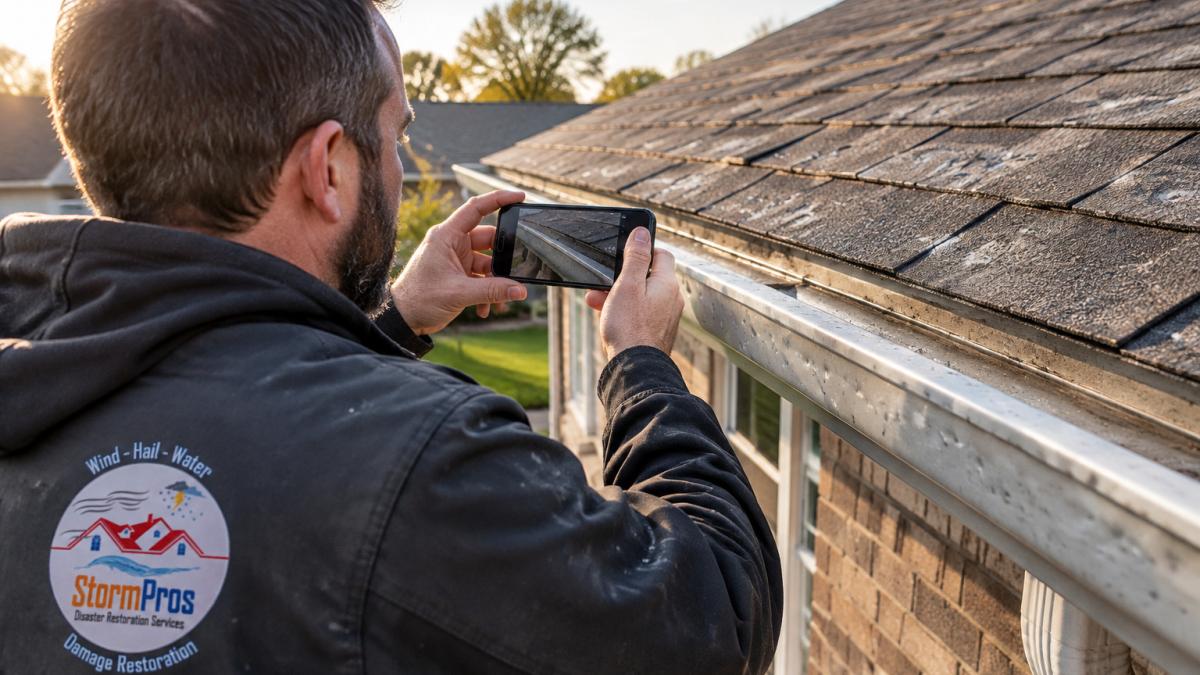
- Photograph every slope of the roof, the gutters, the siding and any interior ceiling stains.
- Take wide shots first, then close-ups with a coin or ruler for scale. For a practical method for documenting storm damage before filing, see our guide.
- Keep dated copies of the storm reports for your area.
An independent roof inspection is also worth considering. A written report from a licensed inspector gives you a neutral record of hail hits, wind lifted shingles and other damage. See what a professional roof inspection costs and includes before you hire one.
What Not to Say to Insurance Adjuster Roof Damage Visits
Adjusters take notes on everything you say, and those notes become part of the claim file that follows your dispute up the chain. The goal of the visit is not to be agreeable, it is to be accurate and to leave a record that supports your numbers.
The phrases that cost homeowners money
- “It’s probably been like that for a while.” This hands the insurer a maintenance argument. Stick to what you observed and when: “I first saw the missing shingles after the storm on the 14th.”
- “I’m not sure, I’m not a roofer.” Fine to say once, but pair it with a request: “I’m not a roofer, which is why I had an inspection done, here is the report.”
- “The roof is old anyway.” Age is already in the insurer’s depreciation math. Do not add to it.
What to say instead
Use short, factual statements that point to evidence.
- “Here are dated photos of every slope, plus the storm report for my ZIP code.”
- “My contractor measured 28 squares; your estimate shows 22. Can we walk the difference?”
- “Please include the drip edge, starter strip and ridge cap in the estimate, they are required to match the existing roof.”
Walk the roof with the adjuster
If it is safe and the adjuster agrees, walk the roof together and point out each damaged area yourself, hail hits on soft metals, wind-lifted shingles, creased tabs, damaged vents and flashing. Bring your inspection report and read from it rather than improvising.
Watch out: do not let a contractor or a friend speak for you during the adjuster visit unless you have authorized them in writing, insurers can treat an unauthorized third party’s statements as your own, and a casual remark from a helper can undercut your documentation.
After the visit
Send a short follow-up email the same day summarizing what was inspected and what the adjuster said they would include. This creates a written record you can cite later if the estimate comes back missing items you pointed out in person. Keep the adjuster’s name, license number if provided, and the date of the visit with your claim file.
Comparing the Adjuster’s Estimate Line by Line and Finding the Gaps
When the estimate arrives, go through it line by line. If the number is too low, our guide on challenging low insurance estimates step by step explains how to dispute it and negotiate a fair settlement. Insurers often miss items that a repair contractor would include, such as drip edge, starter strips, ridge caps, underlayment, or code-required upgrades.
Check for these common gaps:
-
Missing square footage compared to your measurements
-
Wrong shingle type or grade for your existing roof
-
Omitted gutters, flashing, vents or interior repairs
-
Overlooked code upgrades that your local building department requires
Write each gap down with a reason and supporting evidence. This list becomes the core of your negotiation.
Filing a Supplemental Roof Insurance Claim When New Damage Appears
Once a contractor starts tearing off old shingles, they often find damage that was hidden. This is where a supplemental claim comes in. A supplement is a request to the insurer to pay for additional work that the original estimate did not cover.
To file one:
- Photograph the newly exposed damage before it is covered up.
- Get a written description from the contractor explaining why the work is needed.
- Submit the supplement to your insurer with the photos and the contractor’s notes.
- Ask for a written response and keep a copy of everything you send.
Act quickly. Delays can make it harder for the insurer to accept that the damage came from the original storm.
How to Write a Roof Insurance Claim Appeal Letter That Gets Results
A written appeal is the step most homeowners skip, and it is often the one that moves the number. A short, evidence-backed letter can prompt a second look that a phone call may not. Keep it to one or two pages, attach your evidence, and send it by a method that proves delivery.
What goes in the letter
- Your name, policy number, claim number and property address
- The date of loss and the date of the estimate you are disputing
- Each disputed line item, with the amount you believe is correct and the reason
Sample dispute language you can adapt
“I am writing to dispute the estimate dated [date] for claim [number]. Line 4 lists 22 squares of architectural shingles; my contractor’s measurement report shows 28 squares, and the attached photos show the additional slopes.
That structure works because it is specific, it points to evidence rather than emotion, and it asks for a defined action by a defined date.
If the appeal is refused: the appraisal clause
Most homeowners policies include an appraisal clause, and few homeowners ever use it. The mechanism is straightforward: if you and the insurer still disagree on the amount of loss after good-faith negotiation, either side can demand appraisal. You pick a competent, independent appraiser; the insurer picks one; the two appraisers choose an umpire. Each appraiser states an amount, and if they agree, that figure binds the amount of loss.
Before you invoke appraisal:
- Read the clause in your policy for the exact wording, notice requirements and who pays for what.
- Confirm the dispute is about amount, not coverage, appraisal will not overturn a denial based on cause of loss.
- Get your appraiser’s fee and the likely umpire cost in writing; costs are commonly split in ways the clause specifies, so read it before you commit.
The public adjuster option
A public adjuster represents you in the negotiation and is paid a percentage of the settlement, so the cost scales with the number you recover. That can make sense on a large or complex claim and less sense on a small one. Compare the fee against the gap between the offer and your documented number before you sign anything, and confirm the adjuster is licensed in your state.
Keep the paper trail
Save every letter, email and estimate in one folder, note the date each was sent and received, and log every phone call with the name of the person you spoke to. If the dispute later moves to appraisal or a complaint to your state insurance department, that log is the record that shows you negotiated in good faith and gave the insurer a fair chance to correct the estimate.
Your Next Step: Planning Around the Roof Damage Insurance Claim Timeline
Insurance claims move on a timeline, and missing a deadline can cost you money. Build a simple schedule as soon as you file: the date you reported the claim, the date the adjuster visited, the date you expect the estimate, and any deadlines in your policy for completing repairs or filing a supplement.
If you want help organizing your documentation, checking the estimate or handling the supplement, StormPros can review your claim and walk you through the next step. Request a FREE quote from our team to get started.
Frequently Asked Questions
What not to say to a roof insurance adjuster?
Avoid guessing about the cause or age of damage, agreeing that the roof is fine, or signing anything on the spot. Stick to observed facts, such as where you saw water intrusion and when. Do not estimate repair costs or say you plan to replace the roof yourself. Ask for the adjuster’s estimate in writing and say you will review it. Keep a written record of every conversation, including the adjuster’s name, the date and any reference number, so you can refer back to what was said if the claim is disputed later.
Should I take the first settlement offer from the insurance company?
Usually not without review. The first offer is often based on the adjuster’s scope, which may leave out items such as drip edge, underlayment, flashing, gutters or code upgrades. Compare the estimate line by line against your contractor’s estimate and your photo documentation. If the numbers differ, request a reinspection and submit a written supplement. Accepting a settlement can close the claim, so confirm whether a check is final before you cash it.
Is it common for insurance companies to deny the first roof claim?
Partial denials and reduced payouts are common, especially on roofs with mixed wear and storm damage. A denial is not necessarily final. Ask the insurer for the specific policy language and the reason in writing, then respond with documentation such as a roofer’s inspection report, dated photos and weather data. Many policies include an appraisal clause that lets each side hire an appraiser to resolve valuation disagreements. Review your policy and your state’s rules on claim handling deadlines before you respond.
How do I prove my roof damage was caused by a storm?
Document the damage with dated photos, a written inspection report that describes hail or wind indicators such as bruised shingles, creased metal or torn sealant strips, and weather records for the date of loss. Public weather data and hail reports can help support your timeline. Keep records of any temporary repairs and the receipts for them, since most policies require reasonable steps to prevent further damage.


