 5.0 Out Of 250+ Reviews


 Financing Available


 (214) 227-2763

Last Updated: October 31, 2026
Quick Summary
Exterior renovations can raise a home’s appraisal, but usually by less than the project cost. Appraisers credit the gap between a worn, defective exterior and a sound one, measured against comparable nearby sales. Removing visible defects such as an aged roof, rot or peeling paint tends to matter most.
- Appraisers judge roof, siding, paint, windows, gutters, foundation and drainage first.
- A roof replacement can remove a condition deduction for an aged or failing roof.
- Value contribution and resale return are different measures, and neither is guaranteed.
- Permits, invoices, warranties and before-and-after photos help appraisers credit the work.
- Fix deferred maintenance and complete projects before the appraiser’s visit.
Table of Contents
- How Appraisers Judge Exterior Condition
- Which Exterior Improvements Increase Value
- Why a New Roof Does Not Always Add Dollar for Dollar
- Renovation Costs vs. Appraised Value
- Deferred Maintenance and Visible Defects
- Preparing Your Home: A Pre-Appraisal Checklist for Sellers
- Scheduling Your Exterior Work Before a Sale
- Frequently Asked Questions
Exterior renovations can change what a home appraises for, but not always by the amount the owner spent. A new roof, fresh siding or a cleaned-up yard often helps the property look better and feel better maintained to an appraiser. Whether the number actually moves depends on the condition before the work, the materials used, and what similar homes in the area have recently sold for. This guide explains how appraisers think about the outside of a house and where your money is most likely to show up in value.
How Appraisers Judge Exterior Condition
An appraiser’s first job is to describe the property accurately and compare it to recent sales of similar homes nearby. Exterior condition matters because it signals how the home will hold up and how much work a buyer will face after closing.
Appraisers look at the roof, siding, paint, windows, gutters, foundation, and drainage first. They also note visible defects like sagging lines, peeling paint, soft spots, or missing shingles. A property that looks neglected from the street usually loses ground before the appraiser walks inside.
- Roof age and visible damage
- Siding and paint condition
- Gutters, downspouts, and drainage
- Windows, doors, and trim
- Fencing, walkways, and driveway
- Overall curb appeal from the street
Which Exterior Improvements Increase Value
Not every exterior project pays back the same way, and the ones that move an appraisal most are usually the ones that remove a defect a typical buyer would otherwise discount. The table below summarizes how appraisers tend to treat common exterior projects, separating the value contribution an appraiser is likely to credit from the resale return a seller might see in a normal market. The two are not the same number, and neither is guaranteed.
| Project | What the appraiser is likely to credit | Typical resale return pattern |
|---|---|---|
| Roof replacement | Removal of a condition deduction for an aged or failing roof; credit for a sound component with remaining useful life | Often among the stronger exterior returns when the old roof was near end of life |
| Siding replacement or repair | Correction of rot, damage, or a material defect; improved condition rating | Varies widely by material and neighborhood standard |
| Exterior paint | Supports a stronger condition rating when the substrate is sound; little credit if it hides damage | Modest, but one of the lowest-cost ways to improve curb impression |
| Window replacement | Credit for improved condition and energy performance, capped by what comparable homes already have | Frequently below full cost, especially in mild climates |
| Entry door replacement | Small condition and curb-appeal credit; steel and fiberglass doors often outperform | Usually a modest but consistent return |
| Landscaping and fencing | Supports overall presentation and marketability; rarely a standalone value line | Seldom recoups full cost in appraised value |
| Hardscaping, decks, outdoor kitchens | Credit only where comparable sales support it; can be over-improvement | Highly variable; often below cost |
Roof Condition, Age and Replacement
The roof is often the single biggest exterior line item an appraiser considers. A roof near the end of its useful life can pull a value down, especially when a buyer’s lender or inspector flags it. Replacing a failing roof removes that deduction, though the appraiser credits the improvement rather than the full invoice, a pattern that holds for most exterior renovations. A roof with documented age, a permit, and a warranty is easier to credit than one with no paper trail.
Siding, Paint and Windows
Siding and paint change how the whole house reads from the curb. Rotted or damaged siding is a defect, and repairing it protects the structure. Learn to recognize the signs that full siding replacement is needed when damage runs deeper than repairs can address. Fresh exterior paint on a well-maintained home supports a stronger condition rating, while the same paint on a home with hidden damage can look like a cover-up. Professional exterior painting can refresh curb appeal once the underlying surfaces are sound. Window replacement is credited mainly for condition and energy performance, and the credit is capped by what comparable homes in the neighborhood already have.
Landscaping, Fencing and Curb Appeal
Landscaping and fencing help set the first impression, but they rarely drive appraisal numbers on their own. Clean, trimmed grounds and a sound fence support the overall picture, and they help a home sell faster. Expensive hardscaping, outdoor kitchens, and elaborate decks seldom return their full cost in appraised value, and in some neighborhoods they can read as over-improvement.
Value contribution and resale ROI are different measures. An appraiser credits the difference a sound component makes against comparable sales, not the invoice. A project can protect marketability and still move the appraisal very little.
Why a New Roof Does Not Always Add Dollar for Dollar
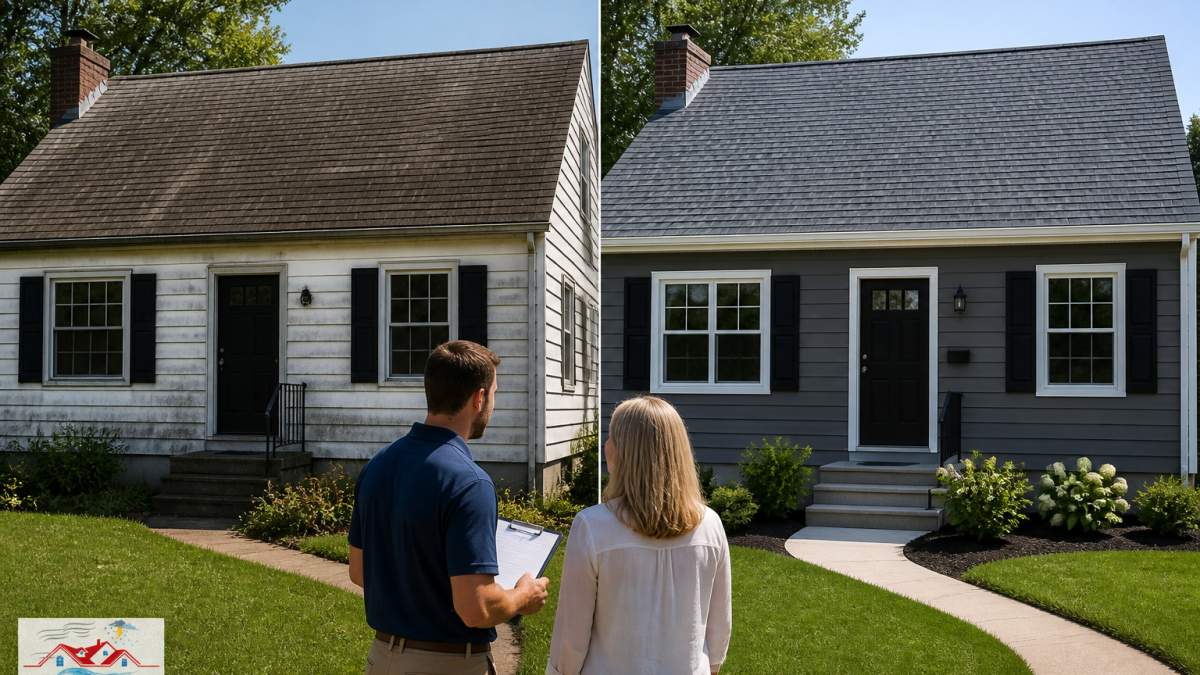
Many owners assume a new roof adds its full cost to the appraisal. That is rarely how it works. The appraiser compares the updated home to similar homes that already had newer roofs, so the credit reflects the difference between a worn roof and a sound one, not the full cost. In a neighborhood where most houses have roofs in good shape, the premium may be small.
A common mistake is treating the project cost as the expected value. Market conditions set the ceiling. A roof can protect the home, speed a sale, and remove a buyer objection even when the appraisal moves less than the bill.
Renovation Costs vs. Appraised Value
Renovation spending and appraised value often diverge, and the gap is widest when owners treat the invoice as the expected return. Appraisers estimate market value, not reimbursement. They compare the home to recent sales of similar properties and credit only what a typical buyer in that market would pay for the difference.
- Cost. What the project actually costs, including permits, inspections, and any required code upgrades. Get at least two written bids and confirm what is excluded.
- Likely contributory value. What a typical buyer would pay for the improvement, judged against comparable homes that already have it. If most nearby homes already have a newer roof, the premium for yours is small.
- Local market support. Whether recent sales in the neighborhood include homes with the same feature. Without comparable support, the appraiser has little basis to credit the upgrade.
A common pattern is that repairs removing a visible defect carry more weight than new features, upgrades that exceed neighborhood norms add little, and permitted work is easier to document and credit than unpermitted work. None of that means a project is a bad idea.
How Appraisers Verify Exterior Work
Appraisers rely on what they can see and what the owner can document. A concise package helps them connect the visible condition to the work performed:
- Permits and final inspection records for roofing, siding, windows, and structural repairs
- Contractor invoices and contracts showing scope, materials, and completion dates
- Manufacturer warranties for roofing, siding, windows, and doors
- Before-and-after photos, especially for work that is now hidden, such as flashing or sheathing repair
- A one-page improvements list with dates and costs, kept separate from marketing materials
Keep the documentation package short and organized. An appraiser reviewing a file before a site visit can absorb a one-page summary and a folder of permits far faster than a shoebox of receipts.
Maintenance Versus Upgrades
Correcting deterioration is not the same as upgrading. Replacing a failing roof or repairing rotted trim protects the home’s condition and marketability, and may prevent a deduction, but it does not automatically add value dollar-for-dollar. A market-supported upgrade, such as a door style or siding material common in the neighborhood, is more likely to be credited because comparable sales support it. Owners should separate the two in their own planning: maintenance protects value, while upgrades may or may not add it.
Appraisal Foundation guidance on how appraisers estimate market value
Deferred Maintenance and Visible Defects
Deferred maintenance is the repair work a home has needed but never received. Appraisers treat it as a condition problem, and they may deduct for the estimated cost to correct it. A few deferred items can outweigh a fresh coat of paint on the front of the house.
Visible defects get the most attention: cracked stucco, water staining under eaves, sagging gutters, and rot at the trim. A professional roof inspection guide explains what to check for hidden roof defects before they reach the appraisal. Fixing these before the appraisal lets the property be rated on its real condition. If repairs aren’t feasible before the appraisal, be ready to explain them and provide repair estimates.
Preparing Your Home: A Pre-Appraisal Checklist for Sellers
Preparation helps the appraiser see the home at its best without hiding real problems. Work through the exterior first, then the areas visible from the street and the yard.
- Walk the perimeter and list every visible defect
- Confirm roof has no active leaks or missing shingles
- Clean gutters and check downspouts drain away from the foundation
- Touch up peeling paint and repair damaged trim
- Trim overgrown shrubs and clear debris from walkways
- Repair or replace broken fencing and loose railings
- Gather permits, invoices, and warranties for past exterior work
Many sellers find an exterior walk-through with a contractor catches problems that were easy to miss. StormPros can assess storm-related damage and deferred repairs before a home goes on the market.
Scheduling Your Exterior Work Before a Sale
Timing matters. Work scheduled too close to the appraisal may not be finished, documented, or reflected in the report. Plan exterior projects early enough to complete them, get final inspections where required, and collect paperwork before the appraiser visits.
Weather can also delay exterior work, especially roofing and painting. Build in extra time and ask your contractor for a realistic schedule. If an insurance claim is involved, confirm what the insurer will cover and how repairs will be documented. A clear plan lets you present the home in its best honest condition.
Frequently Asked Questions
Do exterior renovations increase a home’s appraised value?
Some do, and some do not. Appraisers value exterior work based on condition, materials and how it compares to similar homes in the same neighborhood. A repaired roof, fresh exterior paint and intact siding typically support the value of a home by removing condition deductions, while cosmetic upgrades beyond what comparable sales support may add little. Because appraisals rely on comparable sales, the improvement must reflect what buyers in your market pay for. Keep documentation of permits and workmanship so the appraiser can credit the work accurately.
Does a new roof increase home appraisal value?
A new roof often prevents a negative adjustment rather than producing a large positive one. If the existing roof is aged, damaged or near the end of its life, an appraiser may note it as a condition issue that affects value. Replacing it with a roof in good condition removes that concern. Provide the roofing contract, the installation date and any manufacturer or permit records so the appraiser can recognize the roof’s age and material accurately.
Should I provide renovation receipts to the appraiser?
Yes. Receipts, contracts, permits and a short list of completed work help the appraiser understand what was changed and when. Documentation does not guarantee a higher value, but it helps confirm the condition and age of components such as roofing, windows and siding. Unpermitted or incomplete work may not be credited, so note any project that was never inspected. Organize the paperwork in one folder and hand it over before the appraisal visit.
Can deferred exterior maintenance lower an appraisal?
It can. Peeling paint, weathered siding, damaged gutters, soft wood trim and visible roof wear are common deferred maintenance items that appraisers record as condition issues. Fixing these before the appraisal removes the deduction more reliably than adding new features. A focused repair list, completed before the inspection, usually protects value more effectively than a broad renovation started close to the appraisal date.


