 5.0 Out Of 250+ Reviews


 Financing Available


 (214) 227-2763

Last Updated: October 30, 2026
Quick Summary
To prevent interior water damage from a roof leak, first cut power to affected areas, then place buckets and plastic sheeting under drips to contain the water. Start drying wet materials quickly with fans and dehumidifiers, and call a professional if they stay damp after 48 hours.
- Turn off breakers serving the affected room if you can reach the panel safely.
- Do not walk into standing water to reach the electrical panel.
- Empty buckets before they overflow and check them every 30 to 60 minutes during rain.
- Run fans and dehumidifiers continuously during the first 24 to 48 hours of drying.
- Photograph wet areas and damaged belongings before removing anything for your insurance claim.
Table of Contents
- Shut Off Power to Affected Areas
- How to Stop a Roof Leak From the Inside Until a Roofer Arrives
- Room-by-Room Water Damage Triage Checklist
- Signs of Water Damage From a Roof Leak You Should Not Ignore
- Drying, Moisture Monitoring, and Mold Prevention
- Homeowners Insurance Coverage for Roof Leaks and Claim Documentation
- Scheduling Your StormPros Inspection and Getting a Free Quote
- Frequently Asked Questions
Water finding its way into your living room is alarming, but the first hour matters most. The fastest way to limit interior water damage is to act quickly, safely, and in the right order.
Most roof leaks do their worst damage in the first few hours. Water soaks into drywall, insulation, and flooring, and it can spread far from the drip.
Shut Off Power to Affected Areas
Water and electricity are a dangerous mix. Before you touch anything near a wet ceiling, cut the power.
- Turn off the breakers that serve the affected room if you can reach the panel safely
- Do not walk into standing water to reach the panel
- Avoid touching light fixtures, ceiling fans, or outlets that are wet
If water is dripping onto a fixture or the ceiling bulges with water, leave the area and keep others out. A sagging ceiling can collapse without warning, so stay clear of it.
Place Buckets Under Active Drips
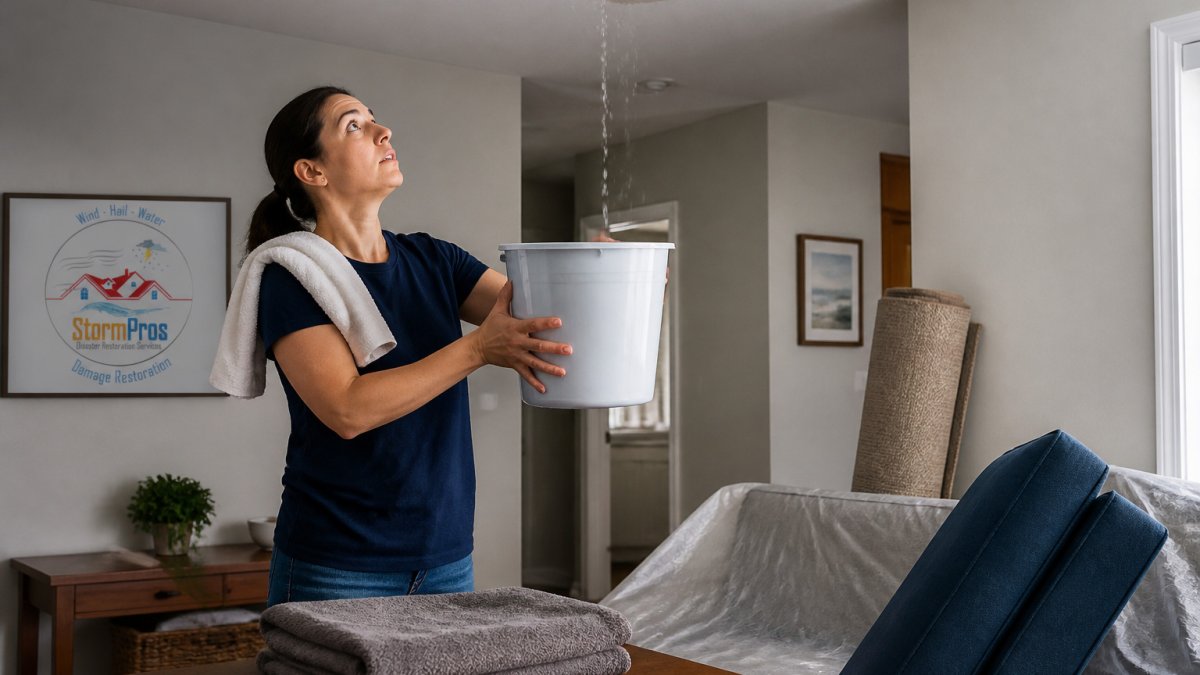
Once the power is safe to manage, contain the water. Place a bucket or container directly under each drip.
- Use a bucket with a wide base so it sits stable
- Empty buckets before they overflow
- Move containers if the drip pattern changes
Check the buckets every 30 to 60 minutes during active rain. Note how fast the water collects. That rate helps a roofer judge how serious the leak is.
How to Stop a Roof Leak From the Inside Until a Roofer Arrives
You cannot fully fix a roof from inside the house, but you can slow the water.
Look for wet insulation, dark staining on the roof boards, and drips coming from the rafters. Place a container under the leak in the attic as well.
Do not climb onto a wet roof. Falls from roofs cause serious injuries, and wet shingles are slippery.
Room-by-Room Water Damage Triage Checklist
Work through the house in a deliberate order so you protect people and power first, then contain the water, then save belongings. The sequence below reflects that priority, not the value of the items in each room.
Priority 1: Electrical and Structural Safety
- Confirm power is off to any room where water is near outlets, switches, or fixtures
- Identify any ceiling that is bulging, sagging, or visibly holding water and keep everyone out of that room
- Check for water pooling near the electrical panel; if the panel area is wet, do not approach it and call an electrician
- Note any cracked or displaced drywall seams, which can signal structural movement
If a ceiling is sagging, do not try to puncture it to drain the water yourself. A common pattern is for homeowners to poke a hole and get a sudden release that soaks the room and can bring down ceiling material. Leave that decision to a professional.
Priority 2: Containment in Living Spaces
- Place buckets under active drips and put plastic sheeting under the drip zone
- Move furniture, rugs, and electronics out of the drip path; lift heavy furniture onto blocks if it cannot be moved
- Remove rugs and hang or lay them flat to dry, but do not stack wet rugs on top of each other
- Unplug electronics that are near the leak only if the outlet and cord are dry and the breaker is off
Priority 3: Bedrooms and Closets
- Strip bedding and move personal items away from the leak
- Check closet floors and shelves for water that has run along the ceiling line
- Pull shoes and stored boxes off wet carpet or flooring
Priority 4: Kitchens, Bathrooms, and Utility Areas
- Check under sinks and around appliances for water that may have traveled along joists
- Move small appliances and paper goods away from the drip zone
- Look for water near the water heater and HVAC closet, where a roof leak can pool unnoticed
Priority 5: Attic and Insulation
- Note wet insulation, which is heavy and loses its insulating value once soaked
- Do not compress or walk on wet insulation more than necessary
- Photograph wet areas before removing anything so your insurance documentation is complete
Do not use a regular vacuum to pick up standing water. The motor can short out and create a shock risk. Use a wet/dry shop vac only if the area is dry of electrical hazards and the outlet is not in the wet zone.
A simple way to remember the order: people and power, then the drip, then the stuff. If you are unsure whether a room is safe, keep the door closed and wait for a professional.
Work through the house in this order, protecting people and power first, then containing the water, then saving belongings.
| Priority | Focus | First action |
|---|---|---|
| 1 | Electrical and structural safety | Confirm power is off near wet areas |
| 2 | Containment in living spaces | Place buckets and plastic sheeting under drips |
| 3 | Bedrooms and closets | Strip bedding and move personal items |
| 4 | Kitchens, bathrooms, utility areas | Check under sinks and near the water heater |
| 5 | Attic and insulation | Photograph wet areas before removing anything |
Signs of Water Damage From a Roof Leak You Should Not Ignore
Some signs look minor but point to larger damage behind the walls. Watch for:
- Brown or yellow stains on ceilings or walls
- Peeling paint or bubbling wallpaper
- Musty smells, which often signal hidden moisture
- Warped floorboards or soft spots underfoot
Any of these signs means you should call a roofing professional and check the interior more closely. Hidden moisture can lead to mold within days, so do not wait for the stain to grow.
Drying, Moisture Monitoring, and Mold Prevention
Stopping the drip is only part of the job. Wet materials must dry fast to prevent mold. Mold can begin to grow in damp conditions, and porous materials like drywall, carpet padding, and insulation are the most vulnerable.
Set Concrete Drying Targets
- Keep indoor relative humidity below about 50 percent in affected rooms while materials dry
- Aim to bring structural materials back to a normal moisture reading for your climate; a moisture meter reading that stays elevated after 48 hours of drying is a sign to call a professional
- Run fans and dehumidifiers continuously, not intermittently, during the first 24 to 48 hours
- Open windows only when outdoor air is drier than indoor air; in humid weather, closed windows with a dehumidifier work better
Material-Specific Drying Guidance
- Drywall: Surface stains can dry in a day, but drywall that is soft, crumbly, or swollen usually needs to be cut out and replaced. Do not paint over it.
- Carpet and padding: Padding that has been soaked should generally be removed and discarded; carpet itself can sometimes be dried in place with fans and a dehumidifier if it is lifted and air can move underneath.
- Insulation: Wet fiberglass or cellulose insulation loses performance and can hold moisture against framing. Remove and replace wet insulation rather than trying to dry it in place.
- Wood framing and subfloor: These can dry in place with air movement, but they need monitoring. Soft spots or dark staining that spreads are signs of ongoing moisture.
Monitor Hidden Moisture
Water travels along joists and inside wall cavities, so the visible stain is not the whole story. Check these spots with a moisture meter or by touch:
- The ceiling around the stain, not just the center
- Wall cavities below the leak, especially around outlets and trim
- Flooring under rugs and furniture near the leak
- Attic framing and insulation directly above the affected room
Take a moisture reading and a dated photo at the start of drying and again 24 hours later. The trend tells you whether drying is working and gives your insurance adjuster a clear record.
Know When to Call a Professional
Call a water damage or remediation professional if any of the following apply:
- Materials are still damp after 48 hours of continuous drying
- You smell a musty odor that does not clear with ventilation
- The affected area is larger than roughly 10 square feet of wet drywall or flooring
- Water has reached insulation, wall cavities, or the subfloor
Temporary mitigation, such as buckets, fans, and tarps, buys time. Permanent repair means fixing the roof and replacing damaged materials. Do not treat a temporary fix as the final repair.
Do not paint over stains before the wood or drywall dries completely. The stain will return and the moisture problem stays hidden.
Homeowners Insurance Coverage for Roof Leaks and Claim Documentation
Many homeowners policies cover sudden water damage from a storm, but coverage for long-term leaks depends on the policy terms. Read your policy carefully and check your deductible. You can also learn what water damage remediation is covered by homeowners insurance and what’s excluded.
Before any cleanup, document everything:
- Take dated photos and video of every affected room and the roof damage
- List damaged belongings with approximate values and purchase dates
- Keep receipts for emergency repairs, tarps, fans, and dehumidifiers
- Save the damaged materials until your adjuster has seen them if possible
Contact your insurer as soon as possible to open a claim.
Scheduling Your StormPros Inspection and Getting a Free Quote
Once the emergency is under control, schedule a full inspection. A thorough inspection finds the leak source, checks for hidden moisture, and identifies any structural concerns. StormPros offers roofing, siding, and gutter services, and works as an insurance claim specialist to help simplify the restoration process.
Ready to get started? Get a FREE quote from StormPros for your restoration needs. You can also review signs of roof water seepage in our detection guide before the inspection.
Frequently Asked Questions
Can you stop a roof leak from the inside?
You can slow a roof leak from the inside, but you cannot fully stop it without reaching the source on the roof. Place a bucket or container under the drip, move furniture and electronics out of the path, and use towels to soak up water on the floor. If the ceiling is bulging, keep people out of that room. Interior steps buy time and limit damage, while a roofer or emergency tarp handles the actual opening. Call a professional as soon as possible, since water can keep saturating insulation and drywall until the leak is sealed.
How long can a roof leak go before it causes damage?
Damage can start within hours, especially if water reaches insulation, drywall, or wood framing. Wet materials can begin to grow mold, and prolonged moisture can weaken structural members over weeks or months. The timeline depends on how much water enters, how quickly it is contained, and whether the area dries properly afterward. Treat any active leak as urgent and address it the same day when possible to reduce the risk of hidden rot and mold growth.
Are roof leaks covered by homeowners insurance?
Many homeowners policies cover sudden water damage caused by a covered event such as a storm that creates an opening in the roof, but coverage depends on your specific policy, the cause of the leak, and whether the damage resulted from lack of maintenance. Document the damage with dated photos and video, keep receipts for emergency repairs and mitigation, and report the claim promptly. A licensed insurance adjuster will evaluate the loss, and you can ask questions about how the estimate was calculated before accepting it.
When should you call a professional for a roof leak?
Call a roofing professional as soon as you discover a leak, especially after a storm, because temporary fixes rarely address the underlying cause. Contact an electrician before entering a room with light fixtures or outlets near water, and call a structural professional if you see sagging ceilings or soft, bowing walls. A qualified contractor can locate the leak source, install an emergency tarp, and begin permanent repairs once the damage is documented and any insurance claim is underway.


