 5.0 Out Of 250+ Reviews


 Financing Available


 (214) 227-2763

Table of Contents
- Reduced Gutter Cleaning Frequency
- Prevention of Water Damage to Your Foundation
- Protection Against Pests and Insects
- Prevention of Rust and Corrosion
- Improved Water Flow and Drainage
- Best Gutter Guards for Heavy Rain and Storm Protection
- Cost Savings and Long-Term Investment Value
- Gutter Guard Installation Cost and Material Options
- Frequently Asked Questions
Last Updated: September 28, 2026
Reduced Gutter Cleaning Frequency
Among the 7 benefits of gutter guards for homeowners, gutter guards eliminate the need to clean your gutters every few weeks. Without them, debris accumulation happens constantly. Leaves, twigs, and dirt clog your gutters fast. With guards in place, you clean far less often.
Most homeowners find they can go months between cleanings. Some systems let you stretch it to a full year. This saves you time and keeps you off a ladder regularly.
Ladder safety matters. Falls from ladders cause serious injuries every year (the CDC). Fewer trips up means less risk. That’s a real benefit beyond just convenience.
Install gutter guards in fall before leaves drop. You’ll avoid the worst debris season entirely and see immediate results in reduced cleaning needs.
The best guards still need occasional maintenance. But it’s minimal compared to manual cleaning. You might rinse them with a hose once or twice yearly instead of climbing up monthly.
Prevention of Water Damage to Your Foundation
Water that overflows from clogged gutters lands near your foundation. Over time, this causes serious problems. Standing water pools around your home’s base. It seeps into the soil and eventually into your basement.
Foundation erosion happens slowly. But once it starts, repairs get expensive fast. Gutter guards keep water flowing properly through downspouts. This directs runoff away from your foundation where it belongs.
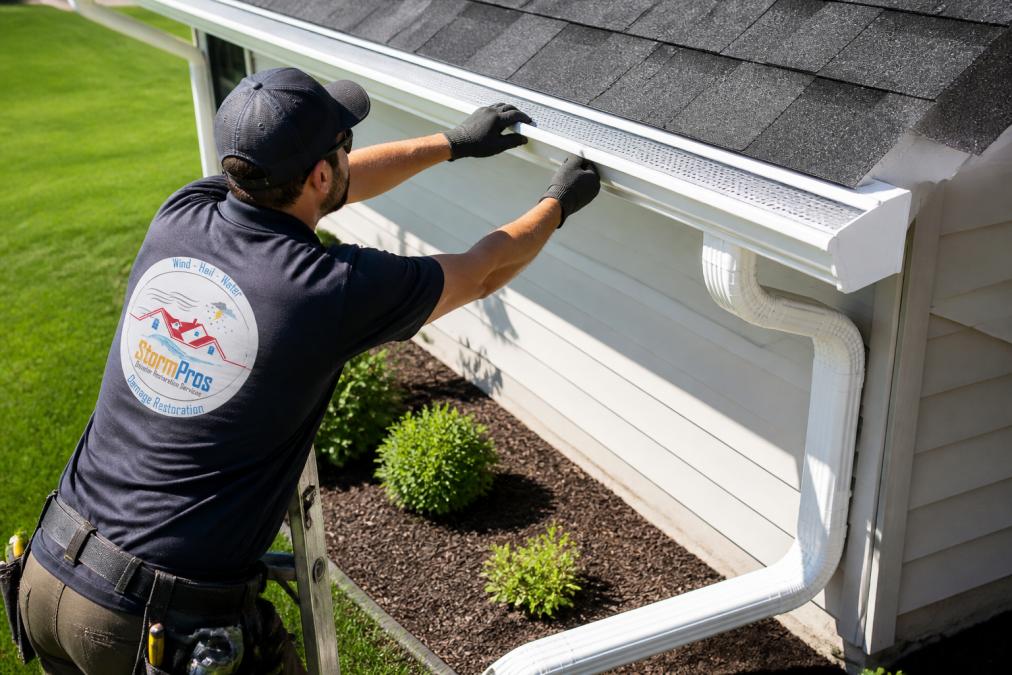
Proper water diversion protects your home’s structural integrity. The foundation is literally what your house sits on. Keeping it dry prevents cracks, settling, and water damage that costs thousands to fix.
Proper drainage is one of the most cost-effective ways to protect your investment.
Protection Against Pests and Insects
Clogged gutters create perfect breeding grounds for mosquitoes and other pests. Standing water in your gutters is exactly what mosquitoes need to reproduce. You’re essentially building insect hotels on your roof.
Gutter guards prevent this by keeping water flowing. No standing water means no mosquito breeding grounds. You’ll notice fewer bugs around your home in summer months.
Other pests also love clogged gutters:
- Wasps build nests in debris
- Ants nest in wet leaves
- Termites find moisture they crave
- Rodents use gutters as highways to your roof
Guards eliminate these entry points. Your home becomes less attractive to pests looking for water and shelter.
Even with guards, check them occasionally for debris buildup. A clogged guard can still trap water. Annual inspection prevents this problem.
Prevention of Rust and Corrosion
Metal gutters corrode when water sits stagnant or when moisture remains trapped against the metal surface. Rust begins as surface oxidation but penetrates deeper over time, eventually creating holes that allow water to bypass the gutter system entirely. Once perforation occurs, water leaks onto fascia boards, soffit, and the underlying roof structure, repairs that often exceed $500-$1,500 per section.
Gutter guards prevent corrosion by maintaining constant water flow. Moving water doesn’t pool against metal surfaces, and debris that traps moisture is eliminated. However, corrosion resistance varies dramatically by material and your local climate.
Aluminum mesh guards are affordable and naturally corrosion-resistant due to aluminum’s oxide layer. In moderate climates with seasonal rain, aluminum guards typically last 10-15 years before surface pitting becomes visible. In coastal regions or areas with high humidity, the salt spray accelerates oxidation, reducing lifespan to 7-10 years. Aluminum is also lighter, making DIY installation easier.
Stainless steel guards offer superior corrosion resistance because chromium in the alloy forms a self-healing protective layer. Stainless steel performs exceptionally well in coastal environments and high-humidity regions where aluminum fails faster. Lifespan typically reaches 20+ years even in harsh climates. The trade-off is cost, stainless steel guards run 40-60% more than aluminum, and they’re heavier, often requiring professional installation.
Copper guards are the premium choice for corrosion resistance. Copper develops a natural patina (a protective layer) that actually strengthens its defense against rust. Copper gutters and guards can last 50+ years with minimal maintenance. However, copper costs 2-3 times more than aluminum and requires specialized installation. It’s most common in high-end homes or historic properties.
Galvanized steel guards are cheaper than aluminum but corrode faster. Galvanization (a zinc coating) protects steel initially, but once breached, often within 5-8 years in wet climates, rust spreads rapidly beneath the surface. Galvanized guards are rarely recommended for long-term protection.
Plastic and vinyl guards don’t rust because they’re not metal, but they degrade under UV exposure and become brittle in cold climates.
If you live in a high-humidity or coastal area, the upfront cost difference between aluminum and stainless steel often pays for itself by avoiding premature replacement. Calculate the cost of replacing aluminum guards twice (years 7 and 14) versus installing stainless steel once (year 0) and keeping it for 20+ years.
Improved Water Flow and Drainage
Clean gutters channel water where it should go. Debris-filled gutters create overflow during heavy rain. Water spills over the sides instead of flowing through downspouts.
Best Gutter Guards for Heavy Rain and Storm Protection
Different materials perform differently in heavy weather. Mesh screens work well for most climates. They filter debris while allowing water through.
For storm protection, consider these factors:
- Your local rainfall amounts
- Types of trees near your home
- Wind speeds in your area
- How steep your roof is
Cost Savings and Long-Term Investment Value
Gutter guards cost money upfront. But they save money over time through reduced maintenance and prevented damage.
The 7 benefits of gutter guards for homeowners include savings on:
- Ladder rental or professional cleaning costs
- Water damage repairs to foundation and basement
- Pest control treatments
- Fascia board and soffit replacement
- Roof damage from backed-up water
The real value of gutter guards isn’t just convenience, it’s preventing expensive structural damage before it happens. Protection costs less than repair.
Gutter Guard Installation Cost and Material Options
Installation method, DIY versus professional, is often the larger cost decision than material choice itself. Understanding the labor cost-benefit trade-off is essential because poor installation can negate the benefits of even premium materials.
-
Skill level required: Mesh and foam guards are easiest; they clip or adhere to existing gutters with minimal tools. Reverse-curve systems require precise gutter alignment and often need fascia board work, demanding intermediate carpentry skills. Solid covers require cutting and fitting custom pieces, the most difficult approach.
-
Time investment: A straightforward mesh installation takes 4-8 hours for an average home. Reverse-curve or custom-fit systems can take 12-20 hours spread across multiple days.
-
Tools needed: Basic DIY requires a ladder, drill, and measuring tape. More complex systems may need a circular saw, caulk gun, and fastening tools you may not own.
-
Safety risk: Working at height on a ladder is the primary hazard. Falls from ladders cause over 200,000 emergency room visits annually in the U.S. Even experienced DIYers face elevated risk, especially on steep roofs or in windy conditions.
-
Warranty implications: Many gutter guard manufacturers void warranties if installation isn’t performed by certified professionals. This means if the system fails prematurely, you bear the full replacement cost.
-
Proper assessment: Professionals evaluate your roof pitch, existing gutter condition, local climate, and tree coverage to recommend the best material. A mesh system may be inadequate for a heavily wooded lot; a reverse-curve system may be overkill for a low-debris area.
-
Correct sizing and fit: Improper installation is the #1 reason gutter guards fail. Gaps allow debris to enter; poor slope prevents water flow. Professionals ensure slope, overlap, and fastening meet manufacturer specs.
-
Existing gutter repair: If your gutters are damaged, sagging, or misaligned, professionals correct these issues before installing guards. DIY installers often skip this step, leading to water overflow despite new guards.
-
Warranty protection: Professional installation typically includes a 5-10 year manufacturer’s warranty covering material defects and performance. This warranty is void if you install yourself.
-
Liability and insurance: If a professional installer causes roof damage during installation, their liability insurance covers it. DIY damage is your responsibility.
-
Speed: Professional crews complete most installations in 1-2 days versus your 2-3 weekends.
Material Cost Breakdown (for a 150-linear-foot home):
- Aluminum mesh: $200-$400 (DIY-friendly, easiest installation)
- Foam insert: $150-$350 (very DIY-friendly, lowest cost, shortest lifespan)
- Reverse-curve: $600-$1,200 (moderate DIY difficulty, better performance)
- Solid covers: $800-$1,500 (professional installation recommended, highest upfront cost)
- Stainless steel mesh: $400-$800 (DIY-possible, better corrosion resistance)
- Copper: $1,200-$2,500 (professional installation required, premium material)
The cheapest installation method isn’t always the lowest total cost of ownership. Factor in warranty coverage, lifespan of materials, and the cost of correcting poor installation when comparing DIY versus professional options.
Frequently Asked Questions
Do gutter guards really prevent all debris from entering gutters?
Gutter guards significantly reduce debris accumulation, but no system blocks 100% of debris. Quality guards using mesh screens or reverse curve designs filter most leaves and pine needles while allowing water through. Some fine debris may still pass through, but the volume requiring cleaning drops dramatically, from several times yearly to once annually or less. The goal is debris filtration that minimizes maintenance, not complete elimination.
Are gutter guards effective in heavy rain and storm conditions?
The best gutter guards for heavy rain maintain proper flow capacity and prevent overflow during intense downpours. Quality systems handle typical storm rainfall without backing up, directing water runoff efficiently away from your home. However, performance depends on gutter sizing and guard design. Reverse curve guards and mesh screens both work well, but improper installation or undersized gutters can still cause issues. Professional assessment ensures your system matches your climate’s rainfall intensity.
What is the average cost of having gutter guards installed?
Gutter guard installation cost varies based on your home’s size, guard material type, and whether you’re adding guards to existing gutters or installing seamless gutters with guards. Pricing depends on quantity, dates, and delivery. Contact StormPros for a free quote to get accurate pricing for your specific home and situation. They can evaluate your needs.
What is the downside of gutter guards?
Gutter guards require upfront investment and occasional maintenance, though far less than uncovered gutters. Some systems can reduce water flow if improperly installed, and certain designs may accumulate debris on top rather than inside. Ice dam mitigation can be affected if guards trap water during freeze-thaw cycles. The key is selecting quality guards matched to your climate and ensuring professional installation to avoid these issues. For most homeowners, benefits far outweigh drawbacks.
Protecting your home from water damage starts with proper drainage. Gutter guards reduce maintenance while preventing costly foundation and structural problems. StormPros specializes in gutter systems and storm damage restoration. Get a free quote today and discover how professional installation protects your home investment for years ahead.


