 5.0 Out Of 250+ Reviews


 Financing Available


 (214) 227-2763

Table of Contents
- Why Gutters Overflow During Light Rain
- Common Causes of Gutter Overflow
- Signs of Improper Gutter Pitch and What It Means
- How Gutter Capacity and Water Volume Affect Overflow
- Cost of Seamless Gutter Installation and When It Matters
- When to Replace Rain Gutters
- Diagnostic Checklist: Pinpointing Your Overflow Problem
- Preventative Maintenance and Professional Help
- Frequently Asked Questions
Last Updated: September 23, 2026
Why Gutters Overflow During Light Rain
Gutters overflow during light rain for reasons that have nothing to do with how much water is falling. We’ve helped homeowners diagnose why gutters overflow during light rain when they shouldn’t, and the answers are almost never what people expect. Most assume heavy downpours cause overflow. The truth is different. A gentle rain can overwhelm a gutter system that looks perfectly fine from the ground.
The real culprits are hidden: debris blocking the flow, downspouts that don’t connect properly, or a gutter pitched the wrong direction. When water can’t move through the system, it backs up and spills over the edge. Understanding why gutters overflow during light rain starts with understanding how gutters actually work. Water needs a clear path and the right slope to flow toward downspouts. Remove either one, and overflow happens fast.
This guide walks you through the most common reasons gutters fail during light rain, how to spot each problem, and when to call a professional.
Common Causes of Gutter Overflow
Gutter overflow during light rain points to specific system failures, not weather problems. Light rain should never overwhelm a functioning gutter. When it does, something is blocking the flow or redirecting water the wrong way.
Debris Accumulation and Clogs
Debris accumulation is the single most common cause of gutter overflow. Leaves, twigs, pine needles, and dirt pack into gutters and downspouts, creating blockages that stop water dead.
Here’s what happens: Light rain starts. Water flows into the gutter and hits the debris dam. It can’t move forward. Water backs up and spills over the edge. The homeowner sees overflow and thinks the gutter is too small. It’s not. The gutter is clogged.
Debris accumulation gets worse seasonally:
- Spring: pollen, seed pods, tree debris
- Summer: leaves starting to fall, dirt buildup
- Fall: massive leaf drop, branch fragments
- Winter: ice dams trap debris and block flow
Check for debris by looking into your gutters from a ladder. You should see mostly empty space. If you see a layer of leaves, dirt, or twigs, you’ve found your problem. Clearing debris often stops overflow immediately.
Gutters clog fastest near downspout openings. Debris piles up right where water needs to exit. If you only clean one section, clean here first.
Blockages in Downspouts
Downspout blockage is invisible from the ground, which is why it’s so commonly missed. The gutter looks clean. Water still overflows. The problem is inside the downspout.
Downspouts get blocked by:
- Debris pushed down from the gutter above
- Ice buildup in winter
- Nests built by birds or insects
- Crushed sections that collapse and trap water
When a downspout blocks, water can’t leave the gutter system. It has nowhere to go except over the edge. Even light rain causes overflow because the water has no exit.
Test for downspout blockage by running water from a hose into the gutter near the downspout opening. If water backs up instead of flowing down, the downspout is blocked. You’ll see water pooling in the gutter while the downspout stays dry.
Clearing a downspout blockage requires different tools depending on the location and severity. A plumbing snake works for many clogs. For ice dams, you may need professional help to avoid damaging the downspout.
Signs of Improper Gutter Pitch and What It Means
Gutter pitch is the slope of the gutter from one end to the downspout. Proper pitch is critical. Without it, water doesn’t flow. It pools. And pooling water overflows during even light rain.
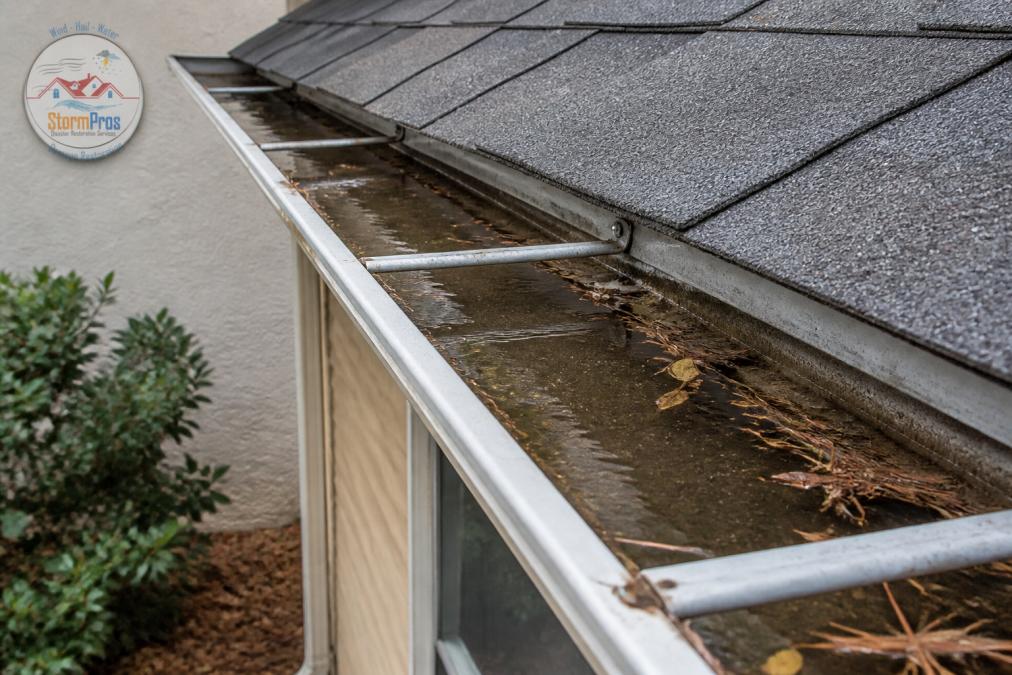
Signs of improper gutter pitch include:
- Water pooling in certain sections after rain stops
- Gutters sagging visibly in the middle between hangers
- Water overflowing in one area while other sections stay dry
- Gutter hangers pulling away from the fascia board
- Visible gaps between the gutter and fascia
Improper pitch happens when:
- Gutters sag over time from debris weight or weather damage
- Installation was done incorrectly from the start
- Fasteners loosen and allow the gutter to shift
- Foundation settling causes the fascia to shift
Gutters that sag visibly are holding water weight they shouldn’t carry. This stresses the hangers and fascia board. Ignore it long enough and water seeps behind the gutter into the soffit and fascia, causing rot. Fix sagging gutters before structural damage spreads.
How Gutter Capacity and Water Volume Affect Overflow
Gutter capacity is how much water a gutter can hold and drain per minute. Most residential gutters hold between 0.63 and 1 inch of water depth before overflow starts. That sounds like a lot until you do the math.
- The downspout is too small for the gutter size
- The downspout is blocked or kinked
- The gutter isn’t pitched correctly
- Debris is slowing water movement
Cost of Seamless Gutter Installation and When It Matters
Seamless gutters are one piece of material shaped to fit your roofline, with no joints except at corners. They look cleaner than sectional gutters and have fewer places for debris to hide.
Seamless gutters matter most when:
- You have frequent overflow problems with sectional gutters
- Debris constantly clogs your gutter joints
- You’re doing a full roof or siding replacement
- You want to reduce long-term maintenance needs
When to Replace Rain Gutters
Gutters last with proper maintenance. The material matters, but so does maintenance.
Replace rain gutters when:
- They’re older than 20 years and showing signs of wear
- Visible rust, holes, or cracks appear in the metal
- Seams separate or joints fail repeatedly
- Sagging is severe and can’t be fixed by adjusting hangers
- Water damage appears on your fascia board or soffit
- You’re planning a roof replacement anyway
Replacement becomes necessary when repairs become frequent. If you’re cleaning gutters constantly or patching leaks regularly, replacement often costs less than ongoing maintenance over the next 5 years.
Diagnostic Checklist: Pinpointing Your Overflow Problem
Use this checklist to identify why your gutters overflow during light rain. Go through each step methodically. Most homeowners find their problem in the first three items.
Visual Inspection:
- Look for visible debris in gutters from the ground
- Check if gutters sag visibly between hangers
- Look for water pooling in sections after rain stops
- Check if gutters are pulling away from the fascia board
- Look for rust, holes, or separation at seams
Water Flow Test:
- Run water from a hose into the gutter near the downspout
- Watch where the water goes, does it flow toward the downspout?
- Listen for water flowing down the downspout
- Check if water backs up or pools in the gutter
- Look for water spraying out of gutter joints
Downspout Check:
- Follow the downspout to where it exits your home
- Check if the exit is clear and water flows out
- Look for water leaking from downspout seams
- Check if the downspout is kinked or crushed
- Verify the downspout isn’t buried or blocked at ground level
Pitch Assessment:
- Use a level to check gutter slope
- Measure the drop from one end to the downspout
- Look for low spots where water would pool
- Check if the fascia board is level or if it’s shifted
Common Findings:
- Debris visible → Clean gutters immediately
- Water backs up during hose test → Downspout is blocked
- Visible sagging → Gutters need adjustment or replacement
- Water pools in sections → Pitch is incorrect
- Multiple problems → Call a professional
Preventative Maintenance and Professional Help
Preventative maintenance stops most gutter overflow problems before they start. Regular cleaning and inspection catch issues early when they’re cheap to fix.
Basic Maintenance Schedule:
- Spring: Clean gutters after trees finish shedding
- Summer: Inspect for damage and clean again mid-season
- Fall: Clean gutters before and after leaf drop
- Winter: Check for ice dams and clear debris
Inspection is just as important as cleaning. Look for:
- Loose or missing hangers
- Separated seams or joints
- Rust or corrosion
- Sagging sections
- Downspout issues
Professional help matters when:
- You’re uncomfortable working at height
- Gutters are severely clogged or blocked
- Structural damage is visible
- Pitch adjustment is needed
- You want a thorough inspection and cleaning
Frequently Asked Questions
Why are my gutters overflowing even though they are not clogged?
Gutters overflow during light rain for reasons beyond clogs. Improper gutter pitch prevents water from flowing toward downspouts, causing water to back up and spill over the edge. Undersized downspouts or gutters that cannot handle the volume of rainwater also cause overflow. Additionally, gutter hangers that have loosened or failed can create sagging sections where water pools instead of draining. Have a professional inspect your gutter alignment and system capacity to identify the root cause.
Can improper gutter pitch cause overflow during light rain?
Yes. Gutters require a minimum slope to ensure proper water velocity and drainage. Without adequate gutter pitch, water moves slowly and collects in low spots, causing overflow even during moderate rainfall. Over time, gutter hangers can shift due to weather or age, creating dips that trap water. Seasonal cleaning alone won’t fix pitch problems. A professional inspection can measure your gutter slope and determine if reinstallation or repair is needed to restore drainage efficiency.
Do undersized downspouts cause gutter overflow?
Undersized downspouts are a common cause of gutter overflow. If your roof is larger or your gutters are wider, you may need larger or additional downspouts. During heavy rainfall, water volume exceeds what undersized downspouts can handle, causing water to back up into the gutters and overflow. Upgrading to properly sized downspouts improves drainage efficiency and prevents water damage to your foundation and fascia board.
What should I do if my gutters overflow during light rain?
Start by cleaning debris from your gutters and downspouts to rule out clogs. Check for visible sagging or low spots that indicate poor gutter pitch. Inspect gutter hangers for damage or looseness. If cleaning doesn’t solve the problem, the issue is likely undersized gutters, improper slope, or inadequate downspout capacity. These issues require professional diagnosis and repair. StormPros can inspect your gutter system, identify the exact cause, and recommend whether cleaning, realignment, upgrades, or replacement is needed to protect your home’s foundation and structure.


