 5.0 Out Of 250+ Reviews

 Financing Available

 (214) 227-2763
Table of Contents
- What Water Damage Restoration Involves
- Understanding the Water Damage Insurance Claim Process
- Professional Water Mitigation Steps Explained
- Average Cost of Water Damage Restoration
- DIY vs. Professional Intervention: When to Call Specialists
- Health Hazards and Why Rapid Response Matters
- Finding Reliable Restoration Services
- Conclusion
- Frequently Asked Questions
Last Updated: September 30, 2026
What Water Damage Restoration Involves
Water damage restoration is the comprehensive process of extracting standing water, drying structural components, and restoring a property to its pre-damage condition. It addresses both visible damage and hidden moisture that can compromise structural integrity and create health hazards.
Water seeps into walls, subflooring, insulation, and crawl spaces. The longer it sits, the more damage occurs, every hour counts when water damage strikes.
The restoration process includes water extraction, structural drying with dehumidification systems, moisture mapping, mold remediation, and content cleaning to ensure no moisture remains trapped.
The first 24-48 hours after water damage are critical. Water that sits longer than this window significantly increases the risk of mold growth and structural deterioration. Calling professionals immediately prevents exponentially higher costs down the line.
Understanding the Water Damage Insurance Claim Process
Filing an insurance claim requires systematic documentation, timely communication with your adjuster, and professional assessment. The difference between quick approval and disputes often comes down to documentation quality.
Notify your insurance company immediately, most policies require prompt notice to avoid denial. Adjuster estimates often fall short of actual restoration costs because they may not account for structural drying, mold remediation, or secondary damage that becomes apparent during mitigation.
Step-by-Step Insurance Claim Documentation Checklist
Professional documentation is the foundation of a successful claim. Use this checklist to capture evidence that supports your claim value:
Immediate Documentation (First 24 Hours):
- Take photos and videos of all visible water damage from multiple angles before cleanup begins
- Document the water source (burst pipe, roof leak, foundation seepage, etc.) if visible
- Record the date, time, and weather conditions
- Photograph any personal property damaged or at risk
Damage Inventory:
- List all affected rooms with square footage estimates
- Document saturated materials (drywall, insulation, flooring, subflooring)
- Note visible mold growth or musty odors
- Document contents requiring cleaning or replacement
Professional Assessment Documentation:
- Obtain written estimates from licensed restoration contractors
- Request thermal imaging reports and moisture meter readings
- Preserve all contractor reports and assessment findings
Communication Records:
- Keep copies of all correspondence with your insurance company
- Document the date and time of adjuster inspection
- Record names and contact information of insurance representatives
- Request written explanations for any coverage denials
Receipts and Expenses:
- Keep receipts for emergency repairs, temporary mitigation, and temporary housing
- Save invoices from restoration contractors
Why Professional Assessment Increases Claim Value
Experienced restoration specialists document the full scope of damage with thermal imaging, moisture mapping, and detailed photographs. Thermal imaging reveals hidden moisture behind walls and under flooring; moisture mapping justifies the duration and intensity of drying work required.
Professional assessment often identifies damage initial inspections missed, hidden moisture in wall cavities, saturation in subflooring, or mold colonization in insulation, increasing claim settlements by thousands of dollars.
Common Claim Disputes and How to Prevent Them
Adjusters may deny mold remediation coverage as a maintenance issue. Prevent this by documenting that mold resulted directly from the water damage event with professional testing and timeline documentation.
Adjusters may question structural drying costs. Professional documentation with moisture meter readings and daily monitoring logs justifies the necessity and duration of drying work.
Some adjusters limit coverage to visible damage, excluding secondary damage like structural rot or mold. Have professionals document all damage during initial assessment, including potential secondary damage risks, to establish the connection to the original water event.
The strongest claims are built on contemporaneous documentation, photos and records created immediately after damage occurs, before cleanup begins. Professional assessment adds credibility and specificity that adjusters respect and are less likely to dispute.
Keep all documentation organized in a single folder (digital or physical) and provide copies to your adjuster proactively. Transparent, comprehensive documentation signals that you’re serious about an accurate settlement and reduces the likelihood of disputes or delays.
Professional Water Mitigation Steps Explained
Water mitigation involves rapid response and systematic removal of water and moisture to stop further damage and enable effective structural drying.
Water Extraction and Structural Drying
Water extraction removes standing water using submersible pumps and wet vacuums. Structural drying then uses air movers, dehumidifiers, and strategic ventilation to pull moisture from walls, subflooring, and structural components.
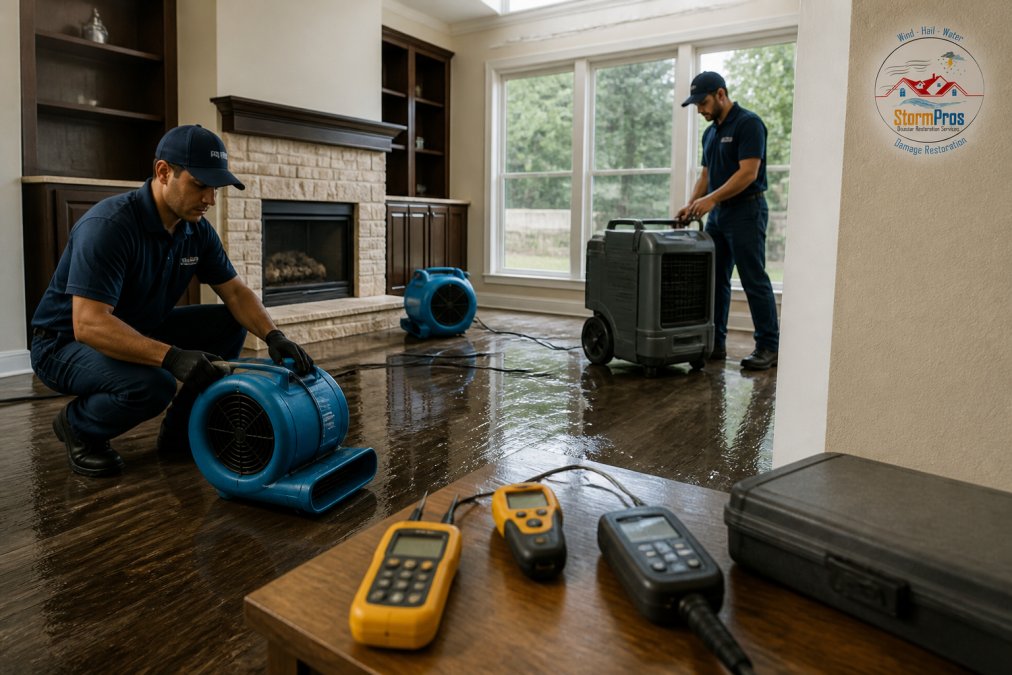
Structural drying typically takes 3-7 days. Professionals monitor moisture levels continuously with moisture meters and hygrometers to confirm completion; stopping too early leaves hidden moisture that leads to mold growth.
Proper ventilation and air circulation are essential. Professionals create airflow patterns that move humid air out while replacing it with drier air, preventing moisture from migrating to other areas.
Incomplete drying is the most common cause of mold problems after water damage. Professional monitoring with moisture-sensing equipment ensures drying is actually complete, not just surface-level.
Mold Remediation and Prevention
Mold begins growing within 24-48 hours of water exposure (the CDC). Professional remediation involves identifying affected areas, containing the problem, removing contaminated materials, and applying antimicrobial treatments.
Professionals use negative pressure systems and HEPA filtration to prevent spores from migrating during removal. Affected surfaces are then cleaned and treated with antimicrobial solutions.
Surface mold on drywall can sometimes be cleaned, but mold infiltrating insulation, subflooring, or structural framing requires material removal and replacement. Professional assessment is essential to avoid leaving systemic mold intact.
Prevention after water damage involves maintaining humidity below 50% during and after the drying process (the CDC). Continued use of dehumidifiers and air movers for several days after visible drying prevents mold from establishing itself.
Average Cost of Water Damage Restoration
Water damage restoration costs vary based on damage extent, water category, and square footage affected. A small burst supply line intrusion costs substantially less than sewage backup or extensive flooding restoration.
Factors affecting costs include water volume, drying duration, mold remediation needs, content cleaning, and structural material replacement.
DIY vs. Professional Intervention: When to Call Specialists
Minor leaks caught immediately might be handled with towels and hardware store fans, but most water damage situations exceed what DIY approaches can safely address.
Professional intervention becomes necessary when:
- Standing water covers more than a small area
- Water has been present for more than a few hours
- Water came from sewage, flooding, or contaminated sources
- Water has saturated walls, subflooring, or insulation
- You suspect mold growth has begun
- Structural materials show visible saturation
Sewage water (category 3 water) poses serious health hazards and requires professional biohazard cleanup. Never attempt to clean sewage-contaminated areas yourself. Exposure to sewage pathogens can cause serious illness.
Health Hazards and Why Rapid Response Matters
Standing water creates immediate and long-term health risks depending on the water source. The EPA and restoration industry classify water damage into three categories based on contamination level and associated health hazards.
Category 1: Clean Water
Category 1 water originates from sanitary sources like burst supply lines, overflowing sinks, or leaking appliances, though it becomes contaminated over time as bacteria colonize it.
Health Risks:
- Minimal immediate risk if exposure is brief, but risk increases significantly if water sits beyond 24-48 hours
- Immunocompromised individuals face greater risk
- Inhalation of mold spores from inadequately dried areas poses respiratory risks
Category 2: Gray Water
Category 2 water contains significant contamination from household sources including washing machines, dishwashers, toilet overflow, or minor sewage backup. It contains bacteria, viruses, and chemical contaminants that pose moderate health risks.
Health Risks:
- Direct skin contact causes gastrointestinal illness, skin infections, or wound infections
- Inhalation of contaminated aerosols poses respiratory risks
- Vulnerable populations (young children, elderly, immunocompromised) face severe complications
- Hepatitis A, norovirus, and bacterial pathogens cause prolonged illness
Category 3: Black Water
Category 3 water is heavily contaminated with sewage, floodwater, or other biohazardous materials from sewage backups, toilet overflow with feces, flooding, or animal waste. It poses severe health hazards requiring professional biohazard remediation.
Health Risks:
- Fecal coliform bacteria and pathogens (Hepatitis A, E. coli O157:H7, Cryptosporidium, Giardia) cause severe infections
- Parasitic infections cause long-term complications
- Mold produces mycotoxins causing neurological symptoms
- Black water can cause life-threatening sepsis in vulnerable individuals
- Chemical contaminants accumulate in tissues
Category 3 water (sewage contamination) requires professional biohazard cleanup. Attempting to clean contaminated areas without proper training, equipment, and protective gear exposes household members to life-threatening pathogens. Contact a licensed restoration contractor immediately if sewage backup or contaminated flooding occurs.
Mold Growth and Respiratory Health Effects
Mold growth from inadequate drying creates long-term health hazards. Mold begins colonizing within 24-48 hours, triggering respiratory problems, allergic reactions, and asthma exacerbation in susceptible individuals.
Why Every Hour Matters in the First Days
Health risks accelerate exponentially: clean water becomes contaminated within hours, mold colonizes within 24-48 hours, and structural materials deteriorate within days. Rapid response is critical.
Finding Reliable Restoration Services
Verify that contractors are licensed, insured, and experienced with insurance claims. Finding a contractor experienced with your specific situation matters.
Conclusion
Water damage restoration requires rapid response, professional assessment, and systematic mitigation to prevent structural damage and health hazards. Immediate professional intervention often determines whether you address water damage or structural rot and mold problems.
Frequently Asked Questions
What does water damage restoration include?
Professional water damage restoration includes water extraction, structural drying, dehumidification, mold remediation, sanitization, and reconstruction of damaged materials. Specialists deploy air movers and specialized equipment to dry affected areas thoroughly. The process also covers restoration of your property to pre-damage condition.
How does the water damage insurance claim process work?
Start by documenting all damage with photos and video. Contact your insurance company to file a claim and request an adjuster inspection. Obtain estimates from certified restoration specialists. Submit your documentation, estimates, and adjuster report to your insurer.
Can I do water restoration myself?
Minor water damage from clean sources (like a burst supply line) may be manageable with dehumidifiers and fans if addressed immediately. However, professional intervention is necessary for category 3 water (sewage or contaminated water), extensive structural damage, mold growth, or damage affecting multiple areas. Attempting DIY restoration on significant damage risks incomplete drying, mold development, and structural deterioration that becomes costlier later.
What are signs of hidden water damage in a home?
Watch for soft or discolored drywall, warped flooring, musty odors, visible mold spores, peeling paint, or sagging ceilings. Subfloor drying is especially critical, water trapped beneath flooring causes structural integrity issues and mold growth over time. If you notice any of these signs weeks after water exposure, professional assessment is essential to prevent long-term structural damage.


