 5.0 Out Of 250+ Reviews


 Financing Available


 (214) 227-2763

Last Updated: October 22, 2026
Quick Summary
To handle insurance claim adjusters effectively, be organized, honest, and prepared with documentation while communicating directly and specifically about the damage. Answer their questions without volunteering extra information, provide clear photos and contractor estimates, and submit all documents promptly to move your claim forward faster.
- Adjusters typically have 30 to 60 days to complete their investigation and determine what the insurer should pay.
- Submit documentation in batches with clear labels and captions, keeping copies of everything you send for your own records.
- Challenge an estimate with detailed contractor quotes if the adjuster missed damage or underestimated repair costs significantly.
- Most insurance claims take 30 to 90 days from start to resolution, with simple claims settling in 30 to 45 days.
- For significant third-party claims or those involving injury, consult an attorney before giving recorded statements to protect your interests.
Table of Contents
- Understand the Adjuster’s Role and Your Relationship
- What to Say to an Insurance Adjuster
- Prepare for the Adjuster’s Home Inspection with a Checklist
- Organize and Submit Your Claim Documentation
- How Long Does an Insurance Claim Take
- How to Dispute an Insurance Claim Estimate
- First-Party vs. Third-Party Claims: Communication Differences
- Common Mistakes to Avoid When Handling Insurance Claim Adjusters
- Frequently Asked Questions
Understand the Adjuster’s Role and Your Relationship
An insurance claim adjuster is hired by your insurer to investigate and evaluate your claim, assessing damage, verifying coverage, and determining what your insurer should pay. Knowing how to handle insurance claim adjusters effectively protects your interests throughout the process.
The adjuster’s role is investigative, not adversarial. Their job is to verify facts, assess damage fairly, and ensure the claim is legitimate, which shapes how you should communicate with them.
Your job is to make their investigation straightforward by being organized, honest, and prepared.
The relationship is professional and transactional, not friends, not adversaries. The adjuster has no incentive to lowball you if the damage is clear and documented; their goal is accuracy, which protects both you and the insurer.
Adjusters typically have 30-60 days to complete their investigation. Knowing this timeline helps you plan your own responses and follow-ups without panic.
What to Say to an Insurance Adjuster
Effective communication with an insurance adjuster comes down to three principles: be honest, be specific, and be brief.
Answer the adjuster’s questions directly. Don’t volunteer extra information, but don’t withhold facts either. If you don’t know something, say so, and ask for time if you need it. This builds credibility fast.
Here’s what to say:
- “I’ll provide that information by [specific date]”, Sets expectations and shows you’re organized
- “I have photos and documentation of the damage”, Signals you’re prepared
- “Here’s what happened, in order”, Stick to facts and timeline
- “I’m not sure about that. Let me check and get back to you”, Better than guessing
Here’s what NOT to say:
- Avoid admitting fault or blame for the incident. Let the facts speak.
- Don’t speculate about coverage or what you think your policy should cover.
- Don’t exaggerate the damage or claim losses you didn’t actually incur.
- Don’t say “I think the damage is worse than it looks” without evidence.
- Avoid emotional language like “This ruined my life” or “You people always deny claims.”
The adjuster wants clarity and reads between the lines for consistency. Vagueness reads as hiding something; emotion reads as bias. Stick to observable facts.
Never sign a recorded statement without understanding what you’re authorizing. A recorded statement becomes part of the claim file and can be used against you if your account later changes in any detail. Ask to review the recording before signing, or consult an attorney first if the claim is complex or involves injury.
Prepare for the Adjuster’s Home Inspection with a Checklist
Before the Inspection Arrives
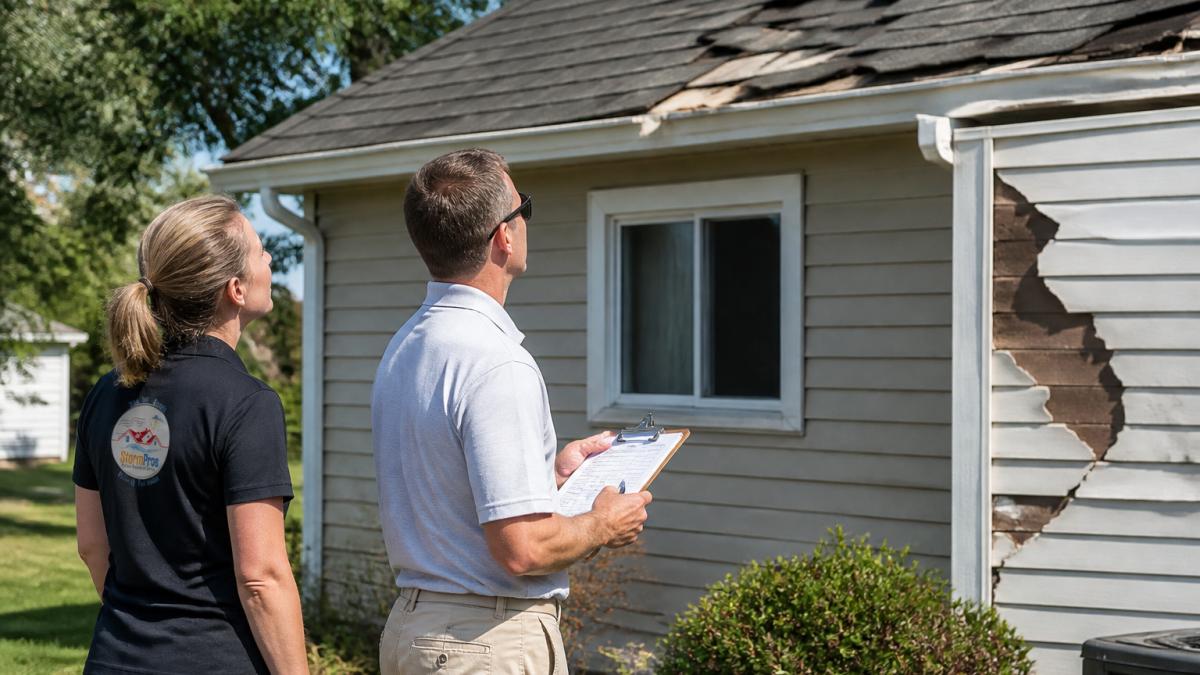
The adjuster will want to see the damage firsthand, so make it easy for them to assess accurately. Secure the property first: tarp leaking roofs, board broken windows, and document emergency repairs with photos and receipts.
Create a timeline of the incident, date, time, weather conditions, what happened, and witness names. This context helps the adjuster understand how the damage occurred.
Gather all relevant documents:
- Your insurance policy and declarations page
- Photos of the damage (taken immediately after the incident)
- Receipts for any emergency repairs
- Estimates from contractors
- Medical records (if injury is involved)
- Police reports (if applicable)
- Proof of prior maintenance (for wear-and-tear disputes)
Walk through your home room by room and list all damage, roof leaks, water stains, broken glass, structural issues. Flag less obvious problems like mold or hidden water damage so the adjuster knows to look.
During the Inspection
Let the adjuster lead the inspection. Stay with them without interrupting, answer questions directly, and volunteer information only to clarify what they’re examining.
Point out documented damage, say “We had water coming in here after the storm” while showing the stain. Let them take photos and measurements, and don’t touch anything they’re examining.
If asked about maintenance, be honest. Neglected roofs are relevant to roof claims; if you’ve kept up maintenance, say so and provide proof. Adjusters expect normal wear and tear, they’re looking for negligence or fraud, not perfection.
If the adjuster finds damage you didn’t notice, ask them to explain it. Understanding their assessment helps you evaluate whether it’s accurate later.
| Step | Purpose | Outcome |
|---|---|---|
| Walk property with adjuster | Show all visible damage clearly | Adjuster documents complete picture |
| Answer questions directly | Build credibility and trust | Faster, more accurate assessment |
| Provide documentation | Prove damage and timeline | Stronger claim support |
| Ask clarifying questions | Understand their findings | Better informed for disputes |
Organize and Submit Your Claim Documentation
Organization wins claims: prompt, orderly documentation helps adjusters move faster and miss less.
Create a single folder (physical or digital) with clearly labeled sections: photos, estimates, receipts, medical records, policy documents, correspondence. Number documents so you can reference them in emails.
Submit documentation in batches tied to specific requests. If the adjuster asks for contractor estimates, send those with a cover email listing what you’re submitting.
Keep copies of everything you send: screenshot emails, save PDFs, photograph physical documents before mailing. You need your own record.
Submit documents promptly. Meet the adjuster’s deadline or request an extension in writing, delays signal disorganization or evasion, even if that’s not your intent.
Caption your photos.
How Long Does an Insurance Claim Take
Most insurance claims take 30 to 90 days from start to resolution, varying by claim type and complexity.
Simple claims with clear damage and no disputes often settle in 30 to 45 days: the adjuster inspects, you submit documentation, and a settlement offer arrives.
Complex claims involving multiple types of damage, injuries, or coverage questions can stretch to 120 days or longer. Supplemental estimates (additional damage found after the initial inspection) also extend timelines.
Here’s a typical timeline:
- Days 1-5: You file the claim and provide initial information
- Days 6-15: Adjuster schedules and completes the inspection
- Days 16-45: Adjuster reviews documentation and prepares estimate
- Days 46-60: You review the estimate and submit any disputes or supplemental documentation
- Days 61-90: Adjuster reviews disputes and issues final settlement
- Days 91+: Payment is processed
Weather delays the timeline: an ongoing storm may postpone inspection, and contractor backlogs extend your submission timeline.
The fastest claims are those where the claimant submits all documentation on time and disputes are resolved quickly. Delays on your end directly slow your settlement.
How to Dispute an Insurance Claim Estimate
When to Challenge an Estimate
Challenge an estimate if you believe it’s inaccurate. Common reasons:
- The adjuster missed damage you know exists
- The repair cost estimate is significantly lower than contractor quotes
- The adjuster applied depreciation unfairly (especially for newer items)
- The estimate doesn’t account for code compliance upgrades required by local building codes
Don’t dispute an estimate just because you dislike the number. If three contractors quote higher than the adjuster’s estimate, that’s a legitimate dispute. If you’re unhappy the claim won’t fully restore your home, that’s a policy question, not an estimate error.
Steps to File a Dispute
Document your objections with detailed written estimates from licensed contractors for the disputed items, not just a total price.
Submit a written dispute letter to your insurer, email is fine, but follow up by phone to confirm receipt.
Example: “Line item 12 in the adjuster’s estimate quotes $2,400 for roof repair. We obtained two contractor estimates at $3,800 and $4,100.
The insurer will accept your dispute and increase the estimate, send another adjuster to re-inspect, or deny it with an explanation. If denied, ask what specific information would change their assessment.
If still unsatisfied, request an appraisal. Most policies include an appraisal clause: you and the insurer each hire an appraiser, who review the evidence and settle on a figure.
Contractor estimates are your strongest evidence in a dispute. Get at least two, and choose contractors who are licensed and insured. Adjusters take these seriously because they’re from professionals with skin in the game.
First-Party vs. Third-Party Claims: Communication Differences
First-party claims are between you and your own insurer; third-party claims are against someone else’s insurance when they’re liable for your damage.
In a first-party claim, your insurer’s adjuster investigates your loss, you’re on the same team, in theory. Communication is straightforward: be honest, provide documentation, and work through disputes professionally.
In a third-party claim, the other party’s adjuster is investigating, and their goal is to minimize what their insurer pays, you’re on opposite sides.
Example: in a first-party roof claim after a storm, you tell your adjuster about the damage and provide estimates.
Third-party claims also involve potential subrogation. If the other party is clearly liable, your insurer may pursue them for damages. Your cooperation and clear documentation help that process.
Common Mistakes to Avoid When Handling Insurance Claim Adjusters
Mistake 1: Being Unprepared
Adjusters move quickly. If you’re not ready with documentation when asked, they move on and you chase them later.
Mistake 2: Oversharing
Don’t explain your feelings about the damage or speculate about its cause.
Mistake 3: Lying or Exaggerating
Never claim damage that didn’t happen or inflate repair costs. Adjusters catch inconsistencies. One lie destroys your credibility for the entire claim.
Mistake 4: Missing Deadlines
Meet the adjuster’s documentation deadlines, missing them signals disorganization or evasion. If you need more time, ask in advance.
Mistake 5: Signing Documents Without Understanding Them
Read everything before signing. Recorded statements, authorizations, and settlement agreements are binding, ask the adjuster to explain anything unclear, or consult an attorney.
Mistake 6: Assuming the Adjuster Knows Everything
Adjusters inspect quickly. They may miss damage that’s not immediately visible. Point out damage you know about. Don’t assume they’ll find everything.
Mistake 7: Accepting a Low Estimate Without Dispute
If the estimate seems significantly low, get contractor quotes and challenge it.
Mistake 8: Going It Alone on Complex Claims
Handling insurance claim adjusters effectively comes down to preparation, honesty, and clear communication. If you’re facing storm damage and need help managing your claim while coordinating repairs, our team can simplify the process and ensure your restoration exceeds pre-damage condition.
Frequently Asked Questions
What should you say to an insurance adjuster?
Be honest, clear, and concise. Stick to facts about what happened and the damage you observed. Say: ‘The storm caused damage to my roof and gutters on [date].’ Provide documentation like photos and repair estimates. Avoid speculation, exaggeration, or admitting fault. If asked about injuries or liability, simply state what you know factually. If you’re unsure about a question, say you’ll follow up in writing rather than guessing.
How long does an insurance claim take from start to settlement?
Most property claims resolve within 30 to 60 days, though timelines vary. Initial inspection typically happens within 5-10 business days. The adjuster then has up to 30 days to issue an estimate (this varies by state and policy). If you dispute the estimate or submit additional documentation, add 15-30 days. Complex claims with multiple types of damage or contractor coordination may extend to 90+ days. Stay in touch with your adjuster about deadlines.
What should you avoid saying to an insurance adjuster?
Never admit fault or blame yourself (‘It’s my fault the roof wasn’t maintained’), exaggerate damage, or make statements you can’t support. Avoid giving a recorded statement without reviewing your policy or consulting an attorney if the claim is large. Don’t sign anything you haven’t read. Don’t agree to a settlement offer on the spot if you believe the estimate is low. Avoid emotional language or hostility, which can damage your credibility. Stick to documented facts.
Can you negotiate with an insurance claim adjuster over their estimate?
Yes. If the adjuster’s estimate is significantly lower than repair quotes you’ve obtained, you can dispute it. Submit written documentation: detailed repair estimates from licensed contractors, photos of all damage, and invoices for any emergency repairs. Request a written explanation of how the adjuster calculated their estimate. If you disagree, file a formal dispute with your insurance company. Some policies allow for appraisal or mediation. Having a contractor or public adjuster review the estimate strengthens your position.


