 5.0 Out Of 250+ Reviews


 Financing Available


 (214) 227-2763

Table of Contents
- How Hail Affects Metal Roofing
- Signs of Hail Damage on a Metal Roof
- Metal Roof Hail Damage Inspection: Step-by-Step
- Repair Options for Hail-Damaged Metal Roofs
- Repair or Replace: Making the Right Decision
- Filing a Hail Damage Roof Insurance Claim
- Protecting Your Metal Roof After Hail Damage
- Frequently Asked Questions
Last Updated: October 23, 2026
How Hail Affects Metal Roofing
Metal roofs are durable, but hail can dent, scratch, and crack their protective coating. The size and speed of the hail determine how severe the damage becomes.
Understanding how hail affects metal roofing helps you decide whether you can repair hail damage on a metal roof or if replacement makes more sense. A large hailstone at high speed can dent the surface, crack the sealant, or damage fasteners.
The real problem isn’t always what you see. A deep dent can pool water, leading to rust, leaks, and structural damage over time, which is why careful inspection after a hailstorm matters.
Metal roofs with proper slope and good drainage handle hail better than flat or low-slope roofs. Water runs off quickly, reducing the risk of pooling and rust formation.
Signs of Hail Damage on a Metal Roof
After a hailstorm, look for these specific signs of damage on your metal roof:
- Visible dents or depressions in the metal panels
- Cracks, splits, or tears in the coating or paint
- Scratches that expose the bare metal underneath
- Bent or damaged flashing around vents, chimneys, or edges
- Loose or missing fasteners (screws or rivets)
- Granule loss on the roof surface (if your roof has a granulated coating)
- Rust spots or discoloration where bare metal is exposed
- Leaks inside your home, especially after the storm
Not all damage is obvious from the ground, so a professional inspection matters.
Cosmetic Damage vs. Functional Damage
Cosmetic damage is visible but doesn’t affect how your roof works, dents that don’t hold water and scratches that haven’t exposed bare metal. Many homeowners can live with it.
Functional damage includes deep dents that trap water, coating cracks that expose bare metal, damaged flashing that lets water in, or bent fasteners. Water intrusion, rust, and leaks are the real risks.
The distinction matters for your insurance claim. Most homeowners insurance policies cover functional damage but not purely cosmetic dents. If your roof still works and doesn’t leak, an adjuster might deny the claim. At StormPros, we help homeowners navigate complex insurance claims for property restoration.
Ignoring functional damage leads to expensive problems later. Water seepage causes wood rot, mold, and structural damage inside your home.
Metal Roof Hail Damage Inspection: Step-by-Step
Here’s how to inspect your metal roof after hail safely and thoroughly.
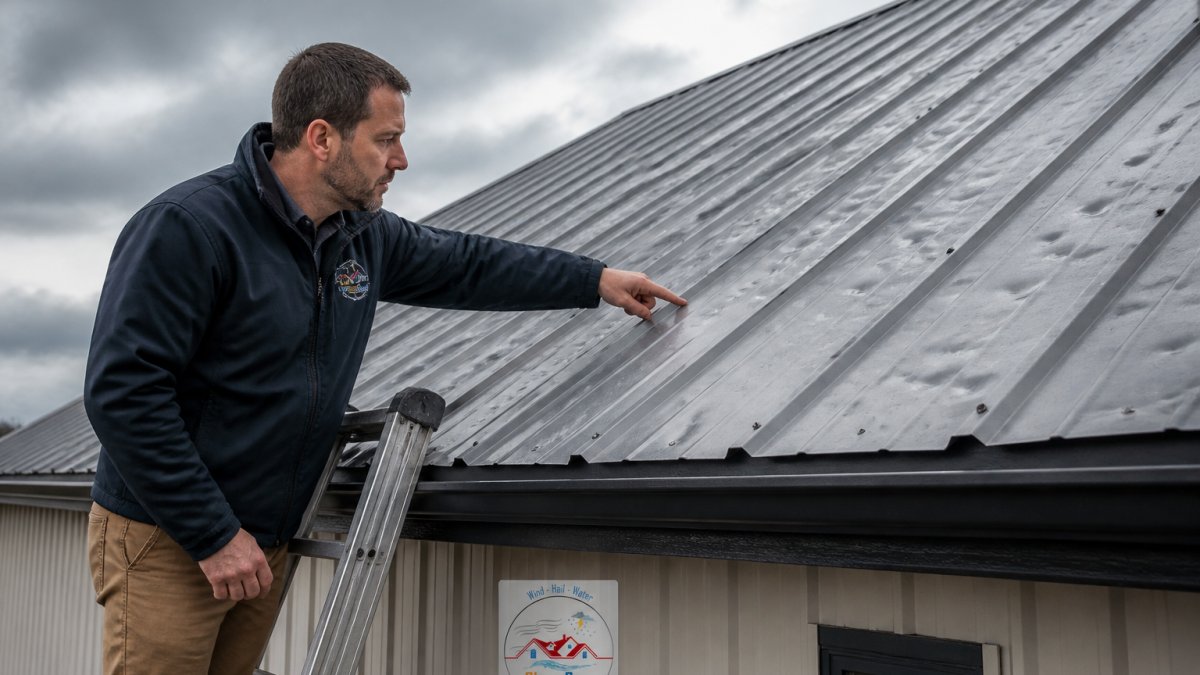
Step 1: Check the weather and plan your inspection
Wait at least 24 hours after the storm ends. Make sure the roof is dry and conditions are calm. Never climb a wet roof.
Step 2: Gather your tools
You’ll need:
- A sturdy ladder
- Work gloves
- A flashlight or headlamp
- A camera or smartphone for photos
- A measuring tape or ruler
- A notebook to record findings
Step 3: Inspect from the ground first
Look up at your roof from different angles, using binoculars if you have them. Document visible dents, discoloration, or debris with photos from multiple angles as a baseline before climbing.
Step 4: Climb safely and inspect the roof surface
Use a ladder that reaches the roof safely, wear gloves and shoes with good grip, and move slowly. Look for:
- Dents of any size
- Cracks or splits in the coating
- Exposed bare metal or rust spots
- Loose or bent fasteners
- Damaged seams between panels
Step 5: Check flashing, vents, and roof edges
Hail often damages flashing around vents, chimneys, and roof edges. Look for:
- Bent or separated flashing
- Cracks in sealant around vents
- Loose fasteners on flashing
- Water stains or rust around these areas
Step 6: Document everything
Photograph every damaged area, measure dent sizes, and note each location (e.g., “southeast corner, 8 feet from the edge”). This documentation is essential for your insurance claim.
What to Document for Insurance
Your insurance adjuster will need clear evidence of hail damage. Document:
- Photos of each damaged area, take close-ups and wide shots
- Measurements of dents, note depth and width where possible
- Location details, which part of the roof, how far from edges or vents
- Damage to other parts of the roof, flashing, fasteners, seams
- Damage to other structures, gutters, siding, or other exterior surfaces hit by the same storm
- The date and time of the hailstorm, get this from local weather records
- Hail size estimates, if you collected hail, measure it or compare it to common objects
guidance on documenting storm damage for insurance claims recommends photographing damage within 48 hours while it’s fresh and obvious. Take photos in daylight with clear visibility. Include reference objects (like a coin or ruler) in close-up photos to show scale.
Repair Options for Hail-Damaged Metal Roofs
Whether you can repair hail damage on a metal roof depends on the type and extent of the damage. Most hail damage can be repaired if caught early and if the damage is localized.
Dent Repair and Panel Replacement
Dent repair works well for shallow to moderate dents that don’t hold water. A contractor can often reshape the panel with specialized tools, restoring appearance and function without replacing it.
For deep dents that trap water or dents in critical areas like valleys or seams, panel replacement is safer and cheaper than replacing the whole roof. The contractor removes the fasteners, slides out the damaged panel, and installs a new one.
Panel replacement is the better choice if:
- The dent is deep enough to hold standing water
- The dent is near a seam or flashing
- The dent is in a high-traffic area where it might worsen
- The coating is cracked or the bare metal is exposed
Most shallow dents can be repaired. Deep dents or dents that hold water usually require panel replacement for long-term protection.
Coating and Sealing Repairs
Hail often cracks the protective coating, exposing bare metal to rust. Coating repairs involve cleaning the damaged area and applying new sealant or paint.
For small cracks or scratches, a roofing contractor can:
- Clean and sand the damaged area
- Remove any rust
- Apply a rust-preventive primer
- Seal with a matching protective coating
For larger areas, the contractor might apply a full roof coating, protecting the whole surface and extending the roof’s life.
Silicone roof coatings are popular for metal roofs because they:
- Provide excellent water protection
- Reflect UV rays to reduce heat buildup
- Seal seams and minor gaps
- Last 10-15 years before recoating is needed
Flashing, Fasteners, and Seam Repairs
Hail can bend flashing, loosen fasteners, or damage seams. These repairs are critical because they prevent water intrusion.
Flashing repairs involve:
- Straightening bent flashing or replacing it if too damaged
- Resealing around vents, chimneys, and roof edges
- Ensuring tight connections between flashing and panels
Fastener repairs include:
- Tightening loose screws or rivets
- Replacing bent or damaged fasteners
- Ensuring fasteners are sealed to prevent water entry
Seam repairs address gaps or separations between panels:
- Resealing with appropriate sealant
- Replacing fasteners that hold seams together
- Adding reinforcement if seams are severely damaged
Water intrusion through damaged flashing or seams is a leading cause of roof leaks, so address these repairs quickly to prevent costly interior damage.
Repair or Replace: Making the Right Decision
Ask yourself these questions:
How old is your roof?
How extensive is the damage? If hail damaged only a few panels or a small area, repair is usually the right choice. If damage is widespread across the roof, replacement might be more cost-effective.
Is the roof leaking? Active leaks mean functional damage needing immediate attention.
What’s the condition of the coating? If the protective coating is cracked in many places, a full roof coating or replacement protects better than spot repairs.
How much will each option cost? Get repair and replacement estimates. Compare the cost to the roof’s remaining lifespan.
[page:5]
Filing a Hail Damage Roof Insurance Claim
Most homeowners insurance policies cover hail damage to roofs. Filing a claim involves several steps.
Step 1: Contact your insurance company promptly
Call your insurance agent within a few days of the hailstorm to report damage and start the claim.
**Step 2: Document the damage thoroughly
The Basics of a Successful Roof Hail Damage Insurance Claim provides comprehensive guidance on the entire hail damage insurance claim process.**
Use the inspection and documentation steps outlined earlier. Your photos and measurements are crucial evidence for the claim.
Step 3: Get a repair estimate
A roofing contractor will inspect your roof and provide a written estimate for repairs or replacement. This estimate becomes part of your claim.
Step 4: File your claim with documentation
Submit your claim to your insurance company with:
- Photos of all damage
- The repair estimate from your contractor
- Documentation of the hailstorm (date, time, hail size)
- Any other relevant information
Step 5: Cooperate with the insurance adjuster
The insurer will send an adjuster to inspect your roof. Be present, point out all damage, and answer questions honestly.
Working with Your Insurance Adjuster
The adjuster assesses damage and determines what your policy covers. How to Handle Insurance Claim Adjusters offers specific strategies for working effectively with adjusters during the claims process. Work with them effectively:
- Be present during the inspection, Point out damage you found and explain what happened.
- Ask questions, Understand why the adjuster includes or excludes specific damage from the claim.
- Provide your documentation, Show photos, measurements, and the repair estimate.
- Get everything in writing, Ask for a copy of the adjuster’s report and the claim decision.
[page:2]
If you disagree with the adjuster’s assessment, you have options. At StormPros, we help homeowners navigate these conversations and simplify the insurance claim process.
Having a detailed repair estimate from a licensed contractor strengthens your position.
Protecting Your Metal Roof After Hail Damage
After hail damage and repairs, protect your roof going forward.
Keep gutters and downspouts clear, Debris buildup prevents water from draining, increasing the risk of leaks and rust.
Inspect your roof regularly, Check for new damage after storms. Catch problems early before they become expensive.
Maintain the protective coating, If your roof has a sealant or paint coating, recoat it every 10-15 years to maintain protection.
Trim overhanging branches, Branches that hang over your roof can cause damage during storms and trap debris.
Address repairs quickly, Don’t wait on repairs. Water damage spreads fast and becomes expensive.
recommendations for storm-resistant roofing in high-hail areas emphasizes that proper installation and maintenance are as important as material choice for long-term protection.
Hail damage to a metal roof doesn’t always mean replacement. With over 20 years of combined experience handling storm damage and insurance claims, we help homeowners restore their roofs and protect their homes. Get a FREE quote to discuss your roof damage and repair options.
| Decision Factor | Repair Makes Sense | Replacement Makes Sense |
|---|---|---|
| Roof age | Under 40 years old | Over 50 years old |
| Damage extent | A few panels or small areas | Widespread damage across roof |
| Coating condition | Mostly intact, localized cracks | Extensive cracking or failure |
| Active leaks | No leaks or minor leaks | Multiple leaks or persistent water intrusion |
| Cost comparison | Repair costs less than 50% of replacement | Repair costs more than 50% of replacement |
Frequently Asked Questions
Can you repair hail damage on a metal roof yourself?
Minor cosmetic dents may appear fixable, but DIY roof repair carries serious risks. Working at height without proper safety equipment is dangerous, and improper repairs often cause water intrusion or void warranties. Professionals have the right tools, materials, and insurance to handle hail damage safely. For anything beyond visual inspection, hire a qualified contractor.
How do you know if hail damage on a metal roof requires replacement instead of repair?
Replacement is preferable when damage affects multiple panels, seams are compromised, or the roof is near the end of its service life. If the coating is severely cracked across large areas or fasteners are damaged, repair may not restore full functionality. A professional inspection determines whether repair or replacement makes financial and structural sense.
What should you document before filing a hail damage roof insurance claim?
Photograph all damage from multiple angles, including close-ups of dents, scratches, and coating cracks. Document the date of the hailstorm and take wide shots showing the overall roof condition. Note any water intrusion, leaks, or interior damage. Keep records of any temporary repairs and get a professional damage assessment. This documentation strengthens your claim and helps your adjuster understand the full extent of storm damage.
How long does hail damage repair on a metal roof typically take?
Simple cosmetic repairs or single-panel replacements may take one to two days. Extensive damage requiring multiple panel replacements, flashing repairs, and coating work typically takes three to seven days depending on weather and damage severity. Emergency temporary protection and documentation happen first; full restoration follows once your insurance claim is approved. Your contractor should provide a timeline after the initial inspection.


