 5.0 Out Of 250+ Reviews

 Financing Available

 (214) 227-2763
Table of Contents
- What Causes Ice Dams and Why They Damage Your Roof
- Diagnostic Checklist: Finding Attic Heat Leaks Before Winter
- Attic Insulation to Prevent Ice Dams: Where It Works and Where It Fails
- Roof Ventilation for Ice Dams: Airflow That Keeps the Deck Cold
- What Can I Put on My Roof to Stop Ice Dams? Safe Options Ranked
- Ice Dam Removal: What to Do When One Has Already Formed
- Frequently Asked Questions
Last Updated: October 8, 2026
What Causes Ice Dams and Why They Damage Your Roof
An ice dam is a ridge of ice that forms along the lower edge of a roof and blocks melting snow from draining off.
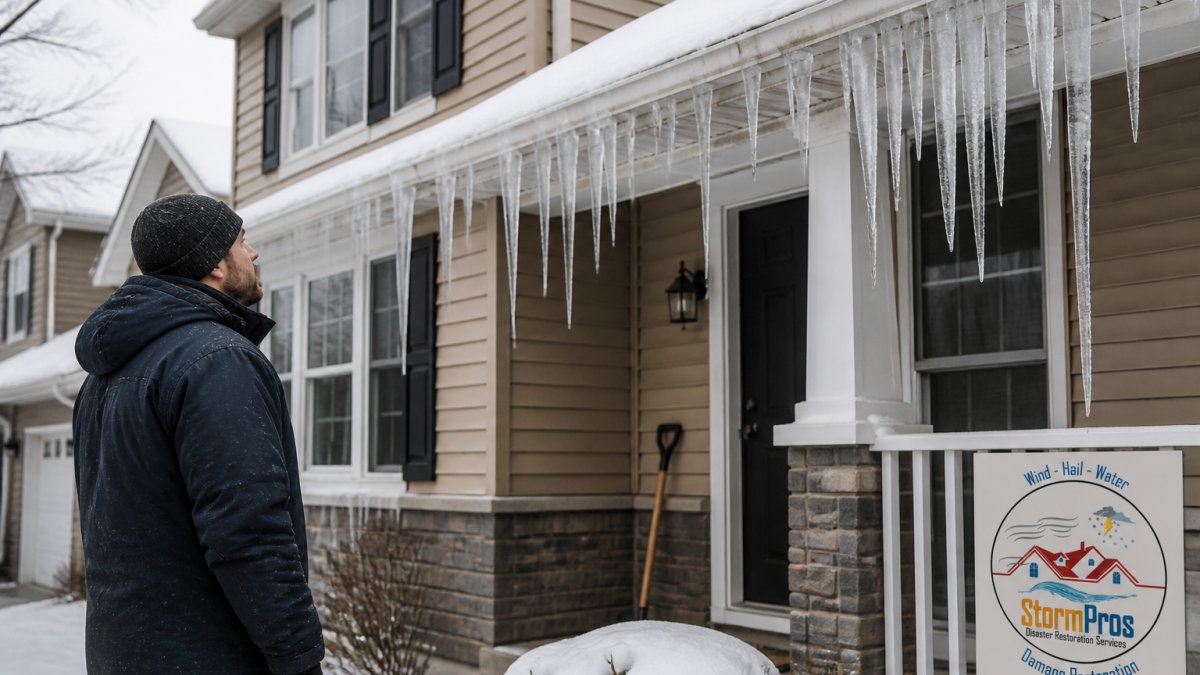
The damage follows a simple pattern. Snow sits on the roof. Heat from the attic melts the bottom layer. That meltwater runs down to the cold eaves and refreezes. Over days, the ice grows into a dam.
That trapped water has nowhere to go but sideways and down, into your home.
How Heat Loss Creates the Freeze-Thaw Cycle
The freeze-thaw cycle is the engine behind every ice dam. A warm attic heats the roof deck above it. Snow melts on the upper roof, then refreezes when it reaches the cold overhang near the gutters. This cycle repeats all winter.
The key insight: ice dams are rarely a roofing problem. They’re an attic problem. Fix the heat source and the dam stops forming.
Ice dams form because the upper roof is warm and the eaves are cold. The goal of every fix is to make the whole roof deck evenly cold.
Diagnostic Checklist: Finding Attic Heat Leaks Before Winter
The best time to hunt for heat leaks is a clear, cold day before snow arrives. Grab a flashlight and a notepad, and walk your attic with this checklist:
- Check for gaps around wires, pipes, and vents passing into the attic
- Look for dirty insulation, which marks air moving through it
- Inspect the attic hatch or pull-down stairs for a loose seal
- Test recessed light fixtures for air leaks from below
- Examine the top plate where walls meet the attic floor
- Check chimney and flue chases for open gaps
- Look for bathroom and kitchen exhaust fans venting into the attic
- Note any frost or damp spots on the roof deck underside
A common mistake is sealing only the obvious gaps and skipping the small ones. Air moves through tiny openings, and a stack of small leaks adds up fast. If you’re unsure what you’re looking at, a professional inspection can map the problem for you.
Attic Insulation to Prevent Ice Dams: Where It Works and Where It Fails
Attic insulation to prevent ice dams works by slowing heat from the living space below. More insulation keeps the roof deck colder, so snow doesn’t melt and refreeze at the eaves.
Where it fails: insulation alone can’t stop air leaks. Fiberglass batts let air pass right through them. The U.S. Department of Energy guide to home insulation explains how air sealing and insulation work as a team.
The order matters. Seal air leaks first, then add insulation. If you insulate over an open gap, you’ve just hidden the leak.
Adding insulation without air sealing can trap moisture and make the problem worse. Seal first, insulate second.
Roof Ventilation for Ice Dams: Airflow That Keeps the Deck Cold
Roof ventilation for ice dams keeps cold outdoor air moving under the roof deck. Intake vents at the eaves pull in cold air. Exhaust vents near the ridge push warm air out.
Watch for these ventilation problems:
- Blocked soffit vents from insulation stuffed into the eaves
- Missing baffles that should channel air past the insulation
- Exhaust vents that are undersized for the roof area
- Bathroom fans dumping humid air into the attic instead of outside
Balanced airflow is the goal. Too much exhaust with no intake pulls air from the living space, which brings warm, moist air into the attic. The EPA guidance on attic ventilation and moisture notes that proper airflow also cuts the risk of mold and rot.
What Can I Put on My Roof to Stop Ice Dams? Safe Options Ranked
Roof-level products treat the symptom, not the cause. If the attic is still warming the deck, any product you put on the roof is fighting a losing battle. Use this ranking as a stopgap while you plan the permanent fix.
| Option | How It Works | Best For | Watch Out For |
|---|---|---|---|
| Heated cables (heat tape) | A resistive cable clips in a zigzag along the eave and downspouts, melting a channel so meltwater can drain | Chronic trouble spots, north-facing eaves, homes with complex rooflines | Continuous electricity draw all winter; cable can be damaged by shovels and ladders; needs a GFCI-protected outdoor circuit |
| Calcium chloride pucks or socks | The salt lowers the freezing point of water, opening a melt channel through the dam | Short-term relief when a dam has already formed | Corrodes aluminum gutters, downspouts, and flashing; kills grass and shrubs below; not effective on thick ice |
| Ice-and-water barrier membrane | A self-adhering rubberized sheet applied to the roof deck under the shingles, sealing around nail penetrations at the eaves | New roofs and full re-roofs; the only option that stops backed-up water from entering | Must be installed during roofing; cannot be retrofitted without tearing off shingles; most building codes require it at the eaves in cold climates |
| Roof rake | A long-handled blade pulls snow off the roof from the ground, removing the fuel before it can melt and refreeze | Any home, when used from the ground | Never work near power lines or under the eaves; pulling snow can damage shingles if the blade catches |
A few practical notes on each:
- Heated cables work best when installed before the season, in a pattern that follows the eave and extends into the downspout. They consume electricity continuously while running, so most homeowners use them only on the worst section of roof rather than the whole house.
- Calcium chloride is the least damaging of the common deicers, but it is still a salt. Rock salt (sodium chloride) is worse for shingles, gutters, and landscaping, and it does not melt ice as effectively at low temperatures.
- Ice-and-water barrier is the durable answer at the eaves. Because it bonds directly to the deck, water that backs up under the shingles cannot pass through it. The trade-off is timing: it only goes on when the roof is open.
- Roof rakes are the safest do-it-yourself tool, but only when used from the ground. Standing on a ladder to reach farther is how most winter roof injuries happen.
The FEMA guidance on winter storm prep recommends clearing snow early rather than treating ice after it forms, because snow removal prevents the meltwater that feeds a dam in the first place.
Heated cables suit homes with one or two stubborn trouble spots. Ice-and-water barrier is the better long-term pick when you’re already replacing shingles, because it addresses the leak path rather than the ice itself.
If you are choosing between products, ask one question first: does this stop water from getting in, or does it only try to stop ice from forming? Only the ice-and-water barrier and a properly detailed roof system stop water. Everything else buys time.
Ice Dam Removal: What to Do When One Has Already Formed
Ice dam removal should never involve a hammer, an ax, a chisel, or an open flame. Each of those methods punches through shingles, damages flashing, or starts a fire in the attic, and none of them is necessary. Safe removal means taking the snow off the roof above the dam and letting the ice melt on its own, or calling a professional who uses steam.
Why the Common Shortcuts Are Dangerous
- Chopping or chipping ice cracks shingles and drives the blade into the roof deck, creating a leak where none existed. The damage often does not show up until the next rain.
- Open flame or a heat gun can ignite the roof deck, insulation, or nearby framing. Attic fires from torches used on ice dams are a recurring winter call.
- Climbing onto a snowy, icy roof is the leading cause of winter fall injuries around homes. Snow hides skylights, vents, and rotten decking.
- Standing under the eaves while someone clears snow above puts you in the path of falling ice and snow slabs.
- Ladders near power lines are a fatal hazard. Service drops to the house are easy to miss against a gray sky.
If Water Is Already Coming Inside
Act indoors first, because the damage is happening now:
- Move furniture, electronics, and rugs out of the affected area.
- Place buckets and towels under active drips, and lay plastic sheeting over items you cannot move.
- If the ceiling is bulging with trapped water, call a professional before it collapses. Do not poke a hole in a sagging ceiling yourself unless you have been told to and have the area clear.
- Photograph water stains, damaged ceilings, wet insulation, and any ruined belongings before you clean up or throw anything away.
- Keep a written log of dates, times, and what you observed. Adjusters rely on this timeline.
Documenting for an Insurance Claim
Most homeowner policies cover sudden water damage from an ice dam, but the claim lives or dies on documentation. A common pattern is that homeowners clean up first and photograph later, which weakens the claim. Before you remove anything:
- Take wide shots of each affected room and close-ups of stains, cracks, and peeling paint.
- Photograph the ice dam itself from the ground, including the eave and any icicles.
- Save receipts for emergency repairs, hotel stays, and rented equipment.
- Get a written scope of work from any contractor before repairs begin.
- Report the loss promptly. Many policies require notice within a set number of days.
Professional Removal
Steam removal is the standard professional method. A technician uses low-pressure steam to melt channels through the dam without striking the shingles, then clears the snow above it so meltwater can drain. It is slower and more expensive than chopping, which is exactly why it does less damage. Expect a professional to also inspect the attic and eave for the heat and air leaks that caused the dam, so the same problem does not return next winter.
Never use a hammer, chisel, ax, torch, or heat gun on an ice dam. The cost of a new roof section or an attic fire is far higher than the cost of professional steam removal.
Once the immediate threat is gone, the real work starts. Long-term prevention means air sealing, insulation, and ventilation, not another winter of raking.
Frequently Asked Questions
What can I put on my roof to stop ice dams?
Calcium chloride ice melt is the safest chemical option for ice dam removal because it works at lower temperatures than rock salt and is less damaging to shingles and landscaping. You can also install heated cables along the eaves and in gutters to create channels for meltwater. Never use rock salt or a hammer to break up ice, as both cause shingle damage. For long-term prevention, focus on attic insulation and air sealing rather than relying on surface treatments.
Does homeowners insurance cover ice damming?
Most standard homeowners insurance policies cover sudden water damage caused by ice dams, including stained ceilings, wet insulation, and damaged drywall. However, they typically do not pay for ice dam removal itself or for preventive maintenance. Document all damage with photos before repairs begin, keep receipts for emergency work, and contact your insurer promptly. A contractor experienced with insurance claims can help you present the full scope of damage so nothing gets missed.
How does attic insulation help prevent ice dams?
Attic insulation slows heat transfer from your living space into the attic, keeping the roof deck closer to outdoor temperatures. When the deck stays cold, snow on top does not melt and refreeze at the eaves, which is what forms an ice dam. The key is coverage: insulation must be continuous with no gaps around chimneys, recessed lights, or attic hatches. Adding insulation without sealing air leaks first often delivers disappointing results because warm air still escapes upward.
Can roof heating cables prevent ice dams?
Heating cables installed along the eaves and through gutters and downspouts can create a path for meltwater to drain, reducing the chance of water backing up under shingles. They work best as a supplement to insulation and ventilation, not as a standalone fix. Cables consume electricity and require a GFCI-protected outlet. If your attic is warm enough to melt roof snow, cables treat the symptom while the underlying heat loss continues to drive ice formation.
Ice dams are a symptom, and the cure lives in your attic, not on your roof. StormPros is a family-owned general contractor with over 20 years of combined experience in roofing, gutters, and storm damage restoration. We inspect the whole system, seal the leaks, and fix the airflow so the problem doesn’t return next winter. Get a free quote from StormPros and protect your home before the first freeze.


