 5.0 Out Of 250+ Reviews


 Financing Available


 (214) 227-2763

Table of Contents
- What Separates the Best Roofing Companies in Texas From the Rest
- Signs of Storm Damage on Your Roof You Should Never Ignore
- Average Cost of Roof Replacement in Texas: What Homeowners Should Expect
- How to File a Roof Insurance Claim in Texas Without Getting Shortchanged
- Residential vs. Commercial Roofing: Matching the Company to the Job
- Roof Replacement vs. Repair: When Each Makes Sense
- Your Vetting Checklist for Hiring a Roofing Contractor
- Frequently Asked Questions
Last Updated: September 19, 2026
What Separates the Best Roofing Companies in Texas From the Rest
Finding the best roofing companies in Texas 2026 starts with one filter: credentials you can verify. Companies with proper licensing, insurance, and manufacturer certifications deliver work that holds up, while those that skip those steps cause problems later.
- Licensing and registration you can look up, not just a business card
- General liability and workers’ compensation coverage that protects you if someone gets hurt on your roof
- Manufacturer certifications that unlock stronger material warranties
Licensing, Insurance, and Manufacturer Certifications
Roofing contractors in Texas operate under local registration rules rather than one statewide license, so verify credentials before anyone climbs a ladder.
Never let a contractor start work before you’ve verified their insurance directly with the provider. A lapsed policy can shift injury liability onto your homeowner’s coverage, and you won’t find out until a claim is filed.
Local Reputation vs. Storm Chasers
After a major hail event, out-of-state crews flood neighborhoods with door hangers and promises of “free inspections.” Some do solid work. Many disappear before the warranty period begins.
Signs of Storm Damage on Your Roof You Should Never Ignore
The clearest signs of storm damage include missing or lifted shingles, granule loss in gutters, dented flashing, and dark spots on ceilings. Catching these early prevents small repairs from becoming full replacements.
Watch for these indicators after any major storm:
- Shingles that look bruised, cracked, or stripped of granules
- Dents on gutters, vents, or downspouts
- Water stains on interior ceilings or walls
- Daylight showing through roof boards in the attic
Average Cost of Roof Replacement in Texas: What Homeowners Should Expect
There is no single average cost of roof replacement in Texas, because pricing depends on roof size, pitch, material, and underlying damage. Here’s how contractors build a number, so you can sanity-check any quote.
- Architectural asphalt shingles, the most common choice in Texas; the lowest installed cost per square of the major options, with a 25- to 30-year manufacturer lifespan under normal conditions
- Impact-rated (Class 4) asphalt shingles, a step up in material cost, but often eligible for homeowner insurance premium discounts in hail-prone counties
- Standing seam metal, a significant jump in material cost, but a 40- to 70-year service life and strong performance against hail and UV
- Concrete or clay tile, high material and labor cost, heavy weight that may require structural review, but excellent heat performance and a very long lifespan
- TPO and other single-ply membranes, flat and low-slope commercial systems, priced per square foot rather than per square
What drives the final number beyond material:
- Square footage and roof complexity, including valleys, dormers, and multiple penetrations
- Pitch, anything above a standard walkable pitch adds labor and safety equipment
- Underlayment and decking condition, which often hides rot that only appears after tear-off
- Number of existing layers, a second or third layer of shingles adds removal and disposal time
- Permit fees and local code requirements, which vary by jurisdiction
- Removal and disposal of old materials, including dumpster and landfill fees
Factors That Move the Price Up or Down
Roof pitch is the quiet cost multiplier: steep roofs require more safety equipment and slower labor, and multiple layers of old shingles add removal time. Upgrading to metal or impact-rated shingles raises material costs but can lower insurance premiums and improve energy efficiency.
Two other levers matter more than most homeowners expect:
- Timing. After a widespread hail event, demand spikes and labor prices rise. Scheduling in a shoulder season can reduce labor cost.
- Scope discipline. Change orders filed mid-project, added decking, upgraded flashing, ventilation corrections, are where budgets blow past the original quote. Ask upfront how change orders are priced and approved in writing.
Energy Efficiency ROI: Where the Upgrade Pays You Back
In Texas, the roof is the largest surface exposed to sun, and attic heat gain drives a meaningful share of summer cooling load. Material choice affects that load directly.
- Reflective and cool-rated shingles carry a solar reflectance rating and can reduce attic temperatures compared to standard dark asphalt.
- Metal roofing reflects solar radiation and, with a proper air gap over the deck, sheds heat rather than storing it.
- Tile and concrete use thermal mass and an air channel to keep heat out of the attic.
- Proper attic ventilation and radiant barrier underlayment amplify whatever the roof surface does, an efficient roof over an under-ventilated attic still traps heat.
How to File a Roof Insurance Claim in Texas Without Getting Shortchanged
Filing a roof insurance claim in Texas follows a defined sequence: document the damage, file promptly, and meet the adjuster on-site with your own contractor present.
Here’s the process that protects your payout:
- Photograph all visible damage, inside and out
- Review your policy’s deductible and coverage limits
- File the claim with your insurer as soon as damage is found
- Request a professional inspection before the adjuster visits
- Have your contractor present during the adjuster’s inspection
- Compare the adjuster’s estimate against your contractor’s scope
- Submit a supplement if the numbers don’t match
Residential vs. Commercial Roofing: Matching the Company to the Job
Residential roofing focuses on steep-slope systems, shingles, and curb appeal. Commercial roofing involves flat or low-slope membranes, drainage systems, and load requirements that demand different equipment and crews.
Roof Replacement vs. Repair: When Each Makes Sense
Repair makes sense when damage is isolated and the roof is under 15 years old. Replacement makes sense when damage covers a large area, the roof is near the end of its lifespan, or repairs would exceed a meaningful share of replacement cost.
How Texas Climate Shortens Roof Lifespan
UV radiation. Sustained sun exposure breaks down the asphalt binder in shingles and loosens surface granules. Once granules are gone, the shingle mat is exposed and degrades quickly, a roof that would last 25 years in a cooler climate may show UV-driven aging years earlier here.
Material-by-Material: What to Expect in This Climate
- Standard 3-tab asphalt shingles, the shortest lifespan of the common options and the least resistant to hail; typically the first to need replacement after a major storm.
- Architectural asphalt shingles, thicker than 3-tab, better UV and wind performance, but still vulnerable to hail impact.
- Impact-rated (Class 4) asphalt shingles, engineered to resist hail impact and often eligible for insurance premium discounts. A strong middle-ground upgrade for hail-prone areas.
- Standing seam metal, excellent UV and heat reflection, strong hail resistance depending on gauge, and one of the longest service lives available. Higher upfront cost.
- Concrete and clay tile, outstanding heat performance and very long lifespan, but heavy and prone to cracking from direct hail strikes; individual tiles can be replaced.
- TPO and single-ply membranes, the standard for flat and low-slope roofs; performance depends heavily on seam quality and installation.
How to Decide: A Practical Framework
- Age the roof against its material, not a generic number. A 12-year-old 3-tab roof in a hail zone may be closer to replacement than a 15-year-old architectural roof that’s never taken a direct hit.
- Get a professional inspection that looks below the surface. Granule loss, fractured mat, dented flashing, and attic water staining all matter more than what you can see from the driveway.
- Weigh repair cost against remaining life. If a repair buys two years on a roof already near the end of its climate-adjusted lifespan, you’re paying twice.
- Consider insurance. If storm damage is the cause, the claim process, not your wallet, may drive the decision.
- Factor in the upgrade. If you’re replacing anyway, move to impact-rated or reflective materials that perform better in this climate and may reduce insurance and cooling costs.
The national “replace at 20 to 25 years” rule is a starting point, not a verdict. In Texas, hail exposure and UV intensity can shorten that window significantly, and impact-rated or reflective materials can extend it. Match the decision to the material and the storm history, not the calendar alone.
Your Vetting Checklist for Hiring a Roofing Contractor
Use this checklist before signing anything. Each item protects you from a different failure mode.
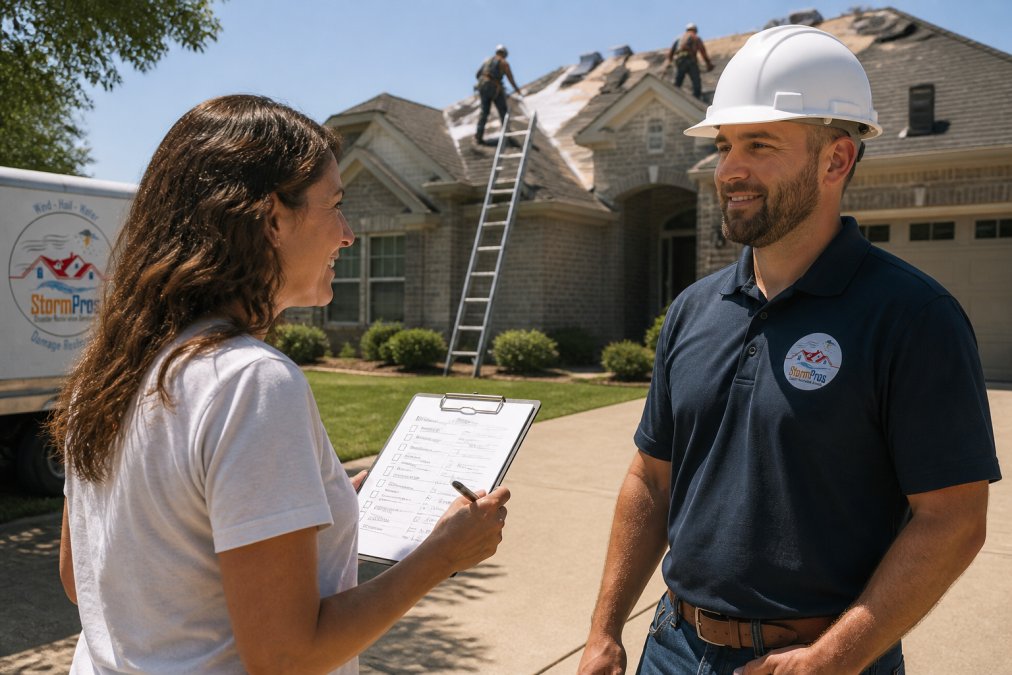
- Verify the company’s registration and business address
- Confirm general liability and workers’ comp insurance directly with the insurer
- Check manufacturer certifications like GAF certified status
- Request three local references from the past 12 months
- Get a written estimate with a detailed scope of work
- Confirm who handles the roofing permit
- Review the roofing warranty terms in writing
- Ask how change orders and supplements are handled
- Confirm the payment schedule, and never pay in full upfront
Red Flags and Post-Storm Scam Prevention
The biggest red flag is pressure. Legitimate contractors don’t demand a decision on the spot or ask for full payment before materials arrive.
Watch for these warning signs:
- Door-to-door crews with out-of-state plates and no local address
- Requests for cash payment or full payment upfront
- Offers to “waive your deductible,” which is insurance fraud
- No written contract, or a contract with blank scope sections
- Pressure to sign before you’ve compared other roofing quotes
Frequently Asked Questions
How do I verify if a roofing contractor is licensed and insured in Texas?
Texas does not issue a statewide roofing license, so verification works differently here. Ask for the company’s voluntary state registration, general liability insurance certificate, and workers’ compensation coverage. Call the insurer directly to confirm the policy is active. Check for manufacturer certifications, and look up the business on the Better Business Bureau and Texas Secretary of State. A legitimate roofing contractor will hand over these documents without hesitation.
How much should a new roof cost in Texas in 2026?
The average cost of roof replacement in Texas varies widely based on roof size, pitch, material, and whether the old roof needs tear-off. Asphalt shingles cost less than metal or tile, and a complex roof with multiple valleys costs more than a simple gable. Storm damage claims can shift your out-of-pocket expense significantly. Get at least three written estimates with itemized line items before signing anything, and never accept a quote given only from the ground.
What should I look for in a storm damage restoration specialist?
Look for a company that handles the full scope: roof, siding, gutters, and interior water damage. A specialist should document damage with photos, meet your insurance adjuster on-site, and explain the claims process in plain language. Ask how long they have operated locally, whether they carry full insurance, and what warranty they back in writing. Companies that knock on doors right after a storm and demand upfront payment deserve extra scrutiny.
Will roofing prices go down in 2026?
Material costs fluctuate with supply chains and demand after major storm seasons, so predicting a drop is difficult. What homeowners can control is how they buy: bundling repairs, choosing a contractor with direct manufacturer relationships, and filing insurance claims correctly. Waiting on a known leak usually raises the final bill because decking and insulation rot. Address damage early rather than timing the market.


